3 months ago
121
3 months ago
121
Abbie Marton Bell, a National Debtline adviser, is often the first person her clients will speak to about their debt, after years of carrying the weight of their financial worries alone. Most of the time, they haven’t even told their partner or family, she says, and “you can literally hear the relief in their voice”.
Debt carries a lot of shame, but it’s more common than people might think. In the UK, 84% of adults had some form of credit or loan in the year leading up to May 2024. The average household holds about £2,700 in credit card debt, and it’s only getting worse. Borrowing has been rising at its fastest rate for almost two years, with those hit hardest by the cost of living crisis increasingly using credit to pay for essentials.
When the National Debtline reopened after Christmas last year, they had 1,400 calls for help – their busiest day on record. “There just isn’t enough money to go around,” says Bell. “About 43% of the people who give us details about income and expenditure have a deficit.” Factors such as job loss, poor mental health, illness, divorce or unexpected expenses, such as a car or boiler breaking down, can push people over the edge.
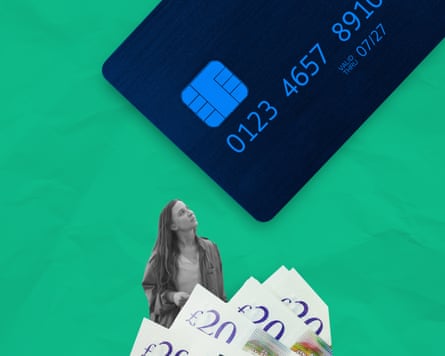
Personality, upbringing, race and gender all play a part: ethnic minority groups face higher overindebtedness rates than white Brits; women are 68% more likely to use “buy now, pay later” services such as Afterpay, Klarna, Affirm and Zip; while neurodivergent people are more likely to make impulse purchases, lose track of outgoings and miss deadlines. But no matter who you are or what your circumstances, debt can quickly snowball out of control.
Social media has started to plug the gaps in financial literacy where schools, who have been required to teach financial education as part of the curriculum since 2014, often fall short. So-called debt-fluencers and financial content creators have taken to sharing their own salaries, assets and budgets online in an attempt to help others better manage their money.
But how exactly do you get a grip on your finances when debts outweigh your salary? And is it really possible to stay debt-free? Here, we talk to people who confronted their debt head on.
‘It was really scary to face up to’
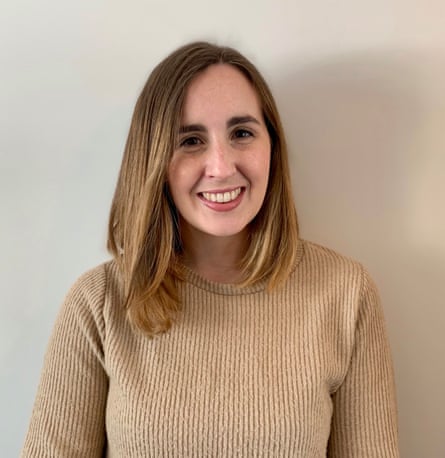
Clare Seal was in a fairly new relationship when she became pregnant with her first child at 24. She and her partner rented and furnished a two-bedroom flat in Bath, and bought new clothes for their child, modelling their lives on the perfect young families Seal had seen online. “Keeping up with the Joneses has always been a problem for people,” she says. “It’s just that now there are so many Joneses to keep up with.”
Soon, a second baby came along and years of slightly overspending on low salaries followed. Seal was a marketing executive for an interiors company, while her husband worked in hospitality. Neither earned more than £30,000. Their biggest expenses were rent, which cost £995 a month, and childcare at £1,500, but other costs, including a wedding, quickly pushed them over the edge. In March 2019, the pair found themselves in nearly £27,000 worth of debt spread across six credit cards and an overdraft. “It was really scary to face up to.”
For a long time, “things would reach a little mini crisis and I would poke my head out of the sand to fix whatever that problem was and then shove it straight back in,” she says. But when her bank called in March to tell her she had gone into an unarranged overdraft and that she would be racking up daily fees until she credited the account, she was forced to face reality. “There’s no money left,” she told the bank. They refunded some previous charges, which brought her within her overdraft limit, and then she sat her husband down and they came up with a plan.
Seal called her lenders to see if there were any gestures of goodwill they could offer. They froze the interest on her credit cards, and allowed her to close down her account so that she could focus on the repayments. She opened an anonymous Instagram account, My Frugal Year, where she kept a diary of her expenses, which she found forced her into radical accountability.
Seal started by cutting down on subscription services and takeaways, and looked for better contracts with energy providers. She stuck to a strict monthly budget, which she tracked using an online tool called Money Dashboard (now closed), making sure to leave some money for fun.
She capitalised on new opportunities: a job with a better salary and their eldest starting school meant they were able to channel more money towards their debt.
But it wasn’t always easy. Seal missed holidays with friends and trips with the kids. The changes she made, however, did force some honest conversations about money, which she says has led to deeper friendships. “I was looking at people who were my age and doing a similar job to me and thinking: they’ve got all that so I can afford it as well, when in fact you never know what someone’s financial backdrop is.”
The family cleared their debts in two years, which felt “a bit surreal”. But Seal knew she needed to shift her mindset and address underlying issues if she was to maintain a good relationship with money. “It is important to have your sights on your long-term plan, rather than risking being a bit rudderless,” she says. “It’s a real skill being able to be relaxed about money without falling back into overspending.”
‘I got a dopamine hit from watching my debt go down’

Three weeks into the pandemic, Sarah Dean lost her job as a research assistant. She spent the next eight months unemployed. Not long after, she needed a root canal, but the NHS dentist waiting lists in her part of south Wales were too long, so she used her credit card to pay privately for the procedure. “Debt was basically covering me for emergencies,” says Dean, who accumulated about £10,000 spread across several credit cards with high interest.
Dean had recently graduated from university and been interning for a social enterprise, earning minimum wage. She grew up in a low-income household in Stockport, and had no financial safety net. Her parents had never talked to her about money and she didn’t learn anything about debt at school, so when she gained access to a 0% interest credit card at university, she didn’t understand how quickly things could spiral. “There’s this assumption that people should be naturally good with their money,” but, she says, you need an education to be able to do that. “We live in a very hyperconsumerist society where we’re made to feel that what we buy, consume and wear is how we fit in, so it’s a no-brainer that so many of us are in debt.”
It wasn’t until her TikTok algorithm started feeding her personal finance content that she learned about budgeting, saving and debt repayment. Creators such as Tori Dunlap, founder of Her First $100K, taught her about the different ways to tackle debt: the snowball technique (where you pay off the smallest debt first, whether that’s a “buy now pay later” loan or a store card, before moving on to bigger debts), and the avalanche strategy (where you target the highest-interest loan first before moving on to lower-rate ones).
One of Dean’s credit cards was charging her 30% interest, so she consolidated her debts into a single personal loan to lower the interest she was paying, and created a debt tracker on Google Sheets, which “gamified” the process. “I found it genuinely enjoyable watching my debt go down rather than getting dopamine hits from spending my money and having a parcel at the door.”
Budgeting made her confront how much money she was making. “It was a global pandemic, the cost of living was rising and I was on a low income,” says Dean, who was earning £29,000. “I couldn’t pay my debt and my bills and try to save money.” Unlike her parents’ generation, who were advised to stay in one career stream and rise up the ranks to earn more, she found that job-hopping was the only way to increase her income.
After switching jobs several times in three and a half years, she doubled her salary. She added to her income with side hustles: selling clothes on Vinted, knitting scarves and creating prints to sell on Etsy, taking up wedding photography, and giving businesses advice on their social media strategy. Dean moved in with her partner, which meant they could split bills, and spent a year reducing her spending.
Now, she knows to stay diligent. “We live in very challenging times,” says Dean, who has noticed the effect of inflation on her weekly grocery shops. Her rent and energy bills have gone up, and while she’s lucky to have an employer that has increased her pay in accordance with inflation, she worries about the state of the job market.
Her main focus is putting money into an emergency fund: normally £500 a month to get her to her goal of £10,000 in the next five years, enough for four months’ worth of expenses should she lose her job again. Dean talks about her progress on social media as Your Money Mate Sarah, where she offers financial advice for “people who typically feel shut out of conversations around money”, particularly women and minorities. She doesn’t want people to make irrational decisions because they’re in a desperate situation – “because that’s exactly what got me into debt in the first place.”
‘It hit me like a ton of bricks, all the nonsense I was buying’
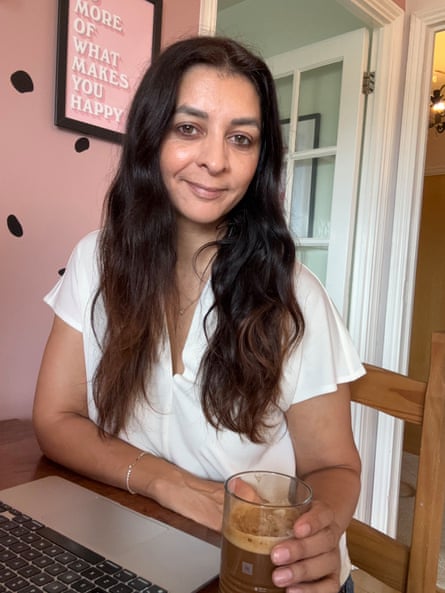
“I never learned any money management skills,” says 47-year-old Ambrina Ruth Taylor, who grew up in debt in south-east London. “If you’re not taught by your parents, you’re at a real disadvantage.”
Taylor’s money troubles began in 2006 when she was 28, working as a newly qualified physiotherapist, and she bought a house with her husband, who was in and out of work in construction. It was exciting buying curtains from Laura Ashley to match the new furniture, but also stressful when the boiler broke the day they moved in. Both the peaks and troughs cost money she didn’t have. The curtains went on a store card and the £2,500 for a new boiler was put on a credit card.
A year later, her first child arrived, followed by a second 10 months later. By March 2018, the debts totalled £21,000. “I was always stressed about paying bills. I knew something was wrong but I also thought that was what life was like when you had a house and children.” It wasn’t until Taylor tried to put £5 of petrol in her car and her card was still declined that she realised how bad the problem was. “I got back in the car. I was sobbing. I had the kids in the back and I just thought: ‘I can’t live like this any more.’”
Taylor looked for help online and found a Facebook group run by Dave Ramsey, an American radio personality who offers financial advice. She felt a lot of shame for being in debt and didn’t want to tell those close to her, but found that, online, everyone was helpful and supportive.
She quickly learned she needed to go through her bank statements to total up her income and outgoings. Taylor was only paying the interest on her mortgage because she had £1,000 a month going out on debt repayments. She cancelled a contract for a phone she didn’t use any more, and subscriptions to a gym and a magazine she never read. “It hit me like a ton of bricks, all the nonsense I was buying.”
Taylor made a budget, cut out non-essentials and negotiated new contracts for her broadband and car insurance. She started meal planning, wrote shopping lists, switched to own-brand ingredients and stopped ordering takeaways. Shopping was no longer impulsive but rather careful and intentional.
Around the same time, she set up a dog daycare business with her husband. Taylor earned extra money taking part in online surveys and focus groups, which meant they were able to pay £2,000 towards their debts a month. “There was a lot to sacrifice and I felt hugely guilty because the children did miss out during those eight months.”
But nothing was worse than having the debts looming. “I was constantly worried we were going to be homeless. My dad had to save us a couple of times with the mortgage and you feel ashamed, because I was an adult and I should have been able to afford my own bills.”
Taylor tried to make repaying her debts fun, pinning up a chart on the fridge with milestones she wanted to reach. She broke down the debt into £1,000 chunks, colouring in a box each time she paid off £100. When the final payment came, Taylor went to the bank to deliver it in person. “It was the best feeling in the world,” she says. “I felt so light.”
Taylor now diverts any extra income towards her savings: she has Christmas, holiday, pet and car funds, into which she puts small amounts each month. She shares tips online and educates her children about their finances, encouraging them to invest money in Isas. Her older son is very good at saving and, although he likes clothes, shops almost exclusively on Vinted. He’s about to go on his first holiday with friends, which Taylor fully supports. After all, she says, “life is for living”.
‘You suddenly find yourself on a very steep cliff’
Michael Crompton enjoyed decades of success as a screenwriter: first on The Bill, then Silent Witness for 20 years, and various crime series. But two years ago, work dried up.
“Screenwriting is one of those jobs that if you get commissioned and it gets made, the money is good. What I never really tended to do was put money aside,” he says. “There were times when I got to the end of the month and thought: this is going to be tight. How am I going to do this? And you phone the bank and put stuff on credit cards, and then you take off again.”
But when his wife filed for divorce in September 2023 and he needed to pay for lawyers, as well as £1,700 a month rent on a property where his five children could come and visit him in Winchester, he suddenly found himself “on a very steep cliff”.
By March 2025, Crompton had borrowed over £20,000 from friends and family and taken on some extra work as a scriptwriting teacher at Royal Holloway university, but he still couldn’t pay the bills. His personal overdraft had reached £15,000; the credit cards had nearly reached their limits; his business account was £22,000 overdrawn and he had stopped contributing to the mortgage on his matrimonial home. The overwhelming feeling he had was: “I’ve failed.”
He called Citizens Advice for help, who connected him with debt advisers. They immediately told him to stop panicking. “It was financial therapy,” he says. They made him realise that he was one of thousands of people who were struggling. They negotiated with the banks for him, and talked to the people he owed money to for a renovation he had previously undertaken on the family home. In 2023, the Financial Conduct Authority Consumer Duty came into effect, which requires that firms be mindful of customers’ circumstances when lending money. They must now consider if their client is in a vulnerable situation, whether that be poor health or financial troubles, and avoid causing foreseeable harm. Crompton’s debt adviser asked for three months of non-payment on his credit cards with no interest accrued until the end of that period.
Crompton started working for a property management company, which gave him a regular source of income. Elsewhere, he began filling his car up with only what he needed in petrol, and shopping at cheaper supermarkets rather than those that were most convenient.
Confronting his debt changed how he says he will spend his money in the future. “It might not be crazy holidays, it might be camping. It won’t be extravagant things but it will be what really matters,” he says. Rather than spending to his limit, he now tries to put any extra money aside as a buffer.
There’s a real sense of self-blame, he adds: “I’ve got myself into this position, I should have known better.” He wants others to know that debt can happen to anybody. The most important thing to do is “seek help earlier and admit it to yourself.”
In the UK, the number for the National Debtline is 0808 808 4000 and Citizens Advice offers a debt helpline on 0800 240 4420. In Australia, the National Debt Helpline is 1800 007 007.
Do you have an opinion on the issues raised in this article? If you would like to submit a response of up to 300 words by email to be considered for publication in our letters section, please click here.