4 hours ago
10
4 hours ago
10
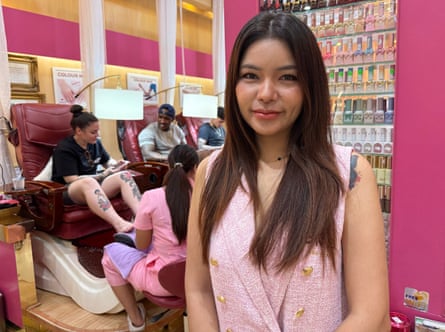
On Thursday morning in Pattaya’s Colour Nail salon there isn’t a spare burgundy lounger to be seen as sailors from the USS Abraham Lincoln – male and female alike – settle in for pedicures to take the edge off a gruelling deployment.
More sailors are waiting outside for their turn and Arisa Suekkanya, a worker at the salon, says she is “excited” the US military chose Thailand as their first port of call after a record uninterrupted 286 days at sea.
The aircraft carrier has been plagued by reports of deteriorating living conditions and poor mental health onboard, including attempted suicides, making headlines around the world and provoking criticism of Donald Trump’s war against Iran.
The ship’s captain admitted to a lack of fresh fruit and vegetables but said reports about the living conditions were largely exaggerated. Some of the thousands of crew gave their view while on leave.
Adam*, who is on his first deployment, says the living situation is like “being stuck in your bedroom with all your family” but that building relationships with fellow crew and “finding your people” made the difficulties worthwhile. The Guardian has chosen to change the names of the sailors spoken to because they were told not to speak to the media about conditions onboard.
For him, the food was the hardest thing to swallow. “I almost choked on this many times,” he says, as he describes eating “uncooked beef” and sliced up, uncooked potato.
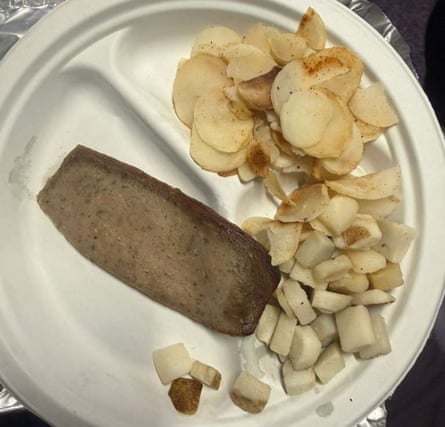
According to Adam, the decline in living standards was down to the battle conditions imposed during Operation Epic Fury rather than the unprecedented length of deployment.
Another crew member, Marco* agrees, saying there was a necessary deterioration during this “battle rhythm” period when it would have put them at risk to restock.
Trent* admits the hardest part of the deployment was “pushing through, keeping the mentality” despite the hardships.
Dane* says “a load came off my shoulders” when he stepped on dry land again after his first deployment. Lester acknowledged it was “tough but we had a job to do.” He said that on the previous evening, “I ate to my heart’s content. Me and Thai food might be best friends after this.”
Another serviceman, who did not give his name, hinted at the toll the long deployment had taken: “Some people adapt to it but not everyone.”
Boom time for the big brands
Pattaya is a city well known for its red light district and colourful nightlife, but for many, the desires were more prosaic.
Tim* was in the Vans store in the mall on Thursday. “It’s the simple stuff like new socks” he was after, holding the pair he was about to purchase.
Another sailor, David*, has bought his wife a Hello Kitty soft toy from H&M. He says it was his fourth deployment, and agrees this would have been quite long for sailors on their first.
At least for Adam, the past few months have made him all the more grateful for his first night ashore he orders two burgers at Burger King and makes plans to order a tailored suit and explore Thailand’s east coast.
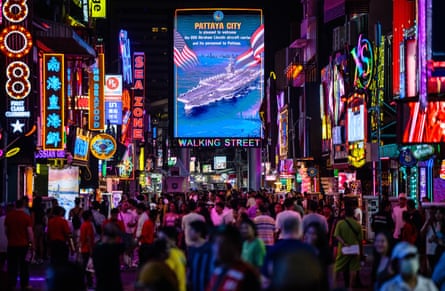
Many local businesses have put up signs welcoming the American visitors, offering incentives like tailors Tito Fashion advertising “specially for US Navy ready in 24 hours”, while Thai restaurant Imm-Oon Na offered 10% off for anyone presenting a valid military ID.
But the draw of the familiar American brands also proved irresistible. In the mall, the likes of Nike, Victoria’s Secret and Starbucks all reported a spike in sales.
The town is hoping the Lincoln’s crew will provide an economic boost. The war in the Middle East has created a downturn in tourism in Thailand, and the rainy season has slowed things, too.
Pattaya’s mayor, Poramet Ngampichet, says if each American spends $100-150 per day the visit could generate about $100m Thai baht ($3m).
However, not all businesses can take full advantage of the 5,000 sailors, who have not been able to spend money for nearly 10 months. Emma Moontee who runs a gift stall at a night market, says she has only sold one fridge magnet souvenir to a sailor, but hoped there would be more.
The crew has also been advised not to go to the beer bars along Soi 6 after sunset, one of the most infamous areas of the town’s red light district where bar girls line the street, and can occasionally be seen physically pulling in male tourists.
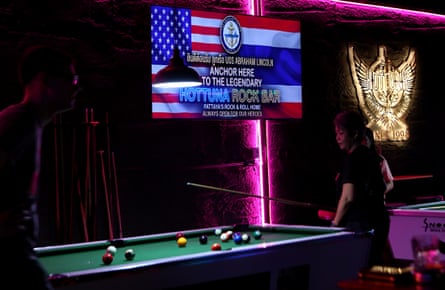
However, the main strip – known as Walking Street – is not off limits. It is dense with clubs and go go bars featuring pole dancing girls. They are largely private from the outside street view and passers by.
Wittaya Phoobantad, who works at Poker Bar on the beach front, about a 10-minute walk from Soi 6, says: “You can see [sailors] walking around but because Soi 6 is banned most of them don’t come in, just go direct to Walking Street.”
On Walking Street a massive neon sign has been built at its entrance saying: “Pattaya City is pleased to welcome USS Abraham Lincoln carrier and its personnel”. Venues like the Sapphire Club offered 10% off to US service members.
Pattana Prasomsup, who works at M’s Mojito, says the 10 crew who visited the bar on Wednesday night provided a “good boost” but noted they appeared quite cautious about interacting with bar girls.
Pattaya is familiar with the US military, who experts agree was the dominant influence in creating the sex tourism industry – and the modern city that developed around it.
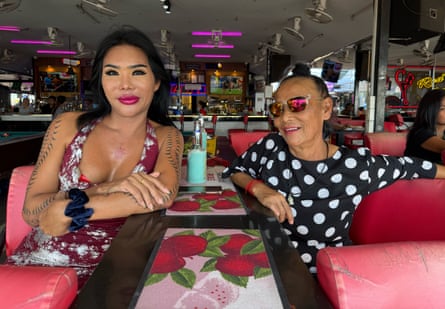
The once quiet fishing village was drastically transformed in the space of 15 years after becoming an official R&R destination for US soldiers during the Vietnam war, causing a boom in hotels, massage parlours and bars, where heavy drinking and paying for female companionship became the norm.
Most of the workers in the sex tourism industry are not local but have themselves migrated to Pattaya, commonly from Isan – Thailand’s poorest and least economically developed region in the north-east – as well as neighbouring Laos and Myanmar or further afield.
Back in the mall, Puangbubpha Duangsri, who works at American Eagle, says in the off season they’d usually make 70,000 Thai baht in a day but on Wednesday they made over 200,000 baht after the sailors arrived. By lunchtime on Thursday they had already made over $100,000.
“Can they stay an extra week?” she says.
* Name has been changed