2 days ago
8
2 days ago
8
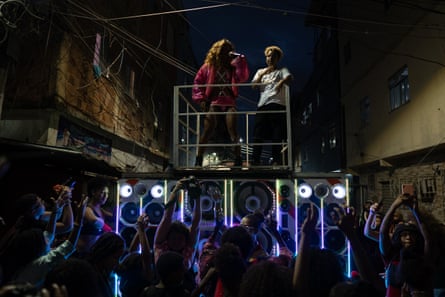
My first encounter with Rio de Janeiro’s ballroom scene was in 2023, during Noite das Estrelas, an artistic occupation that moved through the streets of Maré. From the top of a sound truck, the performer and drag queen Preta Queen B Rull, of the Kiki House of Mamba Negra, sang as people followed her through the neighbourhood. Before we had even reached our destination, the procession had changed the rhythm of the street.
-
Preta Queen B Rull performs from a sound truck during Noite das Estrelas.
-
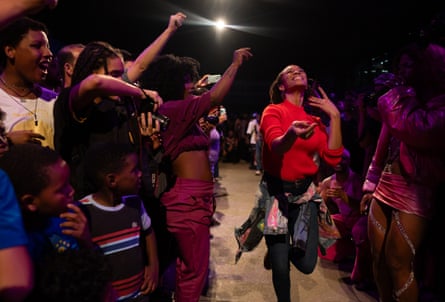
Tainá Mattos (known as Princess Tai Ninja in the Mainstream scene and Legendary Tai Lafond in the Kiki scene) performs during the ball that concluded the Ocupação Noite das Estrelas in Maré.
At the end of the day, two rows of people shouted, pressed against one another and took photographs, forming a runway inside a warehouse. I had gone simply to watch, but I had my camera in my bag. I did not know whether to admire, photograph or try to understand what I was seeing: dance, fashion, performance, movements I did not yet know how to name. I left certain that I would return.
That day, I learnt that photographing a ball demands quick decisions: hesitate, and the moment disappears. But what drew me back was the energy between the runway and the people gathered around it, the shouts for the houses, the response of the crowd, the vibration that seemed to pass through the body. After attending many balls, this has never become ordinary to me. What I feel there is a force built from presence and belonging, as if, for a few hours, no one has to make themselves smaller in order to fit into the world.
-
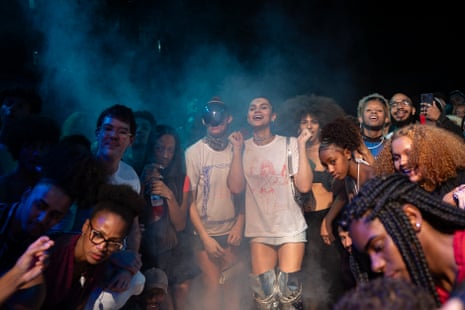
Vitória Jovem, wearing a mirrored visor, joins others at the Noite das Estrelas ball.
Ballroom culture began to take shape in New York between the late 1960s and the 1970s. It was created by Black and Latinx LGBTQ+ people in response to racism and exclusion within drag pageants. Organised into houses, chosen families that provide guidance and support, participants compete at balls in categories involving dance, fashion, performance and gender expression.
In Rio, the scene began to organise around 2015 and 2016 through voguing and exchanges with pioneers from other Brazilian states. Conferência das Bruxas, held in May 2016, is locally recognised as the first ball in the state of Rio de Janeiro. The House of Cazul and the House of Kínisi later played pioneering roles in consolidating house culture in the region. Since then, the scene has developed according to Rio’s own geographies and rhythms, incorporating funk, carnival, the cultures of the city’s peripheries and local political struggles.
-
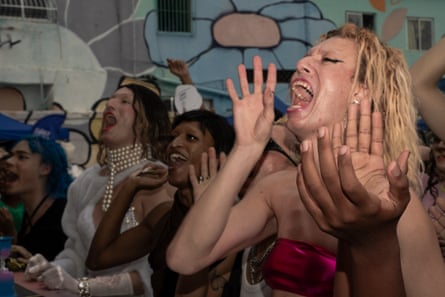
Participants and audience members cheer for friends competing in the Transconexão Ball.
Names also indicate belonging and position within the ballroom. Members often adopt the name of their house as a surname, while 007 identifies someone who is not affiliated with a house. Mother, Father, Prince and Princess designate positions within a house; Legendary recognises a sustained record of excellence, influence and contribution to the scene. Because the Kiki and mainstream circuits have their own houses and systems of recognition, the same person may use different names and titles in each.
I have watched the scene attract larger audiences, enter higher-profile cultural venues and expand into other parts of Rio. But this does not mean leaving the periphery behind.
-
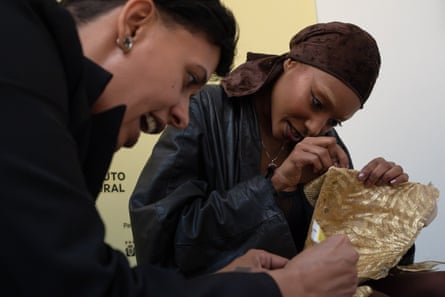
Azch 007 Kiki (left) works on a costume with Mother Rebecaza de Ra, in preparation for Pajuball.
I usually arrive while the venue is still empty. I prefer to observe and follow what unfolds. I photograph at close range because the spaces are generally small, although the audiences continue to grow. I allow flashes, arms, heads and mobile phones into the frame. They are part of the scene and do not disturb me.
Before Pajuball, Azch 007 Kiki was helping a close friend, Mother Rebecaza de Ra Kiki Colombia, finish her outfit. Azch told me that the two had not seen each other for three years, while Rebecaza was living in Colombia. They had first met at a ball, later discovered that they were neighbours and became best friends. That evening, Rebecaza wore the outfit and won the grand prize.
-
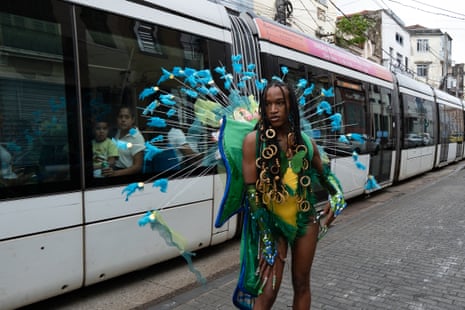
Madah Sodré, a member of the House of La Bella Mafia, wears an outfit made from materials discarded after carnival.
I also photographed the House of La Bella Mafia at Sustenta Carnaval, a project created by Mariana Pinho, artistic director of Gandaia Arts. The project collects costumes discarded after carnival and puts them back into use, preventing them from ending up in landfill. Madah Sodré, who was responsible for the creative direction of the shoot, stepped into the street wearing one of the looks she had just created. At that moment, a VLT tram passed and the passengers turned to look at her.
-
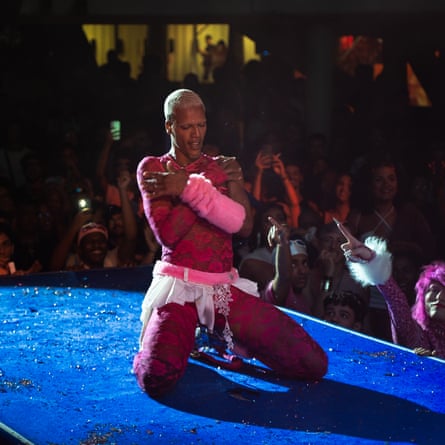
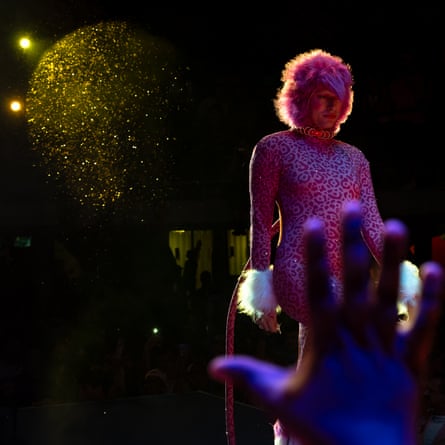
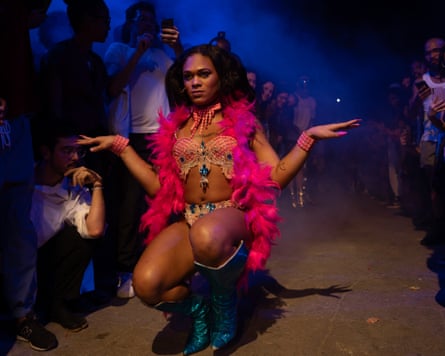
Kill Bill Balenciaga (left) performing during the Pink & White Mainstream Ball, and Vitória Jovem walking in the Runway category as part of Presença Festival at Circo Voador, in Lapa
-
Lua Brainer Kiki, a femme queen, during Ocupação Noite das Estrelas.
In Maré, Legendary Lua Brainer Kiki represents another form of continuity. Born and raised in the area, she and Kill Bill Balenciaga help to build the local scene through Ballroom na Maré, creating spaces for ballroom culture within Maré itself.
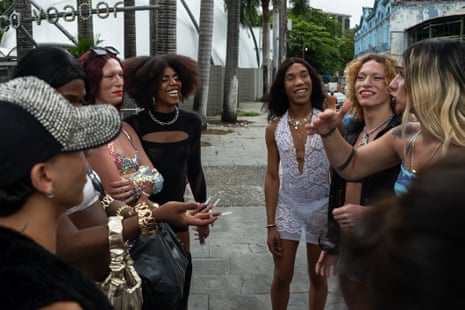
In the final image, the ball is already behind them. Outside, Legendary Runway Vitória Jovem 007, Daniela Raio Klandestina, Legendary Vini Ventania 007 and others talk and laugh before heading in different directions. My work is also moving in that direction: beyond the runway, towards the everyday lives of the houses and the relationships that make a performance possible. I will keep returning because I want to understand what remains when the runway disappears.