3 months ago
200
3 months ago
200
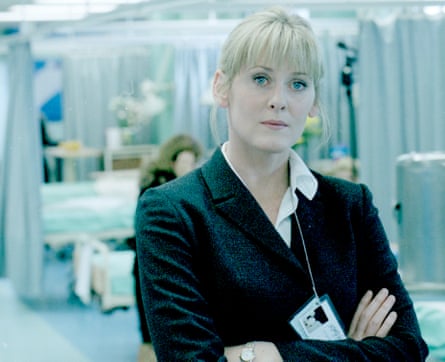
Peter Ransley, who has died of bronchopneumonia aged 94, wrote television plays and series focusing on human emotions and experiences at the centre of the dramas, from the taut thriller The Price, starring Peter Barkworth as a business executive whose wife and stepdaughter are kidnapped by the IRA, to The Cry, with Sarah Lancashire as a grieving mother who steals a child she believes is being abused.
Viewers’ own emotions, often torn to shreds by the chilling realism of Ransley’s writing, were demonstrated in a different way following the screening of Minor Complications, his 1980 BBC Play for Today. It was based on a real-life case of medical negligence involving a woman who underwent routine sterilisation and her fight for compensation after the acute pain she subsequently suffered – due to a punctured bowel during the operation – was misdiagnosed.
Following its screening, Ransley received hundreds of “that happened to me too” letters and placed an advert in the Guardian calling for help with the founding of a charity dedicated to the legal needs of victims of such negligence.
In 1982, with his second wife, Cynthia, a medical social worker, he set up Action for Victims of Medical Accidents (AvMA, later renamed Action Against Medical Accidents), with Arnold Simanowitz, a solicitor, as chief executive, to provide advice and support to those affected by avoidable harm in healthcare. It has since succeeded in raising awareness about patient safety and achieving legal reforms.
Minor Complications and his previous Play for Today, Kate the Good Neighbour (1980), won Ransley the Royal Television Society’s 1981 writer’s award; it followed his experience of tackling the same subject for the nurses series Angels in 1978.
“I brought up the revolutionary idea of a doctor making a mistake,” he recalled. “Doctors don’t make mistakes,” the producer told him. “We all make mistakes,” he protested. “Not on Angels,” came the reply. Eventually, the producer relented and he was allowed to write about one patient being given another’s drugs, then suffering a stroke, on condition that he concentrate most of the episode on a hospital romance.
He then sought a real-life case, which he found with a woman called Stella, renamed Kay in Minor Complications. “What happened to her was such an unbelievable nightmare I can still recall my anger,” he said 20 years later.
Ransley was born in Leeds to Hilda (nee Taylor) and Arthur Ransley, a violinist on ships crossing the Atlantic who opened a dry-cleaning business during the 1930s depression. On leaving Pudsey grammar school, Ransley studied chemistry at Queen Mary College (now Queen Mary University of London). Hating the course, he dropped out after two years.
During national service with air traffic control in Singapore, he wrote and presented programmes for the RAF’s Changi Broadcasting Service. Back in Britain, he went into journalism with the business publisher Maclaren, eventually becoming editor of Plastics & Rubber Weekly in 1964.
When he attended an evening class in writing plays at the City Lit adult education college in London, his end-of-year work, Disabled (1968), about a ventriloquist crippled by muscular dystrophy, was seen by the actor-director Richard Wilson (later the star of One Foot in the Grave as Victor Meldrew). Wilson directed the play the following year at the Stables theatre, Manchester, which had just been founded by Granada Television to discover new writing and acting talent. Granada made a screen version, Dear Mr Welfare, in 1970.
Two years later, Ransley’s play Night Duty, set in a hospital’s psychiatric ward and starring Denholm Elliott, was produced by the BBC, then ITV made Blinkers, about a divorcee looking for new love, for its Saturday Night Theatre slot in 1973, several years after Ransley’s first marriage, to Hazel Rew (whom he had wed in 1957), ended in divorce.
In demand, he became a full-time writer, scripting episodes of the daytime soaps Rooms (from 1974 to 1975), following the lives of boarding house residents, and Couples (1975-76), about marriage guidance counsellors, as well as his own plays and series. Bread Or Blood (1981), was about agricultural decline destroying a 19th-century village; and The Story of Ruth (1982), featured the real-life case of a woman with a traumatic childhood seeking psychiatric help.
In 1983 he wrote another Play for Today, Shall I Be Mother?, about two girls in care. Then came the six-part thriller The Price in 1985, combining tension with the conflicting emotions experienced by Barkworth’s character, whose marriage is already crumbling; and, in 1986, Inside Story, a newspaper drama starring Roy Marsden and Francesca Annis.
Following these were Underbelly (1992), focusing on politics and corruption in the colliding worlds of a property developer and the prisons minister; The Cormorant (1993), based on Stephen Gregory’s novel about a man (played by Ralph Fiennes) inheriting a remote farm and a bird; and The Cry (2002), with Lancashire’s character traumatised after the stillbirth of her daughter.
His 2005 BBC adaptation of Fingersmith, Sarah Waters’s bestselling Victorian crime novel about a con-artist who enlists the help of a female pickpocket to defraud a wealthy heiress, only for his sidekick to fall for their victim, was nominated for a Bafta award. Then he wrote A Good Murder (2006), on the relationship between an artist and an illegal immigrant, and Fallen Angel (2007), adapted from Andrew Taylor’s Roth trilogy, exploring how a woman can turn into a murderer, and starring Emilia Fox and Charles Dance.
He wrote the drama serial Seaforth (1994), starring Linus Roache and based in his native Yorkshire, as – he said in a Times interview – “an epitaph to postwar Britain”. He adapted two of his own novels for the screen: The Hawk (1993), from his 1988 book, was a film about a serial killer, starring Helen Mirren and George Costigan; Bright Hair (1997), a TV movie, was adapted from his 1993 novel Bright Hair About the Bone, and featured Fox as a sinister schoolgirl.
Ransley’s other books included the trilogy Plague Child (2012), Cromwell’s Blessing (2014) and The King’s List (2015), set against the backdrop of the English civil war.
He was a lifelong campaigner on social and political issues, from Ban the Bomb marches to anti-Brexit and pro-refugee demonstrations.
He is survived by Cynthia (nee Harris), whom he married in 1974, their son, Nicholas, daughter, Rebecca, and four grandchildren.