2 months ago
102
2 months ago
102
A group of 1980s LGBTQ+ activists begin fundraising for a south Wales pit village in the dark days of the miners’ strikes. It leads to an enduring friendship between the communities and a massive ripple effect beyond. This nugget of intersectional queer/mining history might sound like the unlikely trajectory of a feelgood Richard Curtis film – but it really happened.
There is, in fact, already a film. Pride, from 2014, was made with a bucket-load of national treasures including Imelda Staunton and Bill Nighy, created in the same “against-the-odds” mould as Billy Elliot and The Full Monty. This magnificent new musical reunites the screenwriter Stephen Beresford (book and lyrics) with director Matthew Warchus, who has developed the show as well as staged it.
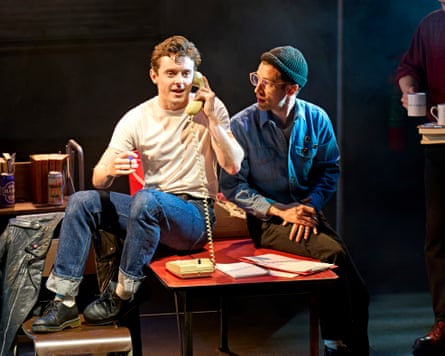
The story begins when Mark (Jhon Lumsden) founds Lesbians and Gays Support the Miners in 1984. That community, he argues, is being persecuted just like his own, in a time of open prejudice towards homosexuality and fewer legal rights. The activists befriend the miners of Onllwyn and collect funds to lift them out of the poverty resulting from the strike.
This production leans into the same joy-filled spirit as the film, maybe for good reason: sentiment sugars tough subject matter, from the normalisation of homophobic abuse to the trauma of coming out to family (and subsequent rejection) as well as the Aids crisis and Margaret Thatcher’s breaking of the miners’ union.
It is all so agile on its feet, the action taking place on the kind of makeshift scaffold and gantry structure (designed by Bunny Christie) on which protest speeches are made and banners brandished. The show pares away some scenes from the film (although it keeps the best lines of the screenplay) but bulks it up with song, movement and an abundant theatrical imagination.
Five narrators tell the story together, sometimes acknowledging us as the audience in direct addresses. These are flecks of self-consciousness, not laboured but fun, especially in a breakout scene by Jonathan (Samuel Barnett), the actor of the group, who has a show-stopping, bittersweet set-piece, You Might As Well Live, about his HIV diagnosis.
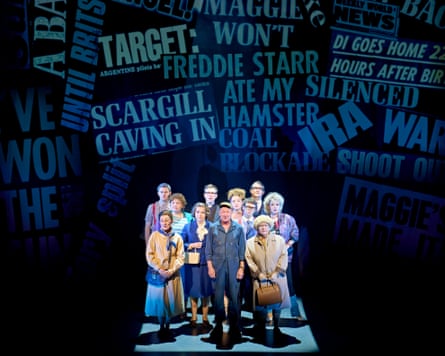
We get snippets of stories from the rest of the cohort: Mark’s right-hand man Mike (Matthew Durkan) stays anonymous, as in the film, and so does Jonathan’s bookseller boyfriend Gethin (Chris Jenkins), whose story of maternal estrangement does not have the same devastating effect as Andrew Scott’s on screen.
However, the storyline on timid Bromley (Lewis Cornay) and his coming out is deeply moving, with the song Mum 1 full of vulnerability and a yearning to be seen for who he really is. Then there is the high of his lovely, declarative I’m Into Guys. It is a shame that Steph (Courtney Stapleton) is the lone lesbian here (she is joined by others in the film) but she is still wonderfully spiky.
The songs are fabulous, even if there are an awful lot of them. Welsh choral music (and a lovely number in Y Ddraig Ar Ein Baner, or The Dragon on Our Flag) rub alongside moving ballads and snazzy disco, and they come with as much wit as heart. They shift gears emotionally too, some tear-jerkers, others naughty (“Two, four, six, eight, is that copper really straight?” is a chant at one protest) and even with edgy black humour around Aids.
What gives this show an added layer of meaning is its example of how coming together can take on prejudice. It feels especially important to revisit at a time when queer rights are being rolled back, when difference is seen as a threat and intolerance is the prevailing currency of conversation on social media.
This is an uproarious musical roadmap, of sorts, reminding us of ways to love each other, and a reminder that to overcome our fears, we must talk to those we are fearful of. As a musical, it becomes more than the sum of its parts: a remarkable piece of British social history, deeply moving, deeply important.