3 months ago
96
3 months ago
96
Men whose abusive behaviour drives women to take their own lives are more likely to get away with their crimes because of proposed law changes, justice campaigners say.
Ministers want to make it harder for inquests to pass verdicts of unlawful killing, which have been crucial in getting justice for women who committed suicide after suffering abuse.
In October last year, Georgia Barter was found to have been unlawfully killed after suffering a decade of domestic violence and abuse. In 2023, an inquest found that Kellie Sutton, whose death was classed originally as a suicide, was unlawfully killed after suffering domestic abuse.
The unlawful killing verdicts followed campaigns by the families of the women.
Harriet Wistrich, the head of the Centre for Women’s Justice, said: “We strongly oppose any reversal of the standard of proof for unlawful killing in inquest verdicts, which would set back the cause of highlighting the issue of recognising the role that domestic abuse plays in relation to the suicides of many women.
“The government’s white paper on policing contains some positive proposed reforms but is badly let down by this concession to the police lobby.”
The plans are part of a package of measures that the government wants to pass to ease the fears of police officers that they will be prosecuted after using force. But justice groups say they will also have a damaging effect on women.
The changes to make it harder to take action against police follow a Metropolitan police firearms officer, Martyn Blake, being put on trial for murder after shooting dead Chris Kaba, who was unarmed, while he was in a car penned in by police vehicles.
Blake was acquitted in 2024, though if the verdict had been different police chiefs and ministers feared armed officers would walk out in protest, endangering the safety of the capital.
The new measures, Wistrich said, would also help officers who were a threat to women stay in their police jobs. “At a time when the government have expressed a strong commitment to tackling the culture of misogyny, racism and homophobia within policing that has allowed perpetrators such as David Carrick to continue serving within the police despite past allegations against them, including excessive use of force, the proposal to weaken mechanisms for individual officer accountability is alarming,” Wistrich said.
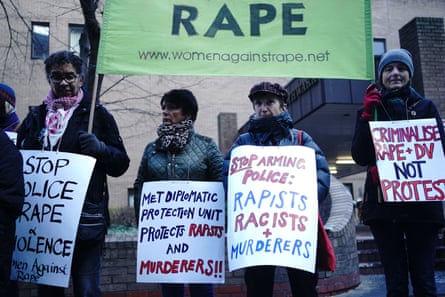
The call for the government to think again is supported in a letter to the home secretary, Shabana Mahmood, by a coalition including Amnesty International, Black Lives Matter UK, the Centre for Women’s Justice and Inquest, which helps families bereaved after state contact.
The letter said that the government has accepted “a one-sided argument in lockstep with the police lobby”, and only a small fraction of complaints led to investigation.
It added: “Police use of force is continually increasing, with over 812,000 recorded uses in 2024-25, a rise of 9% on the previous year. Black people experience police use of force at over three times the rate of white people.”
Deborah Coles, the executive director of Inquest, said: “Changing the law to please the police lobby – at the expense of bereaved people and victims – will simply advance the culture of impunity.
“This letter reflects our dismay at the government’s plans to weaken police accountability in the face of well-documented misogyny, racism and violence.”
Mohannad Bashir, whose brother died after being restrained by Gwent police, against whom no wrongdoing was found, said: “Mouayed’s death continues to have a huge impact on me and my family but the system favours the police more than bereaved families.”
A Home Office spokesperson said: “We know there’s more to do to maintain both public and police confidence in police accountability. That’s why we’ll be commissioning an independent, fundamental end-to-end review of the police misconduct system.”