3 months ago
133
3 months ago
133
Fallow deer are grazing under ruined brick walls in the house where Lady Jane Grey was born. It’s a moody spring day at Bradgate Park in Leicestershire and there are few visitors. Instead, there are fieldfares in the hedges and skylarks singing in the mist. I’m walking, through bracken and craggy outcrops, towards Old John Tower, a folly that looks like a giant beer mug on the hill ahead.
It sometimes feels as though England’s much-photographed beauty spots get more booked up and overpriced every day. But there are scenic corners of the country that still fly under the insta-radar and Charnwood, around Loughborough, is one of these. The largest borough in Leicestershire, Charnwood is the area between Leicester and the Nottinghamshire border. Its gentle wooded hills and well-kept villages offer country walks to gourmet pubs and cafes. It’s like a cheaper, quieter Cotswolds with better transport links.
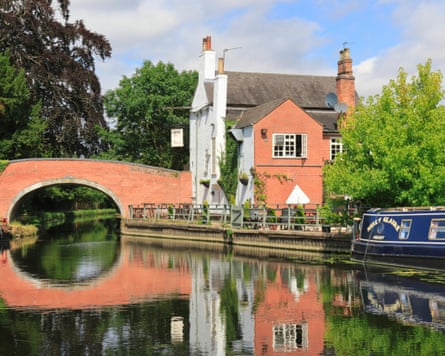
An hour and a quarter by train from London or 50 minutes from Sheffield, Loughborough is easy to reach. The town makes a good base for a Charnwood holiday, with several immersive, weatherproof experiences and easy rural connections by bus, rail and steam train.
The atmospheric landscapes around popular Bradgate Park are just a few miles south of Loughborough. Bus 154 winds past thatched and half-timbered cottages, rugged granite chimneys and drifts of garden snowdrops. Outside the Badger’s Sett pub, near Cropston Reservoir, you can hop off the bus into Causeway Lane, a quiet stony track leading to Bradgate Park with wide views over the water.
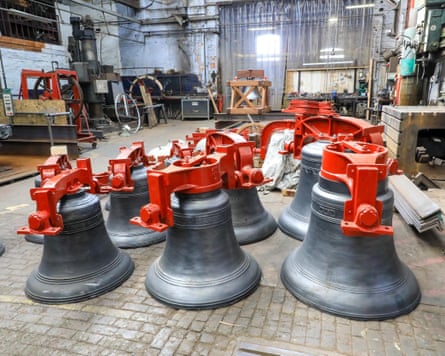
Next morning’s mist turns to rain and I head to the UK’s last remaining bellfoundry for a tour. Fifteen minutes’ stroll from the cafe-lined lanes around the market, the museum was relaunched in 2024. Inside the foundry, there are showers of sparks from a metalworker’s bench, a smell of wood shavings in the bell-wheel workshop, and an 18ft-deep sandpit for cooling casts.
Photograph: John Keates/Alamy
Loughborough Bellfoundry has made bells for cathedrals around the world, from York Minster to Sydney’s St Andrew’s, including Britain’s biggest church bell, Great Paul, for St Paul’s Cathedral. Shiny new and refurbished bells are destined for churches in Truro, Paisley, Betws-y-Coed, Stow-on-the-Wold. Guide Lianne Brooks is a keen bellringer, ringing in four church towers each week. “One pull on a rope and I was hooked,” she laughs. As she demonstrates on the foundry’s bells, the metal vibrates with a low seismic hum. The bellfoundry’s museum has a £5 entry fee for adults, and tours are available from £20.
The 1950s-style heritage Great Central Railway (GCR) station, a couple of minutes away, includes another packed museum and a Brief Encounter-esque refreshment room. With a whistle and whoosh of steam, we’re off, past banks where badgers live, to 1940s-themed Quorn and Woodhouse station. There’s a Naafi-style cafe, with a blazing log fire and radio playing wartime songs, in an old air-raid shelter under the railway bridge.
More than 700 volunteers work on GCR, doing everything from shovelling coal to serving tea. “Dig for Victory” says a sign above trackside gardens, where pink-and-lime-green rhubarb unfurls in pale spring sunshine. Drivers are training new recruits. “If one of us old buggers suddenly collapses, we’d need someone to take over,” says chief fire inspector Ken Scriven, a long-term volunteer driver and former mainline fireman.
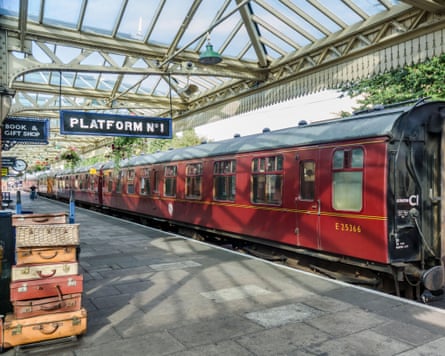
GCR has ambitious schemes, with planning permission granted in 2025, to link the railway through to Nottingham, one of Europe’s biggest heritage rail projects. The photogenic stations feature regularly in TV series, from The Crown to Happy Valley. Much of the recent Netflix drama Seven Dials takes place on board one of GCR’s steam trains. Rolling on towards Leicester, we cross the bullrush-framed Swithland Reservoir, where dining cars pause to watch swans glide over sunset waters (GCR day tickets £24/£13 for adults/kids).
I’m staying at Burleigh Court on Loughborough’s crocus-carpeted university campus on the edge of town (doubles from £75, room only). At night I can hear tawny owls hooting from nearby bluebell woods. The Sprint Bus links the campus with the town centre and railway station every 10 minutes. There’s art on the walls by Loughborough students, carpets made from recycled bottles, and a spa with a decent-sized pool. A £4.5m refurb in autumn 2024 introduced the stylish new Fifty Restaurant, where half the meals are plant-based, and a bar, named after Lionesses Carney and Scott, both Loughborough alumnae. Cocktails include sustainable drinks using leftover veg. I sip a chocolatey purple Beet the Waste while a fellow-drinker braves the Cauliflower Colada.
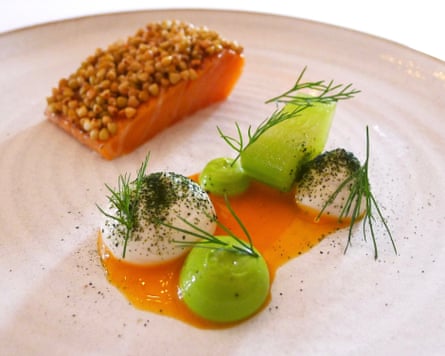
Leicestershire’s only Michelin-starred restaurant is John’s House, a beamed, brick building on a working farm in the village of Mountsorrel, 20 minutes from Loughborough on bus 127 the next day. “It’s a good job he can cook,” jokes John’s brother Tom Duffin; “he was bugger-all use on the farm.” Nearby, the sheep are loudly hungry. “I hear that noise in my nightmares,” grins a young farmworker, lugging a bag of feed. The farm’s hogget, with locally foraged hen-of-the-woods mushrooms, features in today’s lunch (three courses, £49). Fresh venison arrives from Bradgate Park. The evening’s tasting menu (from £100) includes fallow deer with walnut wine as well as Tom’s potatoes with smoked eel, crispy chicken skin and lovage. Stonehurst Farm itself has a nostalgic smell of baking and wet straw. Tom’s daughter, soil scientist Zoe, shows us round pens of rare curly-headed Leicester Longwool sheep and gingery Tamworth pigs, destined for summer hog roasts. Tiny orange piglets are climbing over a spotted sow. There are Easter lambs on the way and a new indoor play barn.
At drier times of year, it’s a pleasant two-mile walk from Mountsorrel along the river to the pub-rich village of Barrow upon Soar. Today, the Soar has spilled onto the floodplains, leaving a duck-dotted lake where the path should be. Luckily, it’s not much further by road, taking a path known as The Slabs. Stepping out of icy drizzle into the fire-warmed Blacksmith’s Arms feels miraculous. An elegant mushroom wellington with deeply savoury mash goes well with golden beers from Charnwood Brewery. Trains from Barrow-upon-Soar station are hourly and take only five minutes to get back to Loughborough. Outside the window are boats on willow-hemmed waterways and flocks of wintering geese.
This trip was provided by Discover Charnwood