3 months ago
77
3 months ago
77
A strong contender for the most depressing four words in the English language – after “I’ve started a Substack”, obviously – is the formulation, “topical sketch comedy show”, a line that will yank many of us back to painful memories of late night Channel 4 in the 90s. British telly has never excelled at this live comedy format, or maybe, depending on your view, nowhere has. Near the end of this month, Sky is launching a UK version of Saturday Night Live, that most revered of American staples and a holy grail for US comedy writers going back to the 1970s. If it seems like a strange import, it may be that, as the dusty original fields kicks from all sides, SNL UK has a prime opportunity to reboot the franchise.
The curious question for observers is whether there are things so rooted in their original context they can’t be expected to travel. We’ve seen a lot of this going in the other direction, with disastrous US remakes of British TV shows, such as Skins (cancelled after one season), The Inbetweeners (ditto) and any British show featuring actors who look ballpark normal, recast with Americans who look like Kristi Noem. (For my money, even the US version of The Office didn’t really work, although nine seasons and everyone else say otherwise). US television imports to the UK, meanwhile, have mostly been gameshows or reality TV, so SNL is a newish experiment. And yet the kneejerk response to news of its commissioning – see John Oliver, calling it a “terrible idea,” per GQ’s reporting – has been overwhelmingly negative.
It shouldn’t be. After all, SNL is a broad format; if the UK version follows the American original, it’ll be a Saturday night show written from scratch every week by a large team of writers plus the 11 comedians who play all the parts, and an opening monologue by a big-name celebrity. For those who haven’t seen SNL, you may be familiar with details of the show from its proxies – the terrifyingly quick turnaround so faithfully and tediously documented by Aaron Sorkin in his big flop of the mid-2000s, Studio 60 on the Sunset Strip, and with much more success by Tina Fey in 30 Rock.
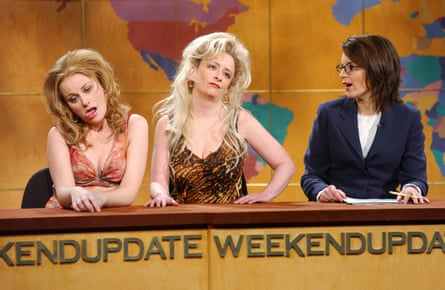
A bigger challenge for the UK cast, which has been drafted after a huge, nationwide casting call, is that at this point in SNL’s 51-year history, the show’s appeal is almost entirely rooted in nostalgia. Anyone who spends more than five minutes in the US is guaranteed to run into a Gen X American who would like to share their memories of watching SNL as a child. This will not be a short conversation. They will want to share with you their favourite sketches, cast lineups, the ones who should’ve had bigger careers after the show, the ones who were wrongly overlooked at audition stage, some trenchant Thoughts About Lorne Michaels, and a lot of SNL lore that can only be matched for passion in this country by Gen X chat about Bagpuss, or someone reciting the shipping forecast. (If you’re very unlucky, the American monologue on SNL history will bleed into recollections of Steve Martin’s comedy albums from the 1970s, and before you know it you’ll be nodding along to observations about Sid Caesar.)
Here’s the thing: I’ve rarely met a British person living in the US who has actually found SNL funny. It’s hard to say why this is. The comedians have always been top notch, from Kristen Wiig and Amy Poehler to Fey and Will Ferrell. And going back to the 1980s, Billy Crystal and Eddie Murphy. But – and I say this as someone who loves Americana – it’s somehow just very, very American. It doesn’t matter how pointed the comedy is, behind the sharpness of the material resides a kind of innocence bordering on indulgence. The brutally high turnover, meanwhile, means that a lot of the sketches are middling at best. And to those who didn’t grow up with the show, the bad wig-based nostalgia appears dated. I imagine this may be part of the appeal to the British producers; the opportunity it affords to invite British families to sit down on a Saturday night and create our own tradition.
Ultimately, its success will come down to the ratio of good material to middling, and how willing the audience is to sit through mild amusement – which can be soothing when you know all the characters! – to get to the occasional out-of-the-park sketch. About once every 10 years there’s an SNL sketch so on the money that you have to watch it hundreds of times and everyone talks about it for ever. The last great one was, to my mind, Kate McKinnon’s Fire Island sketch from 2017. Nine years on and my friends and I still collapse hopelessly with laughter if anyone says: “That’s a wolf sanctuary, all right.” Let’s see what the Brits can do.
-
Emma Brockes is a Guardian columnist