3 months ago
136
3 months ago
136
Now that trainers have supplanted smart shoes for so many occasions, and people replace them as often as fashion and budget allow, shoe maintenance is becoming a lost art. But if you love your shoes, it’s well worth pursuing. How can you keep your favourite pairs going for as long as possible? We asked cobblers for their dos and don’ts.
Know that there is little a cobbler can’t fix
It is time to wise up about shoe care, says Joey Cope, owner of Cobbler Cope in Newquay. “We just kick them off our feet at the end of the day, then the next day. They are getting wet, dry, wet, dry. It takes its toll on shoes.”
The UK dumps 149m pairs of shoes in landfill annually, says Chris Hulse, co-owner of Sole and Trail in Kendal. “This is unacceptable when the vast majority can be fixed. Sometimes all it takes is a small gluing or stitching job, and you’re only paying £4 – then those shoes might last for another 12 months or even longer.”
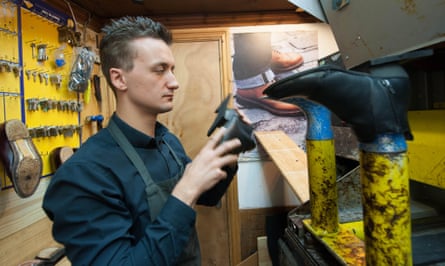
“I turn away very little,” says Cope. “With holes in shoes, we can put patches behind and make it look as best as possible from the outside. For splits down the sole, we can put a piece of leather to reinforce the shoe and feed that underneath the insole.”
This goes for vegan shoes, too. “If a shoe comes in and it is a rubber or plastic construction, we can still repair it,” says Antony Frith of The Shoe Healer in Doncaster. Lately it’s become possible to get rubber replacement soles for worn-out trainers. “It is a sought-after repair,” says Cope, “because trainers are expensive. If you could pay a quarter or half the price of a pair of trainers for a resole, and your shoes are back on the road again, then job’s a good ’un.”
“When buying shoes, often it is about comfort more than anything,” says Cope. “A lot of people try them on and say, ‘These are really comfortable,’ but they don’t think about what they’re made of.”
When shopping for leather shoes, he advises, check the quality by “looking inside the shoe to be sure that it is leather-lined – that is where the quality starts. If you can lift the insole a bit, have a look to see if it is cardboard. Shoes that are made on a cardboard insole aren’t going to last.”
Vegan shoes can be tricky. “I get that people would like to avoid using animal products, but vegan leather is a tricky one,” Cope adds. “Anything that is trying to look supple generally can’t handle day-to-day wear.” He recommends looking for vegan shoes with a sturdy sole and lots of padding and reinforcement that will help to hold the shape.
You can also try charity shops and resale sites like Vinted, says Trish Clarke, AKA Morecambe’s The Lady Cobbler, for “a really good pair of well-looked-after leather shoes for a cheap price.”
Get new shoes resoled
If you buy a leather-soled shoe, have a thin cover sole put over the top straight away, advises Frith. “A rubber sole will last twice as long as a leather sole. It doesn’t affect the balance or look at all, because it’s only about 2mm, but they are super-hard-wearing. And the biggest thing is, it gives you some grip. People come into the shop having had a fall because they have walked into a shopping centre wearing leather soles, and the floor is a bit wet, and they are like Bambi on ice.”
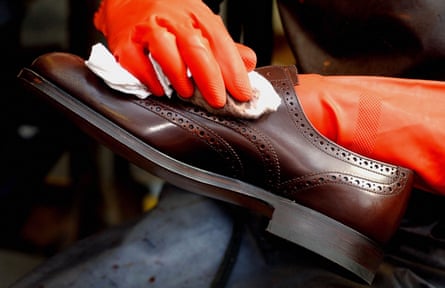
“Leather shoes need feeding,” says Clarke. “Plastic shoes you can wipe over to get any dirt off. But to keep leather shoes going, you need to feed them.”
“I use oil with every pair of shoes that come into my shop,” says Cope. Water can damage leather over time, “so an oil of some form helps to keep the leather supple and stops it drying out as much. Dubbin [wax] doesn’t soak in as well. It is a great waterproofer, but you have to make sure you wipe the majority off, whereas with an oil the leather will just absorb it.”
Rotate and recover
“This goes for both smart shoes and a pair of trainers,” says Hulse. “If you rotate your pairs, it gives the midsoles time to decompress and dry out. Everyone’s feet sweat and it is absorbed into the materials. If you give your shoes time to dry out, that will make them last a lot longer.”
“Two pairs last three times as long,” agrees Frith, who suggests wearing walking shoes of some sort on the way to work. “When you get to the office, put your best shoes on. You look the part and you’ve not scuffed or scratched them.” Frith is not a fan of trainers: “There’s a clue in the name. I have customers walk in with a pair of trainers on and I give them a bit of ribbing and say, ‘Have you come straight from the gym?’”
Don’t let them get too worn out
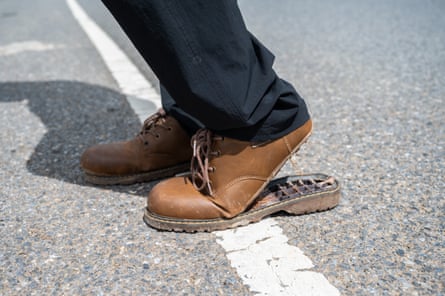
It’s important not to push your footwear past the point of no return, says Cope. He says he often sees heels that are completely worn down, or have even dropped off, and people are still wearing the shoes. “We can do a lot of repairs, but it’s just down to them bringing it in time.”
Prevention is better than cure, says Hulse. “If you know that you can wear out the toe or heel area, there are toe and heel hole preventers.” Put them in before they get worn down, he adds: “Don’t wait for it to happen.”
Keep them clean
“Every time you wear a pair of shoes and you’re walking around the streets or in the office, they are picking up bits of dirt and stones, and that acts like an abrasive and breaks down the flex points in the shoe and the soles,” says Hulse. You don’t need fancy shoe cleaning products. “When I clean my trainers at home, I use a damp cloth with no cleaner on it, just some warm water.” Cope warns against using washing-up liquid as “it is slightly greasy and might leave a film on the shoe”.
Rediscover polishing
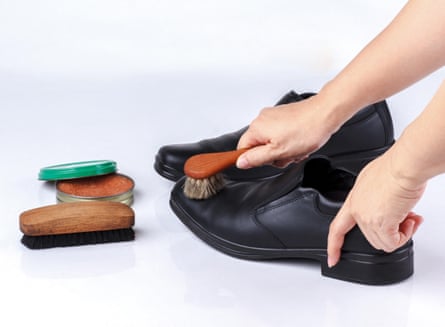
Hulse says to use the best possible brand of polish you can get your hands on, such as Famaco or Saphir. “You just need a little bit of water and a bit of polish. Use a soft cloth and a horsehair brush, which are absolutely fantastic at bringing out a really nice shine.”
“Use polish very sparingly,” says Frith, who puts it on with an applicator brush. “Then leave it for a couple of minutes before removing with a soft brush and then shining it up with a duster.”
“The biggest mistake people make,” he adds, “is overpolishing their shoes. You can polish the toe, round the toe area, and you can highly polish (or ‘bull’) with a little cloth around the counter – the bit at the very back, where your heel sits with a shoe or a boot. Everywhere else you should be super-light with your polish.”
A tin of polish should last a couple of years if the lid is on properly. If you open the tin and the polish has dried up, it is better off in the bin than on your shoe, Frith says.
Never put shoes in a washing machine
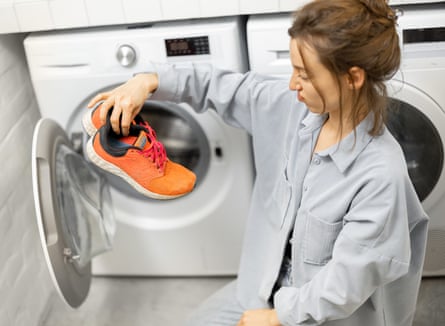
Throwing your trainers in a washer or tumble dryer is “a big no-no”, says Hulse. “We see it all the time. Sometimes they’ll come out brand spanking new, but it’s guaranteed that it will have affected some of the components within that shoe.”
Frith agrees: “Every day, somebody walks into the shop and puts a beautiful, fresh, clean-smelling, gorgeous trainer on the counter – and two seconds later, they pull out the sole,” he says. “The shoe’s been in the washing machine and it has been too hot and the biological powder has melted all the glue.”
“You can buy a trainer cleaner,” says Clare. “You spray it on, lather it up and then take it off with a sponge.” Or, for really stubborn stains, some cobblers will offer a steam cleaning service, says Cope.
Don’t dry with direct heat
“Never, ever force-dry a pair of shoes,” says Hulse. “It can affect the manufacturer’s glue,” which may cause them to fall apart. Resist the urge to put them on a radiator. Instead, allow them to dry slowly, having filled them with newspaper or wooden shoe trees, which are a worthwhile investment. “Keep them at room temperature or somewhere where it’s not too hot or cold and they’ll dry out naturally,” says Hulse.
“You get hikers who like to put their feet by the fire to keep them warm. That will reactivate the glue and make the sole unstick,” says Cope.
Stinky shoes are salvageable
At home, Hulse recommends beanbag shoe deodorisers that can miraculously take a stink away. “In our shop, we’ve got a special cleaning machine that neutralises everything on the shoe and kills the smell. So you can have a really dirty pair of shoes and they’ll come out and they won’t smell of anything. It’s incredible technology.”
Shoe squeaks can be banished, too: “It usually happens with shoes that are older, and they’ve got wet at some point,” says Frith. “It might be that the outer sole has separated from the insole, and as your foot bends, those two now rub together and create a squeak. If it’s a good-quality shoe, then it’s always worth going to the local cobblers to see what can be done.”
Don’t try any old glue
Shoe glue exists for a reason, says Hulse. “Over time, the manufacturer’s glue does dry out. People go into the garage or under the sink, and they’ll find something which is sticky. When you start adding something which is not meant for shoes, it makes it even harder work to fix, or it just becomes unfixable.”
Use a shoehorn
Frith says he tells off his customers for not bothering to untie their laces to put shoes on, as it can damage the back of the shoe. “You can buy elastic laces if you’re going to be that lazy.” Alternatively, use a shoehorn.
Replace the laces
“Tatty laces spoil a shoe,” says Frith. “A new pair of fresh shoelaces in a tired shoe just lifts it completely and makes it look lovely again.”
Store them in shoeboxes
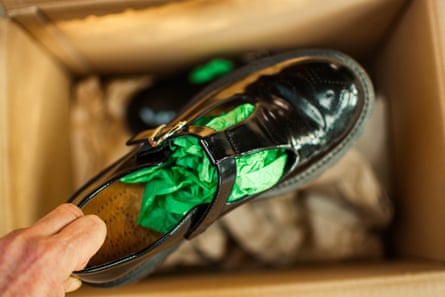
Hang on to the box your shoes came in, says Frith, and if you are not wearing them on a regular basis, store them inside. This keeps them out of the sunlight and the cardboard will help absorb any excess moisture. “I love to see people come in with the original box,” says Frith. “You know they are people who look after their shoes.”