3 months ago
165
3 months ago
165
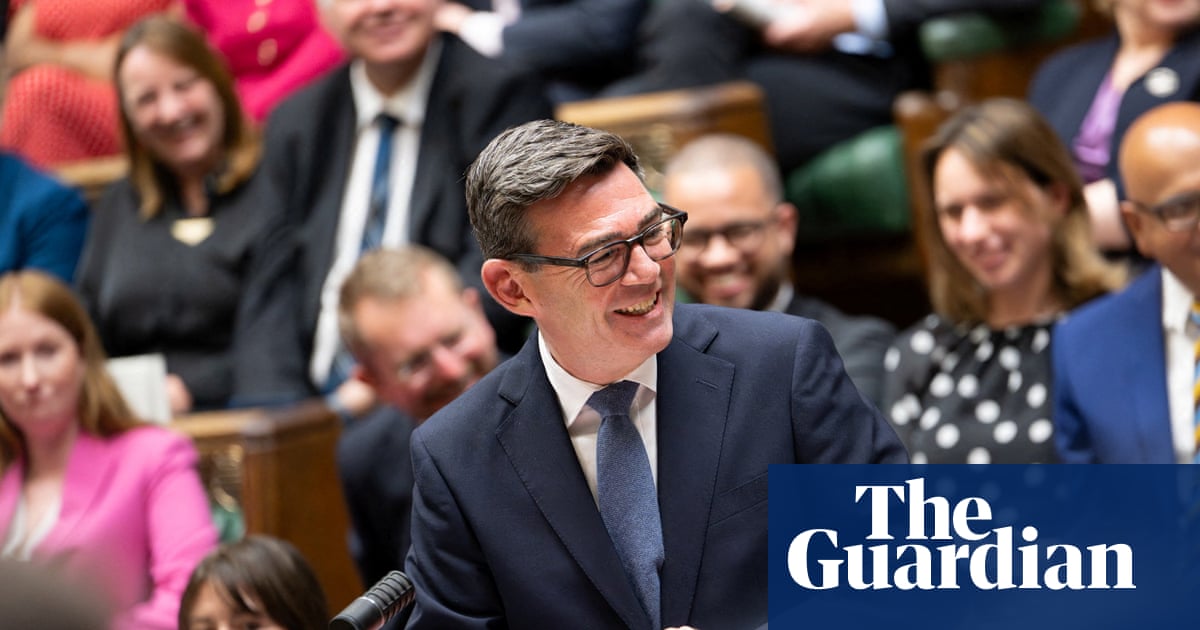
Sweden’s prime minister has promised to put IVF at the heart of his re-election campaign as he tries to win over female voters amid the country’s record low birthrate.
Ulf Kristersson’s government recently increased the number of state-funded IVF attempts granted to aspiring first-time parents from three to six.
Now he has said that if his party, the centre-right Moderates – whose minority-run coalition depends on the support of the far-right Sweden Democrats – hold on to power in September’s general election, they will also fund IVF for additional children.
It comes after official statistics showed this year that, despite often being cited as one of the best countries in the world to have children, Sweden’s fertility rate sank to 1.42 last year, the lowest since 1749 when records started.
“It is a level we have never had in Sweden,” Kristersson, who has three grownup children, said recently, speaking on his phone-in podcast. “And that got me thinking. It could be because lots of people don’t want to have children, but I am quite sure that it is also because quite a lot of people never get those children that they really would like to have.”
While under the new law those trying to have their first child are eligible for six rounds of free IVF, additional children are not funded, with a single attempt costing about 50,000 kronor (about £3,975).
Promising to also fund attempts for those trying to have multiple children as an election promise, he said: “There is nothing wrong with having one child, but a lot of people who have one child also want to have a sibling as well.”
While he said he was “definitely not getting involved in how many children each family should have”, adding that it is “a really private thing”, the debate has prompted some commentators to accuse politicians of trying to “enter the bedroom”.
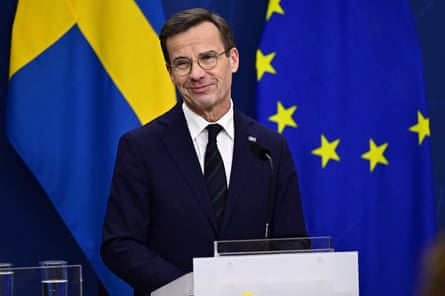
But it is an issue the government is taking very seriously. Following in the footsteps of neighbouring Norway, it has commissioned a study into how to reverse the trend, warning that if it continues at the current rate each generation will be about a third smaller than that of their parents.
The health minister, Elisabet Lann of the Christian Democrats, which is also in favour of extending IVF to siblings, said: “We want to give more people the possibility to fulfil their family dreams and wishes to become parents. One in six couples in Sweden are involuntarily child-free. It affects their quality of life, social life, mental health and their whole existence is characterised by their longing to start a family.”
Opposition party the Social Democrats, Sweden’s largest party, said more help is needed for those who want to have children, but warned against IVF for siblings being used as “short term political moves” or of offering “false hope”.
Fredrik Lundh Sammeli, the Social Democrats’ social political spokesperson, said: “The issue of demographics and sinking birthrate is an important issue for politics. We need to build a society where people feel optimistic and belief in the future and where the public sector also removes obstacles for people who want to have children.”
But some experts are not convinced that this IVF strategy will have the desired effect to the population or to voter intention.
Martin Kolk, a sociologist and lecturer at Stockholm University, said that in Sweden – which has generous parental leave and where childcare is heavily subsidised – the reason for people having fewer children is more likely to be cultural change. Becoming a parent, he said, is seen by some to be “competing with other lifestyles”. He said: “That other aspects of life, so career, hobbies, friends, self-fulfilment, play a little bigger role in life, and then perhaps family building and childbirth plays a little smaller role.”
Helena Olofsdotter Stensöta, a political science professor at the University of Gothenburg, said that, while their election pledge sends a “symbolic sign that the Moderates are thinking about women”, it is unlikely to have much material impact on the relatively well-off groups that the party tends to appeal to. “Moderate voters are mostly men. If only women had voted in the last election, we would have a red [Social Democrat-led] government.”
What will be more important, she said, is whether coalition partners the Liberals get enough votes to get above the 4% threshold needed to remain in parliament. And, so far, Moderate and Sweden Democrat voters “have not shown any big interest in saving the Liberals, which is also rooted in them competing between themselves for the position of prime minister”.