3 months ago
172
3 months ago
172
The great showman has spent the last 50 years on stage, followed by his adoring “fanilows” - but he’s not slowing down yet. Here, he talks about cancer, ridicule and roaring success
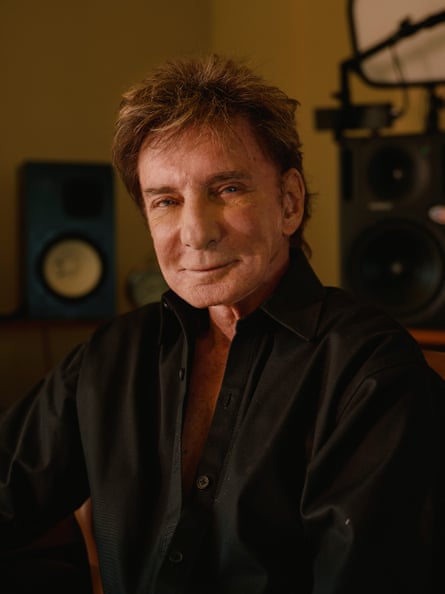
His name is Barry, he is a showman – as we all know. But late last year, after more than 50 years of constant performing, it began to look like the Manilow show was coming to an end. In December, the 82-year-old singer announced he was about to undergo surgery for lung cancer, and postponed his planned live shows. Thankfully, the cancer had not spread and the treatment was successful. But around the same time he released a new single, ominously titled Once Before I Go. The accompanying video showed him saying goodbye to his palatial quarters at the Las Vegas Westgate resort, where he has had a residency for the past eight years, and wistfully reminiscing over old costumes, intercut with footage of him in his 80s prime. It sure looked as if he was shutting up shop.
But no: “That was just an accident,” says Manilow of the video. Really? “Yeah, we didn’t do that on purpose.” The song was actually written in the early 80s by veteran songwriter Peter Allen, he explains, but he felt he was too young to sing it when he first heard it. “It’s a beautiful song and it’s got nothing to do with me. It’s saying goodbye to a romance, you know. But it just so happened that it sounds like I’m talking about myself.” Far from going anywhere, Manilow’s got a new album out next week, and a string of new tour dates lined up.
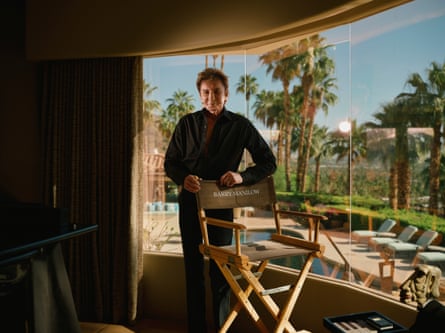
We’re in Manilow’s study at his hilltop home in Palm Springs, California. Its centrepiece is a black grand piano in front of a panoramic window, which looks out over the swimming pool area and across the city to the mountains beyond. The shelves are cluttered with awards and memorabilia (an Emmy serves as a doorstop), and plastering the walls are framed photographs of Manilow with various dignitaries including Bill Clinton, Al Gore, Margaret Thatcher (surreally, they were on Michael Aspel’s chatshow together in 1984) and the then Prince Charles and Diana, Princess of Wales, in 1983 at the Royal Festival Hall. “She was a fan. She must have dragged him to that concert,” he says. They met backstage after, “but she could not look at me. Every time I tried to talk with her, she looked at the floor.”
The lung cancer was “scary”, he admits. “Edna, my mother, died of lung cancer. And I thought ‘No. I’m not going to let this happen.’ And I was right. They got rid of it, and they threw it in the garbage. I was lucky because no chemo and no radiation. All those horrible things that I could have had.” He developed pneumonia, though, and was in intensive care for a week. He lost a lot of weight, and his voice sounds admittedly croaky. “But I’m back,” he says. “I feel fine. I’m not sure my voice feels fine yet, but I don’t want to cancel this tour. I’m so looking forward to it. So, I’m going to do it whether I can sing or not.”
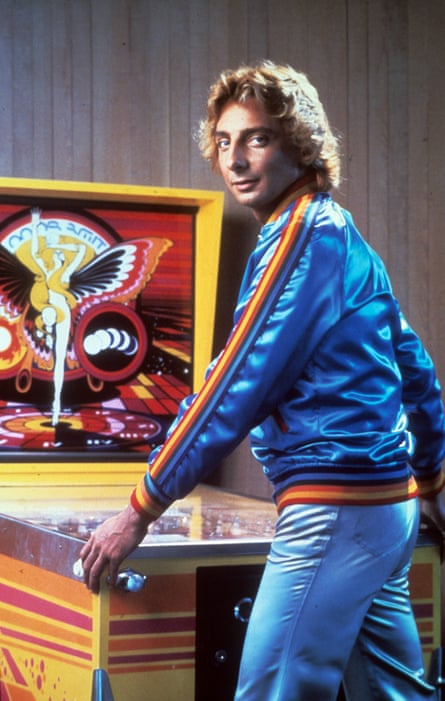
If you wanted to get a laugh, you would mention my name. It was relentless
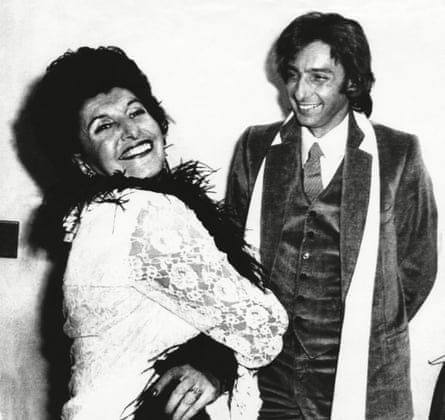
Edna, my mother, died of lung cancer. And I thought: ‘No. I’m not going to let this happen’
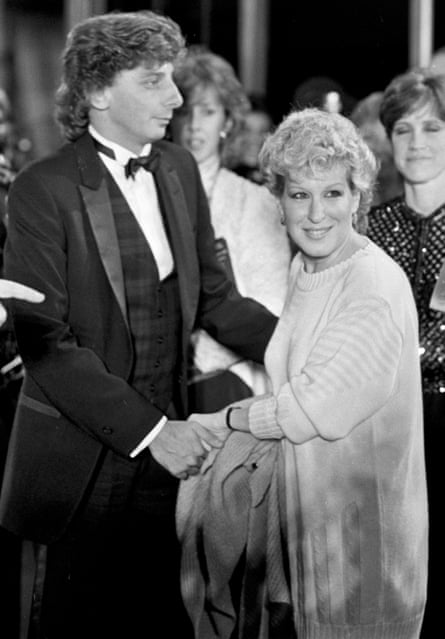
Photograph: Bob Riha Jr/Getty Images
Bette Midler did The Star Spangled Banner in a bathhouse and everybody stood up and their towels fell down!
Manilow has already threatened to quit several times in his career. As far back as 2004 he was on his One Night Live! One Last Time! tour. There was also 2015’s final tour, but he was back in 2024 for another string of “farewell” gigs, still belting out the familiar hits: Copacabana, Mandy, Could It Be Magic, It’s a Miracle, I Write the Songs … He could quite happily retire; what keeps him coming back? “I’m a creator. I like creating,” he says. “The problem is, what do you do with it when you’re done creating? You have to promote it.”
And yet, by his own account, Manilow has always been a reluctant showman. Not that you would guess from the continual touring, the theatrical stage shows, the choreographed numbers, the flamboyant costumes and the legions of adoring “fanilows”. “My first love is not being a performer or even a singer,” he protests. “I don’t consider myself a singer; I consider myself a musician. And you know, if this wonderful part of my career hadn’t exploded the way it did, I would be playing piano in some Paris bar and I would a happy guy, really.”
The way Manilow tells it, he was thrust into the spotlight almost by accident. He had a passion and a talent for music from a young age but his ambition was to be an arranger: organising the music for somebody else to perform. Starting out, he happily wrote for and accompanied other singers on the piano. He played for Bette Midler, most memorably at New York’s notorious Continental Baths – the centre of the city’s underground gay scene, in the early 70s. “There was a whole bunch of guys with towels around their waist. She would try to do The Star-Spangled Banner so that everybody would stand up and the towels would fall down: ‘Let’s check out the merchandise!’”
He produced Midler’s first album, The Divine Miss M (the two are still good friends). Then someone put him in front of a microphone, someone liked his songwriting, someone gave him a recording contract. And before he knew it he was a solo artist. Even when Mandy became a No 1 hit in 1974, “I was hoping it would go away, because it just was not what I was planning on doing with my life,” he says. What kept him going in the beginning was the audiences. “I don’t know what they saw, because I stunk. I really was bad, and they kept saying in their own way: ‘Keep going, we like it.’”
Success came very fast, he says, and everyone was shocked that, of all people, it was happening to him – the lowly accompanist. He still is: “I don’t think I’ve ever really gotten used to it … It’s just not who I am. I’ve figured out how to do it. And the way to do is to be honest with these audiences. Because I don’t know how to not be honest on that stage.” Although he admits: “I change into a bigger version of me when the spotlight hits me. It’s the same guy, only it’s louder.”
That sincerity in the face of cheesy sentiment has been key to his success. Manilow’s music has never been cool. It typically harks back to the classic American songbook, musical theatre, torch songs, a time unsullied by punk, disco, new wave, or even electric guitars. His songs often build to orchestral climaxes with choirs and strings and key changes. The fanilows adored him, but the critics hated him. In his heyday, Manilow was singled out as the epitome of mediocre, unchallenging schmaltz. His looks were also the subject of ridicule. Britain was the worst: the music press and other musicians slated him – even Phil Collins described him as “soft, spineless music”.
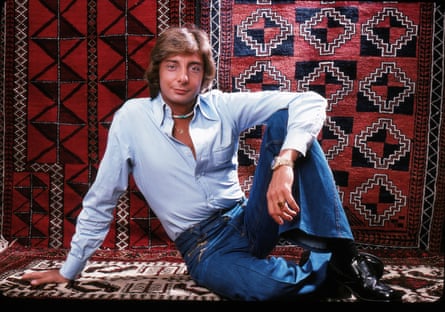
“It was as if I’d hurt somebody in their family,” says Manilow of the critics. “It lasted for so long – from putting me down for the songs, and then putting me down for what I looked like. If you wanted to get a big laugh, you would mention my name. It was 15 years of relentless, horrible reviews.”
How did it make him feel?
“I would stupidly read some of this stuff and I would go into my self-pity, and I’d pull the covers over my head. And then I would get dressed and go to the sound check, and that was that. Because I didn’t agree with them.” Meanwhile, Manilow was selling millions of records, and hosting TV specials and huge concerts, especially in Britain, ironically: 40,000 people came to see him at Blenheim Palace in 1983. It was like Glastonbury for the mums of middle England (Diana’s approval can’t have hurt).
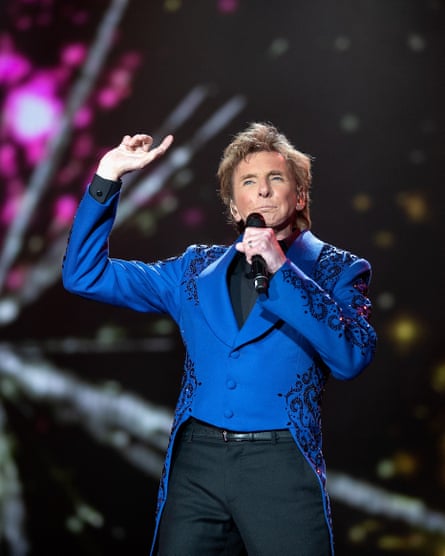
As ordinary as some people found Manilow’s music, his upbringing was anything but. His mother, Edna, had him when she was 19; his Irish American father left when he was a baby. So he grew up with Edna and her parents, an only child, in what was then a down-at-heel Brooklyn. Edna later remarried, and although he loved his stepfather, the couple drank and argued a lot, it seems, but “even though everybody had their own shit I always felt loved”. He only met his biological father, a truck driver for a local beer factory, twice in his life, he says. Once, when Barry was 13, he dropped by and gave him a reel-to-reel tape recorder as a present. “He said: ‘I’m your father.’ And: ‘I think you’d like this.’ And before he could say anything else, grandma came running out of the apartment building that we lived in and was yelling at him: ‘Get outta here!’ And so he ran back to his truck and took off.” The second time was in his dressing room, years later, when he was an established star. “He came in and said: ‘You did a real good job out there.’ And that was it.” He doesn’t know why his family hated his father. He never asked, he says. “He wasn’t real to me. I never really thought about it.”
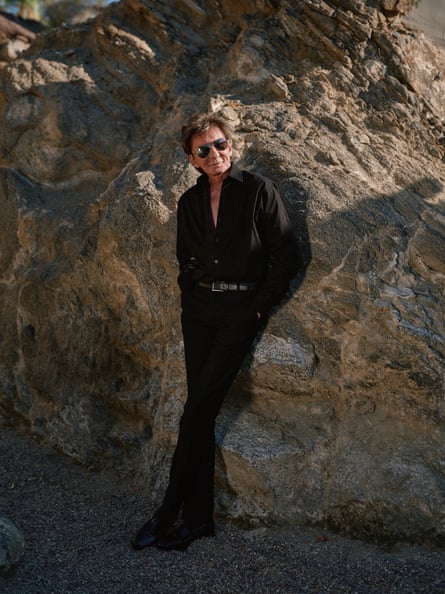
Being gay came on very slowly to me … Coming out was such a non-event. Everybody knew
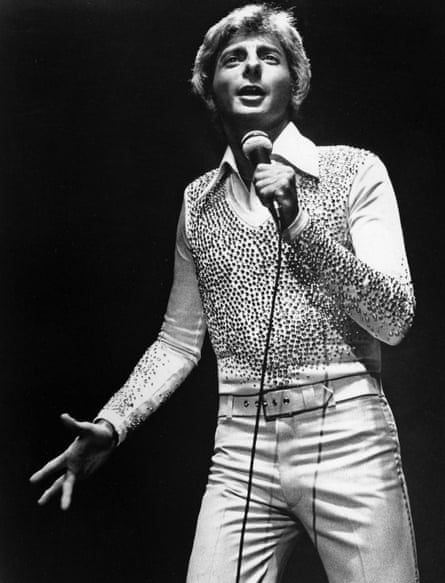
When Mandy went to No 1, I hoped it would go away ... it was not what I was planning on doing with my life
His mother, meanwhile, seems to have clung to him. When he moved to an apartment in Manhattan in the early 70s, Edna one day told him she had moved into the apartment above. “I was such a nice guy, I didn’t say: ‘Are you fucking crazy?’ I pretended that that was a good thing, and that was the last thing I wanted.” Edna repeatedly attempted suicide. One time she phoned him from upstairs to say she had taken an overdose, and he had to take her to hospital. She went to rehab and recovered, and he supported her once he made money, but he felt he had to look after her. “Guilt. Jewish guilt,” he says.
Manilow’s own attempt at a conventional relationship was short-lived. He married his high school sweetheart, Susan, aged 21 in 1964, but they separated within two years. He attributes the break-up to his falling in with the musical theatre crowd he’d started working with after finishing his day job, at the mailroom at CBS in New York. “They were showbiz and they knew stuff that I’d never even heard of musically,” he recalls. “I never wanted to leave that place, but Susan was waiting with dinner for me. That’s why we split: because I was going to be a very bad husband to her.” He presents it as a choice between domestic stability and music, and he chose the latter. As he puts in his memoir: “My passion for music had obliterated everything in its path.”
It was not long after this that Manilow began to discover his sexuality, although “being gay came on very slowly to me”, he says. He met his husband, Garry Kief, in 1978 and they have been together ever since. He only went public about being gay in 2017, in an interview with People magazine. It was simultaneously front-page news and not really a surprise to anyone. “It was such a non-event,” says Manilow looking back. “Everybody knew. I wasn’t hiding from it.”
His mother, who died in 1994, was also fine with it, he says. “She just loved Garry. It was a phone call, and I said: ‘Ma, you know I’m gay? And Garry and I …” She said: ‘Yeah, I always knew that you were gay.’ I said: ‘You did?’ She said: ‘Oh, yeah. When you tried to put my high heels on …’ And I said: ‘Stop! Stop!’” He’s laughing.
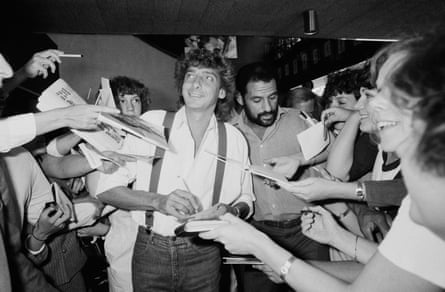
It was a different era, though. “In the 70s, when I was starting off, it would have ruined me, it would have killed my career,” says Manilow. “Not just me, but the record company and everybody that worked for me. It would have hurt everybody. So I couldn’t be honest about that.” Even in the 80s, while British artists such as Boy George, Bronski Beat and Soft Cell were breaking down barriers, most gay performers still had to play it straight, like George Michael, Freddie Mercury and even Elton John, who married a woman in 1984.
Manilow’s mostly female fanbase has not been deterred at all. He still gets knickers thrown at him on stage – “they’re much bigger now, those knickers,” he laughs. But it’s tempting to re-read some of Manilow’s most heartfelt songs in light of his personal history. Break-up songs such as Tryin’ to Get the Feeling Again, This One’s for You, Ready to Take a Chance Again, Even Now, Mandy – often they’re lamenting failed or past relationships. Or I Made It Through the Rain, which feels like a personal survival anthem (“I kept my world protected”). Beneath the polished facades, did we miss the emotional torment? Admittedly, schmaltzier songs such as Can’t Smile Without You or The Bermuda Triangle don’t fit into this thesis, but even his grooviest, most upbeat hit, Copacabana, is actually a tragic story: Lola the showgirl ends up drinking herself half blind and losing her mind 30 years later.
Manilow disavows any personal reading of his music: “I’ll give you a romance, but torment: no,” he says. “I was writing songs I was hoping that people would like. That’s it. I’m not writing about myself.” Besides, many of his songs were written by or with others, he has a group of lyricists who have worked with him for decades, and he often collaborates. On his new album, for example, there’s a song co-written with Gary Barlow. So even when he sings Once Before I Go, it doesn’t mean it’s literally about him going anywhere, he insists. Except, hopefully Britain next month. He’s in rehearsals again this week. “I’m going to do this tour if it kills me,” he says.
When I ask Manilow which of his own songs is his favourite, after some consideration, he lands on I Write the Songs. This is surprising and perhaps quintessentially Manilow. Surprising because he actually didn’t write I Write the Songs. He’s proud of the fact that the original demo of the song was nothing like what he turned it into. But also, for anyone who actually listens to the lyrics, the “I” who says they write the songs (that make the whole world sing and make the young girls cry) is actually music itself. So Manilow is just the messenger, at the service of music – the interpreter, the reluctant showman. That’s all he claims to be. And whatever deeper forces might or might not be driving him, the show must go on.
Barry Manilow’s album What a Time is out 5 June. The UK tour starts on 9 June
In the UK and Ireland, Samaritans can be contacted on freephone 116 123. In the US, you can call or text the 988 Suicide & Crisis Lifeline at 988 or chat at 988lifeline.org. In Australia, the crisis support service Lifeline is 13 11 14. Other international helplines can be found at befrienders.org