3 months ago
156
3 months ago
156
The Hungarian pianist Tamás Vásáry, who has died aged 92, was highly regarded for his elegance and clarity of execution in music by Chopin and Vásáry’s compatriot Liszt. His first concerts in the early 1960s, in London, New York and other major cities such as Milan, Vienna and Berlin, gave promise of a new talent that was exciting for its poetic expressivity rather than for daredevil virtuosity.
That priority was maintained as his career unfolded, and although his repertoire was also to embrace Debussy, Mozart, Bach, Beethoven and Schumann, as well as the concertos of Rachmaninov and the chamber music of Brahms, it was Chopin and Liszt to which he constantly returned.
From an early age he had aspired to the podium, too, and having studied conducting in Vienna and London, he eventually, in 1971, was able to make his conducting debut at the Menton festival, on the French Riviera. In 1979 he became musical director of the Northern Sinfonia (later Royal Northern Sinfonia), based in Newcastle upon Tyne, by which point he was devoting as much attention to conducting as to playing.
Further conducting appointments followed, including that of principal conductor of the Bournemouth Sinfonietta (1989–97), with which he recorded works by Respighi and Honegger, and in 1993 music director and principal conductor of the Hungarian Radio Symphony Orchestra, with which he toured to Britain in 1995. He also made guest appearances with leading orchestras such as the Berlin Philharmonic, the Accademia di Santa Cecilia Orchestra in Rome and the Orchestre de Paris. In 2006 he founded the Kodály Zoltán World Youth Orchestra for talented young players.
As a musically gifted child he was supported, when his parents were forcibly relocated by the Hungarian government, by Zoltán Kodály, who handed him a packet of hundred-forint bills, gave him a Steinway grand piano and invited him to take over half his solfège class. Kodály regarded him as his adopted son, while the composer was for Vásáry a role model who greatly influenced his upbringing.
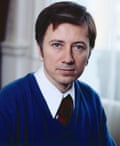
Photograph: United Archives GmbH/Alamy
Following successes in international competitions in Warsaw, Paris and Brussels (1955–56), he was able to emigrate, initially to Brussels, in December 1956. On the overthrow of the Hungarian revolution his father, who as a political figure had been placed under house arrest in 1951, was released from detention on the intervention of the Belgian dowager Queen Elisabeth, after whom the country’s music competitions are still named. The family settled in Switzerland the following year, where Ernest Ansermet, on Kodály’s recommendation, offered Tamás concerts. He also received substantial financial support from leading members of Swiss society.
From 1970 he lived in London, and continued to reside there after taking Swiss nationality in 1971. His career in Britain had taken off in the previous decade thanks to a series of recordings for Deutsche Grammophon and a successful Tchaikovsky concert with the Royal Philharmonic. He was soon giving more than 100 concerts a year with the world’s leading orchestras, and later calculated that he had given more than 8,000 concerts over the course of his life.
Born in Debrecen, Hungary’s second-largest city, Tamás was the son of Erzsébet (nee Baltazár) and Jozsef Vásáry, a senator in the Hungarian National Assembly, who became a secretary of state in the cabinet of the reformist communist Imre Nagy. He studied at the music conservatory in Debrecen under Margit Höchtle and made his stage debut at the age of eight in his home town, playing one of Mozart’s early piano concertos. His solo recital debut took place the following year.
He then studied under József Gát, Lajos Hernádi and Kodály at the Franz Liszt Academy of Music, winning the Franz Liszt Competition there at the age of 14. He contributed to the family income when his father was dismissed from office, gaining experience in cabaret, jazz and operetta.
He was still only 24 when in 1957 he was invited by Deutsche Grammophon to record a disc of popular pieces by Liszt, including two Hungarian Rhapsodies, two Consolations, the Paraphrase on Verdi’s Rigoletto and La Campanella. On a subsequent rerelease of the disc, the critic Bryce Morrison wrote: “When it comes to terms such as leggierissimo and precipitato Vásáry has few equals,” while the opening flourishes of the Rigoletto Paraphrase would “make less nimble pianists weep with envy”. Other Liszt recordings from this period included the two concertos with the Bamberg Symphony Orchestra under Felix Prohaska (1960) and another of the B minor Piano Sonata coupled with the Réminiscences de Don Juan and a polonaise (1961).
Then came the abundance of Chopin recordings between 1964 and 1966, including the two concertos with the Berlin Philharmonic under Janos Kulka and Jerzy Semkow, the Scherzi, the Second and Third Sonatas, both sets of Etudes, the Nocturnes, Impromptus, Ballades, Waltzes and a selection of Mazurkas. The concertos were notably less demonstrative than some other readings, the slow movements characterised by superbly expressive touches, the finales full of imagination. All the solo pieces were marked by Vásáry’s clarity of articulation and digital dexterity, though the pieces were never allowed to become vehicles of superficial virtuosity.
The Nocturnes were dispatched with unaffected candour, with contained rubati, lacking Romantic excess. In the Waltzes he was skilful at teasing out the melancholy under the surface glitter. Sometimes the playing could be criticised for lacking expressive variety and tonal richness, but there were ample compensations in the tenderness and poetic sensitivity always in evidence. He returned to the concertos in recordings with the Northern Sinfonia in the 1980s.
In 1967 he married Ildikó Kutasi-Kovács, a cultural anthropologist; she died in 1994. His subsequent marriage to Henriett Tunyogi, a ballet dancer, actor and director, ended in divorce in 2019.