3 hours ago
9
3 hours ago
9
The countdown is on. Two months out from Andy Burnham’s inaugural autumn budget, bank executives are wringing their hands over whether the government will target their bumper profits with fresh taxes.
The chancellor, John Healey, is reportedly considering a windfall tax on both banks and oil companies in the late October Westminster setpiece.
The UK’s four largest lenders – HSBC, NatWest, Barclays, Lloyds Banking Group – have generated £200bn in pre-tax profits over the past five years, largely off the back of rising interest rates.
They are now in the crosshairs of campaigners – including the Trades Union Congress (TUC) and campaign group Positive Money – who say a tax increase could help cover rising household bills as part of Burnham’s drive to tackle the cost of living.
The TUC’s general secretary, Paul Nowak, who has been pushing hard for a new bank tax said: “Britain’s largest banks are making a fortune. Not because they’ve suddenly become more competitive or improved their services to customers, but because high interest rates mean that, right now, they can sit back and watch the money roll in. Inflated mortgages are fuelling record bonus pots.
“With energy bills edging towards record highs this winter, the government is going to need to provide more support for households – and taxing banks’ windfall profits is the obvious way to pay for it.”
Any move in the UK would echo similar efforts in mainland Europe to make lenders pay more tax to help offset surging living costs and higher defence spending. Here are some of the tools different governments used, as well as the benefits and pitfalls of targeting the profits of some of the world’s largest banks.
Spain: taxed and undeterred
Spain’s prime minister, Pedro Sánchez, revealed plans for a windfall tax in 2022 that would raise €3bn from banks over the following two years to help alleviate cost-of-living pressures.
It spooked investors, wiping more than €5bn off the value of Spanish-listed bank stocks, but politicians pushed ahead: putting a 4.8% “solidarity tax” on the domestic revenue of banks whose income passed €800m. That included fees and net interest income, – the amount of money banks make from loan charges, minus what they pay on deposits.
The €800m threshold and the focus on domestic revenues meant it broadly excluded small local banks and most foreign lenders’ Spanish operations.
Big banks and lobby groups filed legal challenges over the tax, while the European Central Bank (ECB) warned that Spain risked disrupting monetary policy, and damaging lenders’ capital positions, which help to cushion the blow of economic shocks.
Politicians eventually decided to extend the levy a further three years to 2027, after successfully raising €1.3bn in the first year, and €1.7bn in 2024. Banks now face a sliding tax rate of between 1% and 7%, with the highest rate hitting lenders such as Banco Santander whose annual revenue from interest and fees surpassed €5bn.
The extension triggered a fresh spate of legal challenges by banks and lobbyists, and criticism from both the International Monetary Fund and ECB, which warned it could hit bank profits, push up borrowing costs for low-income households, and make Spain’s banks less competitive on the international stage.
Lithuania: a defence spending boost
Lithuania’s government decided to roll out its own windfall tax on banks in 2023, after forecasts showed lenders were due to rake in €1.3bn in net profits that year. That was three times higher than 2022, following a surge in interest rates sparked by Russia’s full-scale invasion of Ukraine.
The 60% tax, which applied to any net interest income that was 50% higher than the previous four-year average, was used to fund infrastructure projects and boost defence spending amid Russian threats.
Politicians agreed to exclude income from any newly agreed loans, to prevent a situation where banks stopped issuing mortgages and business loans to avoid paying tax.
The levy helped raise about €250m in 2023 and €247m in 2024, representing 0.3% of the country’s annual GDP, before being extended by an extra year. The European Commission appeared to support the move, saying it helped cut public debt at a time of regional security threats.
But the tax is said to have spooked foreign firms, with the central bank having repeatedly tried to lure new lenders “with no significant success”, according to an EU report.
The banking sector said it also disadvantaged lenders serving local customers, while letting others such as Revolut, which is registered in the country but serves mostly non-residents, off the hook.
Czechia: ‘unrealistic expectations’
Czechia announced its own three-year windfall tax on banks to help cover consumers’ soaring electricity and gas prices in 2022. The temporary measure, lasting from 2023 to 2025, involved a 60% tax on any profits that were more than double (120%) the previous four-year average.
Deeply unpopular with businesses, the tax also caused friction within the far-right ODC civic democratic party, which said it was interfering with the free market and contradicted core conservative values.
Czech finance minister, Zbyněk Stanjura, talked about scrapping the tax a year earlier than planned, but later admitted the levy had not yet covered state costs linked to the energy crisis. While the finance ministry originally hoped to collect more than 30bn Czech koruna from the country’s six largest banks, it quickly became clear they would fall short of those targets.
“It is unclear whether this was due to unrealistic expectations driven by a vision of easy extra revenue and convenient scapegoating of big corporations, or whether the delayed implementation of the tax (from 2022 to 2023) and the behavioural responses by businesses were not duly considered,” the law firm A&O Shearman said in a 2024 report.
The country ended up raising just 1bn Czech koruna, months before the tax expired in December 2025, according to figures reported by local broadcaster Ct24.
Italy: a tax that fell flat
While plans for a windfall tax by prime minister Giorgia Meloni’s rightwing government gained international attention, it was one of the least effective levies.
Meloni’s team shocked markets in August 2023 after revealing plans for a 40% tax on banks’ net interest margin. The move drew the ire of banking lobby groups and wiped €10bn off shares in financial services companies, forcing politicians to water down the proposal a day later with a cap that halved the estimated tax takings to €2.5bn, from €4.9bn.
The rules eventually came into force in October that year, but not before being diluted further.
Banks – which are already subject to higher corporation and regional taxes in Italy – were allowed to choose one of two options: pay a tax equivalent to 0.26% of the risky assets on their balance sheets – ensuring those with safer loans paid less – or keeping the money on their balance sheets but putting aside two-and-a-half times that amount into their own reserves to cushion the blow of any economic shock.
Unsurprisingly, all banks chose to put the money in reserve, scuppering original hopes that extra funds could help support mortgage holders and cut taxes.
However, Italy’s deputy prime minister, Matteo Salvini, has now revived plans for a new tax three-year levy, that would involve a 5% tax on the profits of Italy’s 10 largest banks.
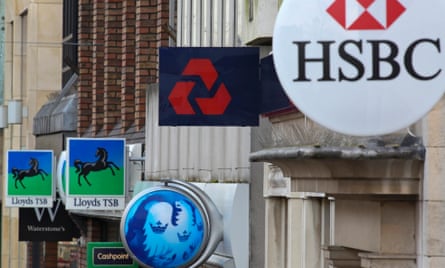
What if the UK followed suit?
If current trends continue, the UK’s four largest banks will rake in £60bn in profits for 2026. Windfall taxes have been used on banks in the UK before, notably in the early 1980s when Margaret Thatcher’s then chancellor, Geoffrey Howe, accused high street banks of escaping the recession and in the 1990s by Labour chancellor Gordon Brown to generate extra revenue.
Calculations by campaign group Positive Money suggest that the UK could raise up to £10.9bn this year from adopting Czechia’s model; up to £6.95bn by following Spain’s sliding tax scale; and £2.2bn by following in Lithuania’s footsteps.
“Plenty of countries have successfully taxed banks’ windfall profits,” the TUC’s Nowak said. “We’re calling for an increase in the bank surcharge to raise billions for the Treasury to cut bills across the country. This is an easy win for government – and the chancellor should ask the banks to pay a fairer share”.
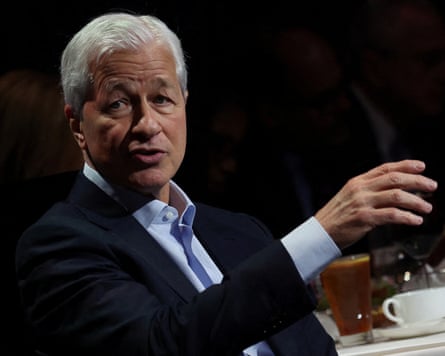
The world’s most powerful banker, JP Morgan boss, Jamie Dimon, has repeatedly warned the UK government against increasing taxes on banks.
The chief executive of lobby group UK Finance, David Postings, said the banking sector “is a major contributor to the public finances, paying over £43bn in tax last year,” a figure which includes income tax payouts on staff salaries.
“Banks based here already pay a corporation tax surcharge and the bank levy, giving them a higher total tax rate than in other major financial centres. Increasing sector‑specific taxes would risk damaging the UK’s international competitiveness and make it harder to attract investment.”