1 month ago
64
1 month ago
64
Long before we became a nation of smoothie lovers, with blenders gracing our worktops, the health-conscious kitchen was always home to a juicer. Those early models could be tricky to keep clean, or require herculean effort to produce a mere dribble – but modern juicers are more efficient, easier to maintain, and can often produce more than just fruit juice.
There are some solid reasons to buy. Homemade juice is the original health drink: squeezed straight from fruit and vegetables, it has none of the preservatives sometimes found in shop-bought blends, nor is it treated to make it last longer or stay the right colour. Juicers can, however, leave behind some of the important fibre found in fruits’ skin and flesh.
Another argument in favour of fresh is the taste. If you haven’t savoured it recently, you may not appreciate how delicious a glass of homemade juice can be: it’s like tasting it for the first time all over again. A final motive is that making your own juice means you can hide all kinds of veggies in it, which is a win if ordinarily you struggle to eat your greens.
At a glance
-
Best juicer overall and best on a budget:
Nutribullet juicer
-
Best compact centrifugal juicer:
Philips Viva Collection juicer
-
Best juicer for oranges and citrus fruit:
Nama J2 cold press juicer
-
Best cold press/masticating juicer:
Kuvings Auto 6 juice extractor
-
Best juicer for small kitchens:
Ninja cold press juicer with anti-clog filter JC151UK
Why you should trust me
I tested my first juicer more than a decade ago. Since then, I’ve put dozens through their paces: the startlingly speedy, the deliberately slow and pretty much everything in between. I’ve tasked them with more than OJ, too, whipping up veggie blends, nut milks and instant sorbet. Ultimately, I’m opinionated on what constitutes a good juicer, what’s worth paying more for, and what you should avoid.
It’s a brave tester who invites multiple juicers into their kitchen. The mountain of washing-up can be astonishing (several were not dishwasher-safe), and assembling and disassembling them is a perverse logic puzzle. Unless you’re scrupulous about cleaning surfaces, everything will be slightly sticky for weeks afterwards: the worktop, the floor, sometimes even the ceiling. And naturally, all their empty boxes were irresistible to my seven-month-old kitten, Sherbet.
How I tested
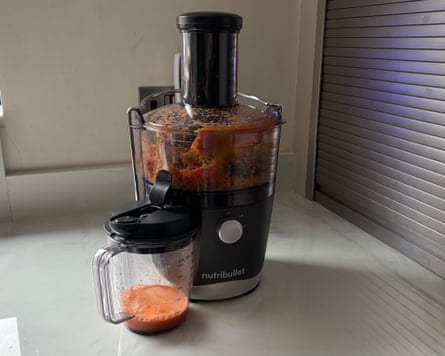
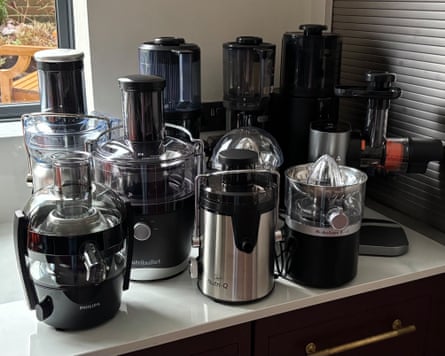
Every writer wants the opportunity to pen a juicy feature. However, perhaps I should have asked more questions before agreeing to this one: the unpacking, food prep, measuring, cleaning and assembly/disassembly of 10 juicers took about three days. I tested four “slow” (otherwise known as cold-press or masticating juicers), four “fast” (or centrifugal) juicers, and two citrus juicers from the most popular and well-known manufacturers in each category.
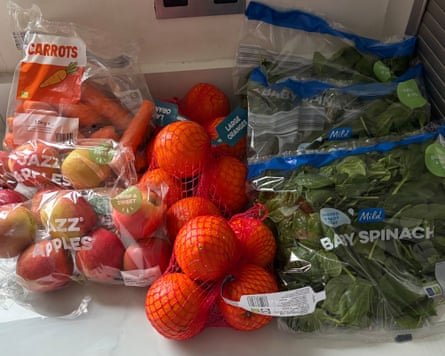
Each juicer was tested with an orange, an apple and a carrot, along with a handful of washed spinach leaves. All were unpeeled, except the oranges, which were only unpeeled when testing citrus juicers. The fruit/veg was weighed on digital scales before juicing, and the juice yield was weighed afterwards to the exact millilitre, allowing me to calculate how much juice you can expect from each item, as a percentage of the overall weight.
In a separate test, I juiced an orange using each machine, taking the fruit’s temperature with my Thermapen, then measuring the temperature of the juice produced. This meant I could calculate how much heat the process added. Slow juicers often have lower heat generation as a feature (resulting in less oxidation and maintaining nutritional value), so this test meant I could see if that proved true in a real-world setup.
In addition, each juicer was assessed on how easy it was to keep clean and use; its price v its functionality; and the usefulness of any additional kit, such as lidded containers for juice, cleaning brushes and alternate pulp strainers. Noise was measured with the juicer empty, at a distance of one metre, using a decibel meter, and total runtime was recorded. All the fruit was room temperature rather than from the fridge (although my unheated kitchen was pretty chilly).
All the juicers have either been returned to the manufacturers or donated to charity, including the Westway, my local community centre.
The best juicers in 2026, tested
Best juicer overall and best on a budget:
Nutribullet juicer
Nutribullet
Juicer
from £87
Why we love it
It’s easy and convenient to use
Why we don’t love it
The food pusher isn’t dishwasher-safe
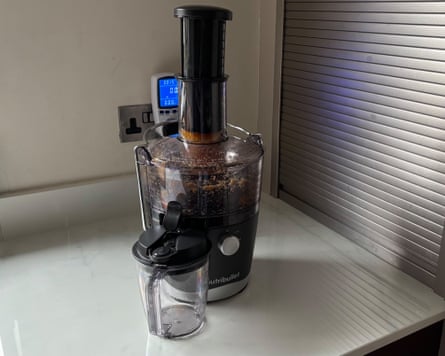
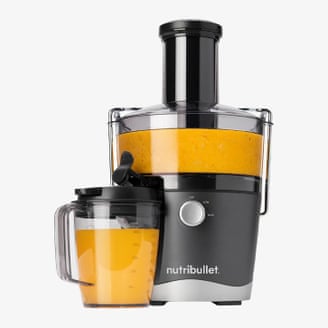
Nutribullet smoothie lovers don’t need to look far for their juice fix. The company’s juicer brings a lot to the party: a wide, 3in (approximately 7.6cm) chute for minimal food prep; two speeds; a big capacity for making lots at once; and a handy lidded jug for storage with a froth separator – all for under £100. It’s easy to keep clean, too: almost everything is dishwasher safe as well as straightforward to wash by hand with the included cleaning brush.
Why we love it
This juicer hit the sweet spot in terms of value for money, making it a good all-rounder for most households. It feels solid and well built; there’s a no-drip spout so it won’t leave a mess on the worktop; and the 800ml jug is a good size and pours well from its flip-top lid.
The juicer may be loud, but it’s fast: I spent less than two minutes actually juicing, and just 1.3C was added to the temperature of orange juice. While its average yield wasn’t the best on test, it was brilliant when making fruit juices and carrot juice.
It’s a shame that … it’s less suitable for leafy greens: much of the spinach wasn’t juiced.
Type: centrifugal
Dimensions: 24 x 23 x 41cm (WDH)
Power use: 0.008kWh over 1min 27secs
Peak and average noise: 70.8dB/61.8dB
Spare parts: none, although there is a replacement jug
Warranty: two years
Nutribullet
Juicer
from £87
Why we love it
It’s easy and convenient to use
Why we don’t love it
The food pusher isn’t dishwasher-safe
Best compact centrifugal juicer:
Philips Viva Collection juicer
Philips
Viva Collection Juicer
from £79.99
Why we love it
It’s ideal for those who hate washing up
Why we don’t love it
Leafy greens tended to be left behind
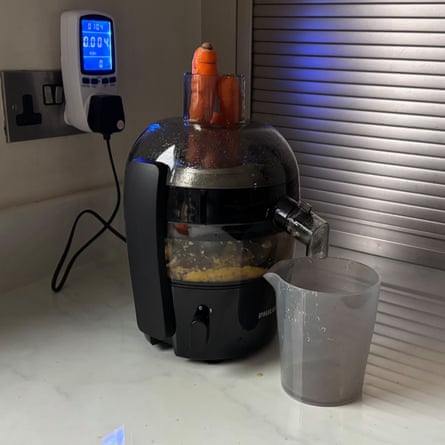
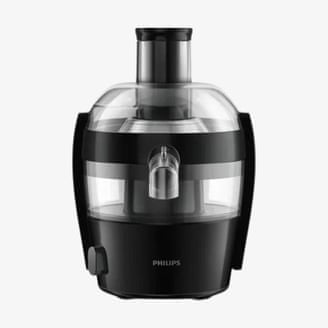
This juicer may not be deemed cheap, but it feels robust enough to last for years, and it has great features. It’s compact, yet it can juice 1.5 litres at once. There’s a spout that twists up to prevent mess (although it doesn’t drip that much if you forget), suction feet to keep it planted on the worktop, and a 500ml jug. Plus, while all the parts are dishwasher safe, you can clean the juicer by hand in less than a minute because of a cleverly designed sieve that needs no scrubbing.
Why we love it
I found this juicer the simplest to assemble and disassemble, and the easiest to clean (other than the simple reamers). Its sieve only needs a wipe with a sponge to clear fibres, so while there’s no brush included, you probably won’t need one.
Its average yield was the same as the Nutribullet, and, being smaller, it was quieter. The temperature increase for orange juice was minimal too: just 1.5C. I especially like that spare and extra parts are available, meaning you could double up on a few and still be able to juice while bits are in the dishwasher. Perfect for smaller households and busy lifestyles alike.
It’s a shame that … there’s only one speed, so you’re out of options when juicing trickier ingredients.
Type: centrifugal
Dimensions: 21 x 24 x 30cm (WDH)
Power use: 0.008kWh over 1min 42secs
Peak and average noise: 68.5dB/60.3dB
Spare parts: yes
Warranty: two years
Philips
Viva Collection Juicer
from £79.99
Why we love it
It’s ideal for those who hate washing up
Why we don’t love it
Leafy greens tended to be left behind
Best juicer for oranges and citrus fruit:
Nama J2 cold press juicer
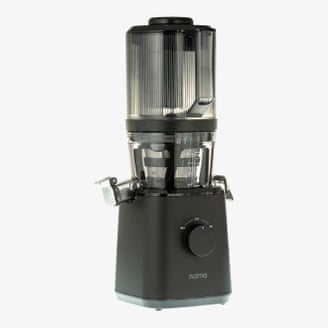
Nama
J2 cold press juicer
£549.49
What we love
Oodles more juice for your money
What we don’t love
It’s hard to justify the price unless using it daily
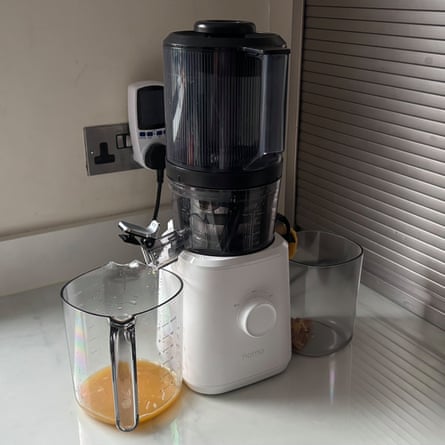
If you find slow juicers tedious, you’ll love the time-saving large hopper on the J2 – but you’ll have to get past the eye-watering cost. Great for making big batches, you simply load it with fruit and veggies and walk away, while it gets on with chopping and feeding the pieces into a chamber below. An anti-drip stopper does exactly that, while a lidded jug can store your juice for the next few days. And it’ll make smoothies, thicker juice, soups and plant milks too.
Why we love it
The J2’s average yield (67%) and excellent volume of orange juice (77%) put it among the best juicers and best masticating juicers on the market. It even managed to extract 70% juice from spinach, and added only 1.2C in the orange juice temperature test. If a healthy lifestyle is one of your goals, it’s a fantastic juicer to have at hand – though be aware it’s fairly big and heavy to store.
It’s a shame that … its parts aren’t dishwasher safe. There’s a handy brush to make cleaning as easy as possible, but it’s still time-consuming.
Type: masticating
Dimensions: 25 x 23 x 45cm (WDH)
Power use: 0.010kWh over 6mins 59secs
Peak and average noise: 42.5dB/40.2dB
Spare parts: yes
Warranty: 15 years motor and parts
Nama
J2 cold press juicer
£549.49
What we love
Oodles more juice for your money
What we don’t love
It’s hard to justify the price unless using it daily
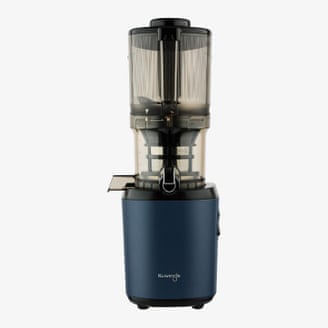
Kuvings
Auto 6 juice extractor
from £360
What we love
Load up the hopper, and it’ll juice by itself
What we don’t love
There are lots of places for pulp to hide when cleaning
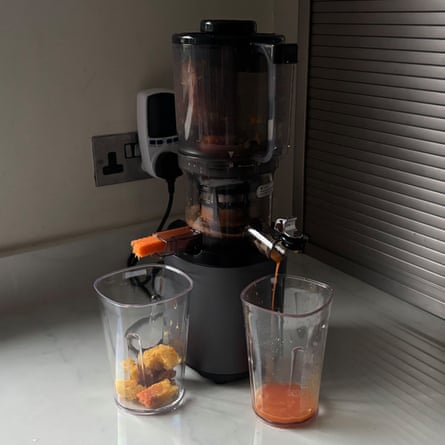
Kuvings created the first vertical slow juicer, and the Auto 6 is one of its latest. There’s lots to love here: a sorbet filter that can whip up frozen desserts in a flash, a drip-stop spout, a relatively compact design and the ability to make more than just juice – such as plant milks.
Why we love it
It didn’t have the highest yield of the larger slow juicers I tested (an average of 56%), yet the Auto 6 does have a more palatable price. It’s an ideal choice if you’re interested in buying a cold-press juicer that can produce big batches (the hopper is 1.7l) – so is great for families. The juice extractor scored well on the temperature test, too, adding just 1.1C to the orange juice, and produced very little noise. The cleaning brushes are handy, but also necessary – none of the parts are dishwasher safe.
It’s a shame that … spinach leaves mostly wrapped themselves around the auger when juiced alone: they’ll be best processed with other veggies or fruits.
Type: masticating
Dimensions: 19 x 22 x 45cm (WDH)
Power usage: 0.017kWh over 7mins 7secs
Peak and average noise: 46.9dB/36.5dB
Spare parts: yes
Warranty: 15 years on the motor, five years on parts
Kuvings
Auto 6 juice extractor
from £360
What we love
Load up the hopper, and it’ll juice by itself
What we don’t love
There are lots of places for pulp to hide when cleaning
Best juicer for small kitchens:
Ninja cold press juicer with anti-clog filter JC151UK
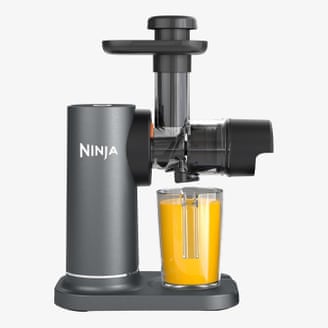
Ninja
Cold press juicer with anti-clog filter JC151UK
from £129
What we love
All the parts of this slow juicer are dishwasher safe
What we don’t love
Not the best yield on carrots (36%)
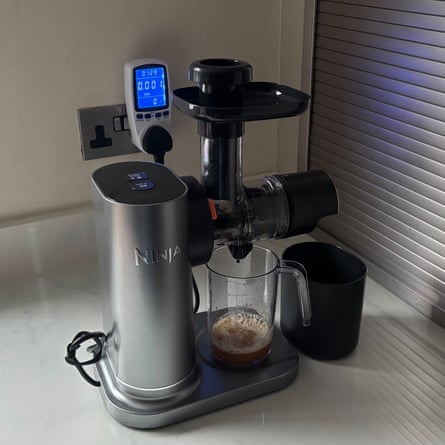
This cold press juicer’s horizontal design, as opposed to the tall vertical arrangement of many masticating juicers,means it’s more likely to fit under your kitchen cabinets than other similar juicers. Also including storage on the base for its accessories, such as a thick pulp filter and 700ml jug, keeps everything neat and tidy. There’s also a drip-stop lever to cut down on mess.
Why we love it
It’s a simple thing, but I loved that this juicer’s thick pulp filter (for pear, berries, melon and pineapple) is a different colour to the standard one. So often I find myself squinting at similar parts trying to figure out which is which.
But there’s more than coloured parts to this juicer: it extracted plenty of juice from the fruits – a 73% yield for oranges and 60% for apples – and even did well on spinach (49%). It also used very little energy through the juicing session, and only added 1C to orange juice. I liked that there was minimal residue left inside when it was time to clean up, too, and a brush provided to help.
It’s a shame that … a narrow chute means food prep aplenty: I had to chop up apples and carrots more than when using the other slow juicers.
Type: masticating
Dimensions: 31 x 19 x 40cm (WDH)
Power use: 0.005kWh over 7mins 38secs
Peak and average noise: 45.8dB/41.2dB
Spare parts: yes
Warranty: two years
Ninja
Cold press juicer with anti-clog filter JC151UK
from £129
What we love
All the parts of this slow juicer are dishwasher safe
What we don’t love
Not the best yield on carrots (36%)
The best of the rest
KitchenAid Go Cordless citrus juicer
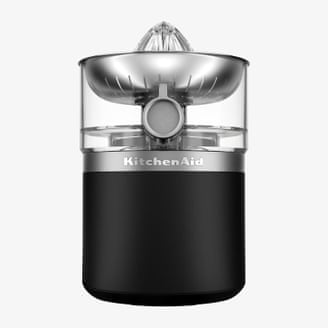
KitchenAid
Go Cordless citrus juicer
from £129
What we love
Dishwasher-safe parts make it a serious time-saver
What we don’t love
You’ll need to tip it to drain out all the juice
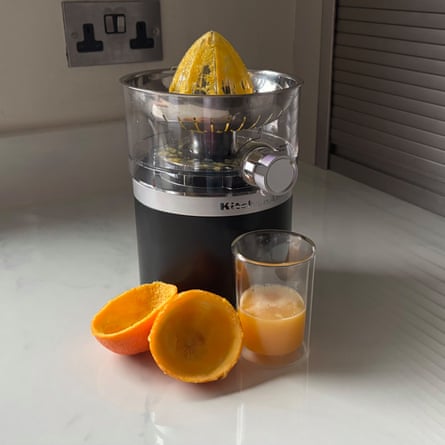
Best for: effort-free squeezing
Part of KitchenAid’s Go Cordless range with an interchangeable battery, the citrus juicer takes the effort out of reaming and allows you to do it anywhere in your kitchen. Push down, and the reamer spins one way; repeat, and it’ll reverse direction. The juice drains from a spout at the front, which can be closed with a twist of a knob. While the yield from oranges was only 50%, the simple method meant that the temperature was raised only by 0.7C: less than any of the slow juicers.
It didn’t make the final cut because … unless you’ve bought into the KitchenAid Go collection already, adding a battery bumps up the price by another £55.
Type: reamer; dimensions: 19 x 20 x 26cm (WDH); peak and average noise: 50.9dB/30.4dB; spare parts: no; warranty: two years, plus KitchenAid will recycle old appliances when you buy new
KitchenAid
Go Cordless citrus juicer
from £129
What we love
Dishwasher-safe parts make it a serious time-saver
What we don’t love
You’ll need to tip it to drain out all the juice
Quest Nutri-Q power juicer
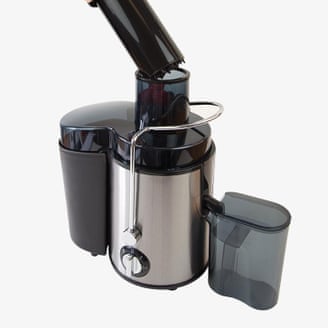
Quest
Nutri-Q power juicer
from £32
What we love
It’s lightweight and compact for storage
What we don’t love
No anti-drip spout means potential mess
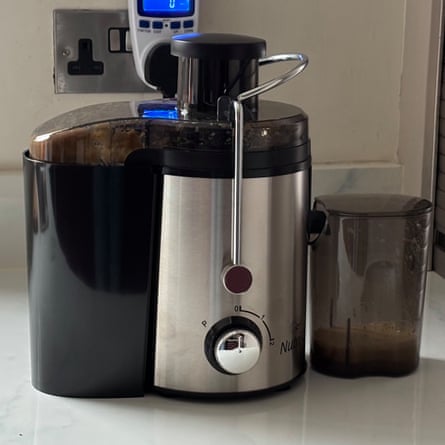
Best for: bargain hunters
For those unsure how much they might use a juicer, this entry-level model is one to try. It’s affordable, but there are still some handy features, including two speeds and a 500ml lidded juice jug with a froth separator. You’ll need to do a bit more food prep, however, as the feed chute is quite narrow. And use the fastest speed with caution: in testing, fruit tended to splatter up the chute as it was added. It also had a fairly low average yield of 50%, and added the most heat of all the juicers on test at 2C.
It didn’t make the final cut because … only the jug and bowl are dishwasher safe: the rest is handwash only, and there’s no cleaning brush.
Type: centrifugal; dimensions: 29 x 21 x 36cm (WDH); power use: 0.007kwh over 2mins 3secs; peak and average noise: 63.5dB/63.1dB; spare parts: available from Quest’s customer service department on request; warranty: six months
Quest
Nutri-Q power juicer
from £32
What we love
It’s lightweight and compact for storage
What we don’t love
No anti-drip spout means potential mess
Smeg citrus juicer
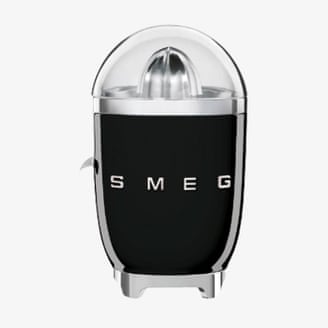
Smeg
Citrus juicer
from £139.95
What we love
Most of the parts go in the dishwasher when you’re done
What we don’t love
It spins in only one direction, so more effort required
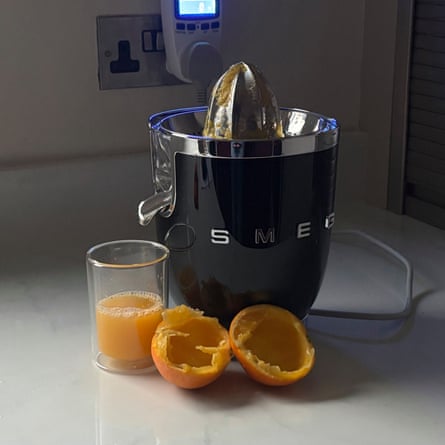
Best for: vintage style
With similar functionality to the KitchenAid juicer, the Smeg citrus juicer comes with the bonus of a cover – great for keeping the reamer dust-free if you only juice occasionally – and a drip-free spout that clicks upwards to stop the flow. I also liked that the spout extends farther outwards, making it easy to position a glass below. It produced an identical yield to the KitchenAid – 50% – but the temperature only rose by 0.6C: the lowest of all the juicers on test.
It didn’t make the final cut because … even though it looks gorgeous on the worktop, it’s pricey.
Type: reamer; dimensions: 19 x 16 x 28cm (WDH); power use: 0.005kWh over 3mins 29secs; peak and average noise: 50.9dB/49.6dB; spare parts: no; warranty: two years
Smeg
Citrus juicer
from £139.95
What we love
Most of the parts go in the dishwasher when you’re done
What we don’t love
It spins in only one direction, so more effort required
Sage Nutri Juicer Cold Plus
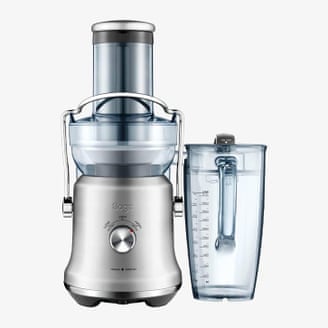
Sage
Nutri Juicer Cold Plus
from £219.95
What we love
There’s a nozzle for juicing straight into a glass
What we don’t love
The pusher isn’t dishwasher-safe
Best for: large quantities
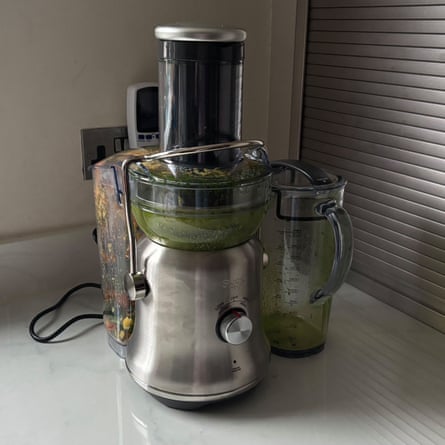
Need juice fast? The Sage Nutri Juicer Cold Plus requires next to no food prep. Its 88mm-wide chute can accommodate whole apples and other fruits, while a powerful motor turns them into juice in seconds. Plus, there’s a 2l lidded juice jug with froth separator to store it in.
The downside is that the juicer itself is a big beast compared with others, so you’ll need space for it on the worktop. Yield for the fruit was reasonable, but the average (52%) worked out as one of the lowest of the group. However, it didn’t add much in terms of heat, raising the temperature by just 1.2C.
It didn’t make the final cut because … the motor isn’t the noisiest, but it takes a while to ramp back down from juicing.
Type: centrifugal; dimensions: 33 x 21 x 45cm (WDH); power use: 0.008kWh over 1min 41secs; peak and average noise: 62.3dB/57.9dB; spare parts: no; warranty: five years motor, two years parts
Sage
Nutri Juicer Cold Plus
from £219.95
What we love
There’s a nozzle for juicing straight into a glass
What we don’t love
The pusher isn’t dishwasher-safe
Hurom H400 self-feeding slow juicer
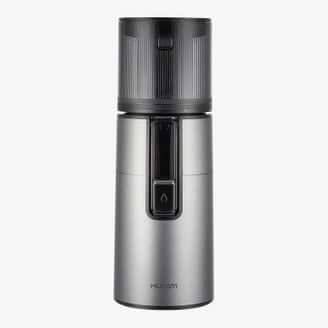
Hurom
H400 self-feeding slow juicer
£599
What we love
Easily the most attractive slow juicer
What we don’t love
It’s not so great with leafy greens
Best for: a contemporary/sleek look
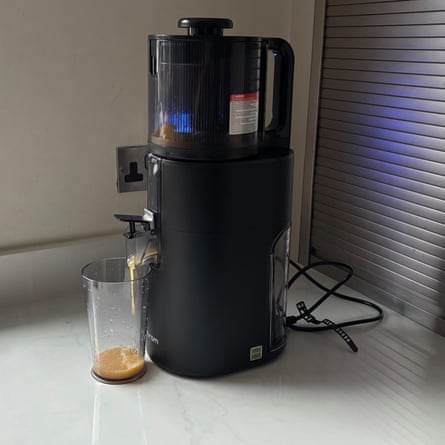
Tall and slim, the Hurom H400 is a veritable supermodel among slow juicers, and it’s no slouch when it comes to making fruit juice. On test, it produced a good yield of 63% and a high 76% yield for oranges.
So why isn’t it in the top picks? The high price tag; the fact I found it one of the most difficult to take apart and reassemble; a low yield on spinach (40%); and that it added more heat to the orange juice than I’d expect for a masticating model, at 1.9C. While the cleaning brush is brilliant, I’d always prefer to have some dishwasher-safe parts.
It didn’t make the final cut because … spinach was easy to load but wrapped itself around the auger, so it’s best to juice this with other ingredients.
Type: masticating; dimensions: 19 x 22 x 47cm (WDH); power usage: 0.012kWh over 7mins 9secs; peak and average noise: 46.6dB/42.9dB; spare parts: yes; warranty: 10 years motor, five years parts
Hurom
H400 self-feeding slow juicer
£599
What we love
Easily the most attractive slow juicer
What we don’t love
It’s not so great with leafy greens
What you need to know
What to look for in a juicer
In my experience, a small appliance must be easy to keep clean if you want to make the most of it. This is important when buying a juicer, not only to keep it running smoothly, but also so you’ll use it regularly without dreading the clean-up. Look for juicers that are easy to assemble and take apart; have thicker plastic than cheap models, so they don’t break or distort; and don’t have any inaccessible crevices.
Don’t worry too much about motor size and energy consumption: centrifugal juicers need a powerful motor to do their job, but as they’re only operating for seconds, the energy use will be low. Conversely, slow juicers don’t need a big motor, but their runtime is longer. None of the juicers I tested cost more than a few pence to run per session.
Should I choose a masticating or centrifugal juicer?
The style of juicer you choose will depend largely on your budget and what’s most important to you: time or volume of juice.
Centrifugal juicers work by finely shredding the fruit or vegetables before spinning at speed to separate the juice from the pulp through a strainer. They work quickly, which is why they’re also known as fast juicers, and are usually affordable. The downside is that they may not be as efficient as masticating. In my testing, the difference in yield percentage wasn’t as large as you may think though: the lowest a centrifugal juicer produced was 50%, while the most efficient masticating juicer averaged 67%. They’re noisy, but as they’re quick, you won’t have to endure that for long.
Masticating juicers chop, crush and “chew” the fruit or vegetables before squeezing out the juice through a filter or screen. It’s a process that takes more time, hence their other name of “slow juicers”, or cold-press juicers. Most are an investment, so it’s advisable to budget at least £100 for one that will last. Overall, I found them to be more efficient in producing juice but time-consuming to use – on average, I spent about seven minutes using a slow juicer compared with a couple of minutes using a centrifugal model. They produce very little noise: great if you’re juicing while others are asleep.
I also tested electric reamers for this feature. While confined to citrus juicing, if it’s just OJ you’re after, they’re a quick, low-maintenance way to a refreshing glass. Given their similar price, though, you’d be better off buying an efficient centrifugal juicer so you can benefit from their versatility.
How to clean your juicer
Residue can be stubborn, so always clean your juicer immediately after use. If seals and small parts can be removed, then do so: check the instructions for manufacturer advice. It’s not solely for hygiene: poor cleaning is a common reason for a juicer malfunction, as fibres and other buildup will make it slower and less effective.
Rather than dismantle the juicer on the worktop, lift away all the parts that need cleaning from the base as one, if possible, and take it to the sink. If your juicer comes with a cleaning brush, use that – it’ll be the right size and shape for fitting in all the nooks and crannies. If not, invest in a brush with a pointed end, such as Oxo’s kitchen appliance cleaning set.
Never clean plastic parts with water that’s too hot, as they can distort, and only put parts in the dishwasher that are marked as dishwasher safe (check if they’re top rack only too). Air dry everything so that all parts are moisture-free before reassembling.
Are juicers repairable or recyclable?
Most juicers break down into several parts for cleaning, with the upside that if one breaks, it’s simple to replace, as manufacturers often offer spare or extra parts.
Burnt-out motors mean going back to the manufacturer if they offer repairs (the pricier the juicer, the greater the chance that there’s a repair service, generally speaking), but may be avoided by looking after your juicer. Overloading can strain the motor, as can clogs. Take your time when juicing, adding ingredients in the order suggested, and check all the parts are fitted properly before you start.
If your juicer is no longer working, you can recycle it: at your recycling centre, stores that offer the Retailer Take-back scheme, kerbside recycling bins or drop-off points: use the postcode checker at Recycle Your Electricals. If your old juicer is working, donate it to a charity that accepts electrical goods.
Buying a refurbished or secondhand juicer
If you’re keen to save but don’t want a budget model, buying refurbished or secondhand juicers can be ideal. Juicers have a tendency to be used initially, but if they’re hard to clean or bulky on the worktop, they end up neglected, so there’s a good chance of finding nearly new products secondhand.
A secondhand juicer will need a thorough clean before you use it. Crevices and seals can play host to mould, so make sure it’s hygienic before trying it out. Look for secondhand bargains on auction and local selling sites, or check Back Market for refurbished juicers: appliances come with a minimum warranty of one year and 30-day returns.
That said, choosing a new juicer that suits your needs is the best way to make sure you’ll get lots of use out of it. Cheap products can be tempting, but if you opt for a durable juicer that’s been tested in a real kitchen, it should last for several years.
For more:
The best blenders for smoothies and soups
The best rice cookers, tested
The kitchen gadgets top chefs can’t live without
Rachel Ogden has worked as a consumer journalist for decades, becoming an expert unboxer before it was a thing, although she is less successful at repacking. Her home has hosted hundreds of small appliances from juicers and blenders to robot vacuums, while outside, you’ll find her messing about with barbecues and pizza ovens. It takes a lot to impress her – many appliances have tried and failed