3 months ago
127
3 months ago
127
If you really want to solve a problem, try doing nothing about it. Fold some laundry. Stir a risotto. Go for a run, watch a film, try to entertain someone else’s baby: anything that involves pottering about in an undemanding yet still vaguely engaged way, which absolutely couldn’t be classed as work but isn’t totally vegetative either. It may not be the productivity hack any go-getter wants to hear, but it’s surprising how often a spell of aimless noodling around frees an otherwise overworked human brain to make the kind of lateral mental leap that helps everything fall into place. And I’m not just saying that to justify a New Year’s Day spent lying hungover on the sofa, ploughing through the last of the Christmas cheese.
For the eminent cancer surgeon Michael Baum, it was a night off with his wife at the theatre that allowed him to suddenly join the dots. After watching a scene in Tom Stoppard’s play Arcadia where one character explains chaos theory to another, Baum had his own personal eureka moment: what if this mathematical concept, used to describe complex systems that may seem haphazard but have a hidden underlying pattern to them, could also explain the otherwise puzzling way in which cancer grows and spreads? The result of that one stray thought as the interval curtain rose was an innovation in chemotherapy, and a gratifying rise in survival rates.
Though the history of science is littered with accidental breakthroughs discovered in pursuit of something else entirely, what Baum was describing sounds more like a kind of glorious inefficiency: a victory born of knowing exactly when to stop trying. The story only came to light after Stoppard’s death, when Baum was moved to write to the Times that the playwright couldn’t have known how many lives he had inadvertently saved. But with all due respect to the power of drama, perhaps it wasn’t really the play that saved them so much as the permission it gave a doctor to switch off and relax.
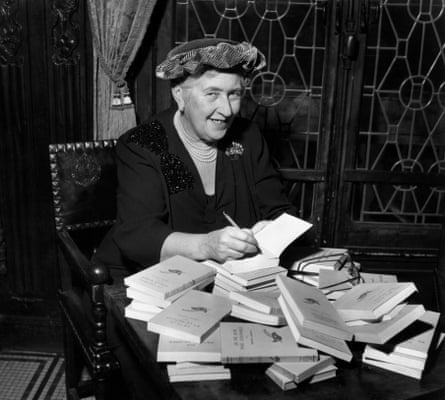
After all, the kind of pottering that frees a mind doesn’t have to be particularly high-powered. Archimedes supposedly had his breakthrough lolling in the bath, watching displaced water slop over the side. Agatha Christie used to work out plots for her murder mysteries while washing up, arguing that “the purely mechanical labour helps the flow of ideas, and how delightful to find your domestic task finished with no actual remembrance of having done it”. Even I have learned over the years that when I’m stuck on a piece of writing that won’t fall into shape, the quickest way of fixing it isn’t to hammer away at it grimly for hours but (sorry, boss) to shut the laptop and do something completely different for a bit. Somehow, in the process of taking the dog round the block or grumpily stacking the dishwasher, things more often than not arrange themselves. The trick is to divorce the busy conscious mind from some deeper subconscious part of the brain, which can carry on percolating things even when it doesn’t feel as if you’re thinking at all. It’s different from consciously working, but also very different from loafing: if anything the closest parallel is with dreaming, and the way it allows a mind to rerun the mental videotape of the day and make sense of everything you couldn’t process at the time. And, as with sleep, the busier you are, the more you probably need it.
Recently I heard a former Downing Street aide suggest only half-jokingly that governments should adopt what universities call a reading week (or strictly speaking, what a reading week would be if students didn’t mostly treat it as a chance to go home and get their laundry done). What he meant was a break, long enough to do some actual thinking, from constantly running to catch up with whatever outrage is currently fuelling the social media news cycle. If Keir Starmer’s government is often criticised for lacking a grand vision or intellectual hinterland, in part that’s surely because nobody in this punch-drunk administration ever has time to develop one: to reflect on what has worked and what hasn’t, to make the less obvious connections, and let some original ideas bubble up.
There’s no way a government as unpopular as this one would ever dare say it was taking time out to think deep thoughts, of course, for fear of the inevitable public backlash against what would be perceived as either slacking or unbearable pomposity. Yet the irony is that many of us are probably secretly craving something similar. According to a recent TUC survey, more than half of British workers say their jobs have got more intense in recent years: women are particularly likely to feel uncomfortably stretched, which may reflect the fact they’re more likely to work in public sector jobs such as health and education, where rising workloads and shrinking headcounts, coupled with government productivity targets, have systematically squeezed all the slack out of the day. For too many of us, work intensity means having no time to think straight during the day, and getting home too knackered to do anything much but slump and scroll. What is being lost is the kind of free-floating time that allows a relaxed but still intellectually curious mind to slide usefully sideways.
Paradoxically, it’s technology that may also offer the best chance to claw some of it back. As AI starts to take on more and more routine tasks at work, employers will face a choice over how to use the human time saved. They can either simply seize the opportunity to make humans redundant and max out their profits in the short term, or they can gamble on a longer path to future productivity gains by giving some of that time back to their employees – not as the endless paid leisure time of Keynesian fantasy but to do the kind of original and creative thinking or training that large language models still can’t replicate. (One obvious template is Google’s 20% rule to promote innovation back in the 00s, under which programmers were offered a day a week to play around with side-projects on the company’s time: the commercial rationale was that while most would come to nothing, there would be enough original ideas generated to justify the time seemingly wasted.)
Too utopian? Maybe. But for now, there are worse ways to ease yourself gingerly into January than to remember that time spent doing what looks like nothing much can be time spent achieving more than you actually realised. Happy New Year.
-
Gaby Hinsliff is a Guardian columnist