3 months ago
136
3 months ago
136
I sit my office in Srinagar surrounded by the steady, safe hum of the secondary school where I work. As academic head, my mind is occupied with curriculums and pupil progress. But my soul is 130km north of the Jammu and Kashmir city, behind the jagged peaks of the Razdan Pass, in the silence of the Tulail valley.
I am a daughter of the Dard Shin. We are a tribe whose history is etched in the Himalayan granite by the glacial water of the Kishanganga River.
My father became the first professor of commerce from Tulail. His struggle to education was physical. He walked through snow that reached his waist to find a world that did not know he existed.
His journey from the remote highlands to higher education gave me wings to fly. Yetthose I left behind – the sisters of my tribe – are still grounded in the frost.
For six months, snow seals the Tulail valley. In this frozen isolation, the Dard Shin women are the architects of survival. They are the first to break the ice on the water buckets in the dawn. Their hands never stop. They spin, they knead, they work until they collapse into sleep, only to wake and do it all again.
In the middle of this hardship, the children of Tulail carry dreams. I remember nine-year-old Zubeida. “I want to be a doctor,” she told me.
“When the snow is deep and the mothers are in pain, I want to be the one who knows how to make them better. I will wear a white coat like the snow, but I will bring warmth.”
The path to a medical degree is blocked by more than just mountains. There is no high school here for her to attend.
Twelve-year-old Irfan’s father and brothers are away working in the building sites of Shimla. Irfan’s jaw is set: “I don’t want to carry stones. I want to be a scientist.
“I want to study why the stars are so bright in Tulail and how we can use the sun to keep our homes warm when the electricity goes away.”
When the first frost bites, the men of Tulail pack their frayed bags and leave for the construction sites in Shimla or the apple orchards of Himachal Pradesh. “We leave because the snow is a wall that stands between my children and a full stomach,” says Mohammad, a young father. The women face the winter alone.
The village of Saradab is the last gasp of civilisation before the mountains turn into an impenetrable land. “Electricity is a guest that only visits for three hours, then leaves us in the dark,” says Zareena.
Her fingers are stained by wood smoke. “We trek for hours with axes in hand to beg the trees for warmth. We cook over open fires in rooms so thick with smoke that our children’s coughs become the rhythm of our winters. Our lungs burn as much as the wood we scavenge.”
The deepest hardship is when, because of haya (shame), women give birth in the dark, on cold floors, with no one but village elders to catch the new life.
My father saw his people suffer every day of his life. It fuelled his determination for my education. When I wanted to give up, he would remind me of the Saradab women. He wanted me to escape a cycle of invisibility with every book he put in my hand. He knew that for a Dard Shin woman, education is a rescue mission.
My father wants every daughter of Tulail to have the right to dream without the fear of the snow. I can hear him on the phone now, his voice a steady bridge across the mountains as he talks to the men back in Tulail.
He explains why they must keep their daughters in school. He tells them why a book is as vital as the harvest, and how an educated girl can change the fate of the village.
When he looks at the young girls in the valley, he sees future leaders who just need a path. His life’s work has become a message to our people: that our daughters are not burdens to be married off, but torches that can light up the entire valley.
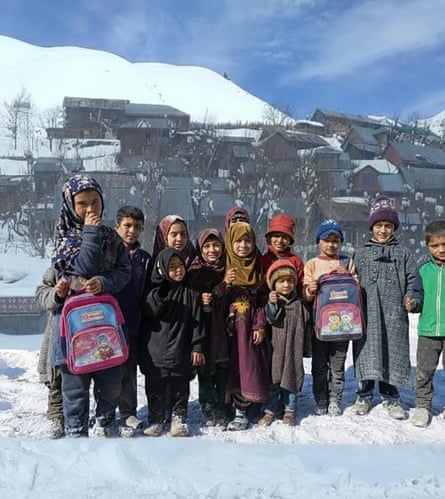
As an educator, I view the world through the lens of agency. In Srinagar, I see girls who dream of the stars. In Tulail, a girl’s dream is over by the eighth grade. When we deny her an education, we are not just missing a student. We are burying Zubeida the doctor and Irfan the scientist. We are silencing poets.
My father proved that the Dard Shin mind is as sharp as the mountain air, that scholarship can bloom where only potatoes and barley were thought to grow.
But empowerment should not be a miracle or a lottery won by the lucky few. It requires bringing the university to the valley, not just the girl to the university. It requires a digital bridge to break the isolation of winter. We must stop looking at the tribal woman as an exotic photograph – we must start seeing her as an intellectual force.
As a Dard Shin woman who found her voice through her father’s courage, I refuse to let the stories of my sisters be written in disappearing ink.
The women of my tribe are not victims – they are warriors. Education is the only bridge strong enough to cross the Razdan Pass and remain open when the world turns white. It is time we stopped waiting for the spring and started building that bridge ourselves.