3 months ago
149
3 months ago
149
Speaking in a parliamentary debate on the voluntary sector, not long after Labour’s huge election victory, the party’s former MP Jeff Rooker evoked the many ways charities hold Britain’s social fabric together. Every week in his local area, he told fellow peers, a group named Hands Together Ludlow gives food and support to dozens of desperate people, enables others to access benefit entitlements, runs a “shed” workspace that doubles as a place to meet and talk, and rescues individuals overlooked by agencies delivering social services. Volunteers such as these, Lord Rooker observed, “keep society going”.
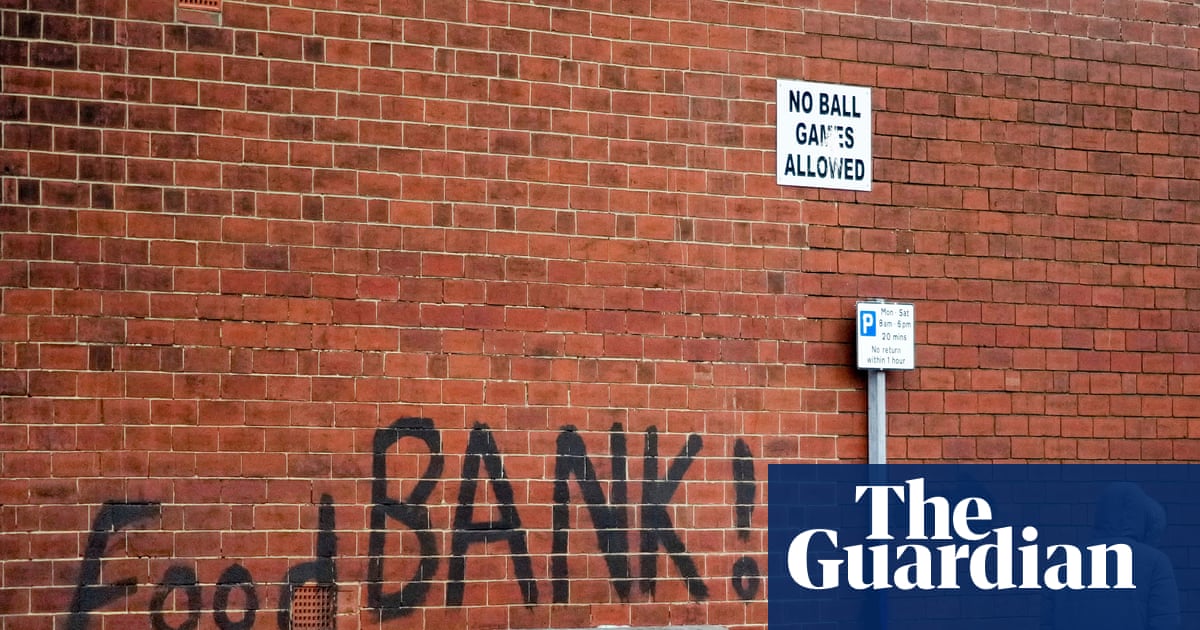
Few would disagree. The Guardian’s Christmas charity appeal showcases similarly vital work being undertaken up and down the country. Yet heading into 2026, this vast network of voluntary organisations faces formidable headwinds and an ominous financial crunch. The prolonged impact of austerity, the pandemic and an ongoing cost of living crisis mean that demand for their services continues to rise. But state funding – both from central government and hollowed-out local authorities – has become more and more inadequate, and charitable giving has declined to the lowest level since tracking began. Fewer people are volunteering, and costs are dramatically up – not least as a result of the rise in employers’ national insurance contributions, which kicked in last April.
For some of the country’s household name charities, this perfect storm ensured that 2025 was an annus horribilis. The mental health charity Samaritans announced in July that it would close half of its 200 branches. Macmillan Cancer Support has shed a quarter of its staff and scaled back hardship grants. Other jobs have been – or are at risk of being – lost at Oxfam and the counselling charity Relate. Institutions such as the National Trust have been targeted by “anti-woke” campaigners more interested in stoking culture wars than safeguarding the viability of a crucial component of the public realm.
Civic reckoning
At the other end of the scale, thousands of smaller grassroots organisations are simply struggling to stay afloat, digging into reserves and cutting services. A survey by Voluntary Norfolk in the summer found that half of the county’s charities feared they would be forced to let staff go. Burnout in overstretched and insecure workplaces is a growing concern.
A Labour government aspiring to place such organisations at the heart of civic renewal should treat this state of affairs as a scandal and a challenge. In July, Sir Keir Starmer launched the civil society covenant – continuing with the post-2010 framing of the non-state, non-market sphere as one shaped not only by formal charities and non-profits, but by community and faith groups too. But much-needed collaboration will not flourish on the basis of warm words alone.
A reset, not for the first time, is needed. The modern history of voluntarism has been one of cultural reinvention, and shifting boundaries of responsibility in relation to Whitehall. In the 1960s and 1970s, a new wave of campaigning charities professionalised the sector and shone a light on the deficiencies and outdated approaches of the postwar welfare state. Organisations such as the Child Poverty Action Group, Shelter and Friends of the Earth acted as critical friends to Labour governments, for which they constituted a radical hinterland and crucial source of ideas.
Counter-revolution followed, as Conservative administrations shrank the state and appealed to virtuous citizens to fill the void. Margaret Thatcher’s putative revival of “Victorian values” in the 1980s, and David Cameron’s “big society” in the 2010s, promoted the moral superiority of individual and communal self-reliance over debilitating “welfare dependency”. That, at least, was the self‑serving political narrative. The disastrous social consequences of recession and austerity were meanwhile dumped at the doors of churches and charities that were ill-equipped to cope.
By contrast, Sir Keir’s notion of a covenantal relationship carries promising echoes of New Labour’s earlier idea of a “compact”. As chancellor in the 2000s, Gordon Brown presided over a boom in contract funding to voluntary welfare providers and a new focus on social enterprises – both viewed as vehicles through which to expand choice and deepen civic engagement. Taking inspiration from the celebrated US sociologist Robert Putnam, whose work spoke to an early communitarian strand in New Labour thinking, Mr Brown hailed “a quiet revolution in how voluntary action and charitable work serve the community”.
Underfunded but indispensable
That was then, though, before the 2008 crash inaugurated two lost decades of flatlining growth and pared-back Whitehall budgets. Politically polarised, preoccupied with issues of social cohesion, and dealing with the costs of an ageing population, Britain is now in dire need of a new golden age of voluntarism. But the current financial squeeze on charities, which the government has done too little to address, is pointing in the opposite direction. For the majority of charities regularly surveyed by the National Council for Voluntary Organisations, grants and contracts have not covered costs since 2020. Worryingly for the future, donations have dipped most steeply among the young, with “affordability” cited as the principal factor behind the decline.
For its idea of a “covenant” to mean anything, Labour must begin to find ways to ensure the voluntary sector can access both the financial resources and the human resources it needs. As countless studies have attested, the country’s 160,000‑plus charities contribute to the economy not only directly, but through preventive action that saves the state money it would otherwise spend when problems turn into crises. Properly valuing that latter contribution would, in itself, justify a transformative injection of funds into their coffers.
A sector which is a proven social and economic asset deserves better than a constant, failing battle to do more with less. Charities are trusted by users in a way that the state and local councils are not, and their priorities are not distorted by the profit-seeking motives of market‑based providers. At a grassroots level, this unique position can allow them to be pathfinders and pioneers, forging deep and creative connections with the communities in which they are embedded. The government rightly talks up the prospect of an alliance that will empower the voluntary sector to fulfil its proper vocation. In 2026, it will be time to walk the walk.
Do you have an opinion on the issues raised in this article? If you would like to submit a response of up to 300 words by email to be considered for publication in our letters section, please click here.