2 months ago
81
2 months ago
81
What is a writer’s responsibility? I feel that it has always been to give voice to those who have been silenced and to keep people alive through recreating them in our imagination, time and time again.
This is what I have in mind as the Iranian people live through their worst period of suffering in 47 years. Thousands are dead. Friends in Tehran hide in their homes, not able to go out for explosions and acid rain. Worst of all, they know that it is not just foreign bombs that threaten their lives. Their own government continues to patrol the streets with guns, beating people, arresting them, killing them.
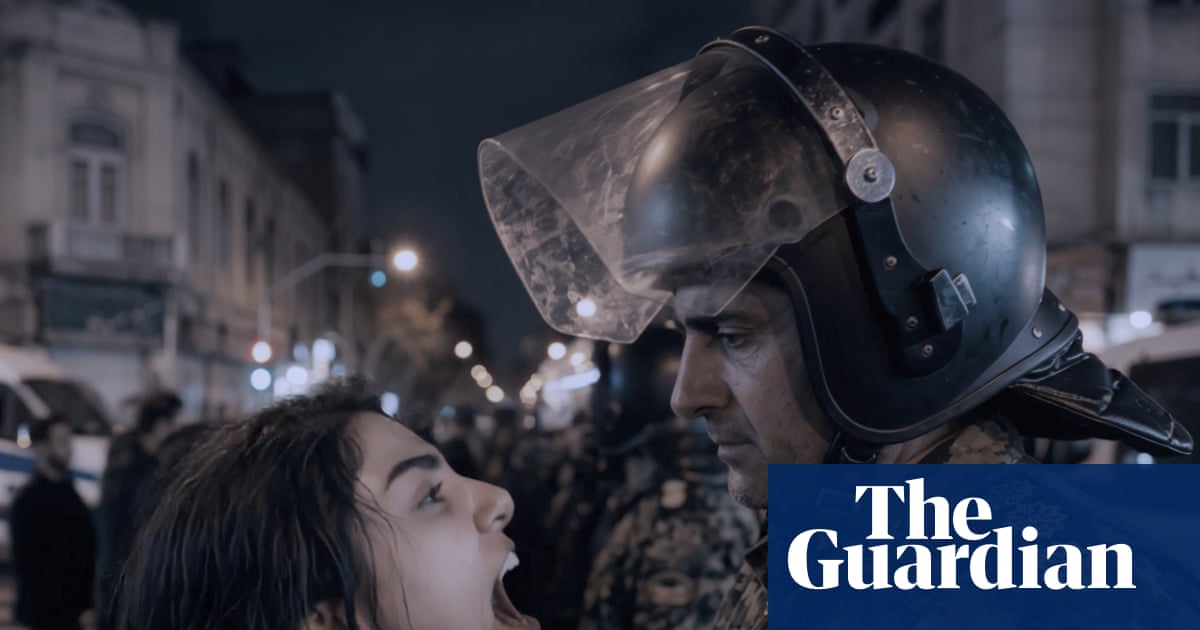
Of course, that last part is nothing new. Just a month ago, the streets of Tehran were full of protesters marching against the Islamic Revolutionary Guard Corps, knowing they could be killed for doing so. And yet they came, and they came in droves. The sounds of the regime’s bullets were contrasted with the sounds of Iranians, singing and dancing, throwing away their mandatory veils and showing their hair. There was such joy to it. “Woman, life, freedom,” they chanted. If that is not emblematic of Iran’s spirit, then I don’t know what is.
I left Iran for the US in 1997. On my last day, as I packed up my belongings, my mother followed me from room to room. “Tell them, tell them,” she said. She wanted the world to know how the Iranian people were living under the Islamic Republic’s rule. Today, her words ring in my ears.
Since the US-Israeli war broke out, Iranian voices have been erased. They find themselves caught between western bombs and the oppression of their own regime. Internet access remains restricted. Checkpoints are appearing across the streets of the capital. Tehran’s prisons are now so full there is not enough food to go round, a friend tells me this week. The prisoners’ families are in a total information blackout. The Iranian fight for freedom remains existential.
Since the war broke out, I feel I have entered another world. I am Alice falling down the rabbit hole. But I have to feel hopeful. If anything positive could come from this war, it would be the conflict liberating the Iranian people. When at the beginning of the 1979 revolution, Ayatollah Khomeini made the veil mandatory, thousands of women came into the streets and chanted the slogan: “Freedom is neither eastern nor western. Freedom is universal.” If we believe that, then Iran becoming a democracy must be the world’s fight, and it will benefit people from the UK to Sudan. Saul Bellow spoke about the true threat to democracies being our sleeping consciousness and our atrophy of feelings. We must never allow ourselves to forget that freedom is not all comfort.
“Iran is an ancient country,” my father used to say – it has been invaded, flattened, many times before. But what gives us continuity, what connects us to one another and to the world, is our poetry, our literature, our cultural heritage. Even truck drivers across Iran have bumper stickers of poems by Hafez or Saadi or Ferdowsi. That is Iranian culture, which even the Islamic Republic has been unable to destroy. This is our humanity. As bombs fall on our Unesco sites, as crucial infrastructure is destroyed, I remember the power of intangible things. This war will end. This regime will go one day. And the stories, the poems, the art and the music will remain.
Today, I think of my former students in Tehran often. More than my American students, they had an insatiable appetite for reading – to feel connected to home but also to open themselves up to the world. I will always remember a young Muslim girl named Razieh who became obsessed with Henry James and his female characters, whose independence and integrity mattered more than their happiness. “I think I’m falling in love,” she would tell me as we walked together after class. This young girl, who had never left the Islamic Republic but was enamoured of an old British-American fiction writer, was imprisoned and later executed by the regime.
I have lost many relatives and friends, but Razieh’s story has always remained with me. And so it is her memory that I invoke as we talk about the fight for freedom ahead for Iran’s people. From democratic countries, it must feel disturbing to hear their stories, to watch films of Iranians losing their lives for freedom. But life is not comfortable. Life is disturbing. Iran is telling you that even when life is disturbing, there can be hope.
-
As told to Lucy Pasha-Robinson. Azar Nafisi is an Iranian-American writer and the author of Reading Lolita in Tehran, Read Dangerously, and other works