2 hours ago
8
2 hours ago
8
I have always loved podcasts. The genre of audio I have come to think of as Two Men Talking (In Excessive Detail About Their Lives) has been one of my favourite forms of entertainment for decades. It started with a semi-religious devotion to a Sunday morning XFM show hosted by Jimmy Carr and the comedy writer Iain Morris, but as the years progressed and podcasting boomed, I was soon spoilt for choice. Eventually there were enough comedy duos candidly discussing their hopes, fears and awkward social interactions to fill every moment of my day.
I was initially drawn to these podcasts because they made me laugh, but from the start I also found them hugely comforting: there was a period in my teenage years when I couldn’t fall asleep without mainlining episodes of Adam and Joe’s BBC 6 Music show, waking up each morning relieved I hadn’t been strangled by my iPod earphones in the night.
As I got older, certain podcasts served specific consolatory functions: I was delighted when Josh Widdicombe and Rob Beckett began sharing their deeply relatable childcare woes in (Lockdown) Parenting Hell during the loneliest days of the pandemic. Sometimes, I desperately needed the reassuring company of the parasocial relationships I’d fostered. During one of my youngest son’s many late-night trips to A&E, I rocked him to sleep in the waiting room while binging episodes of Wolf & Owl – comedians Romesh Ranganathan and Tom Davis’s podcast – to steady my nerves.
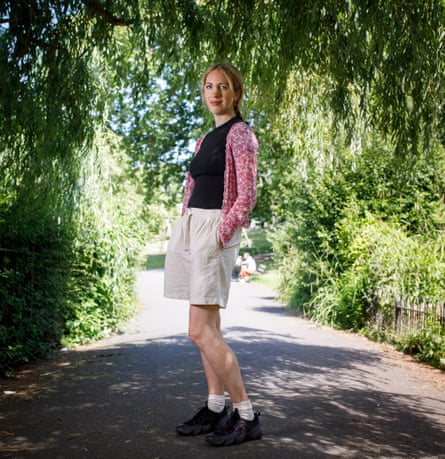
As my consumption ramped up, however, I became aware that I was using this psychological crutch every day: I listened to podcasts while walking, shopping, cleaning, folding laundry, preparing food, getting dressed, having a bath and travelling pretty much anywhere. Although I had occasionally used them to prevent anxious catastrophising, most of the time it wasn’t that I was scared to be alone with my own thoughts – it was more like I couldn’t be bothered to have them in the first place.
I can’t remember the precise moment I realised my podcast habit was drowning out my internal monologue but I’m pretty sure I wasn’t wearing my headphones at the time – it is impossible to have an epiphany while eavesdropping on somebody else’s conversation. The seed was definitely sown during a train trip early last year, which involved me gazing at the East Anglian countryside for hours in silence without a single piece of technology to distract me. Along the way, I felt as if I was undergoing a mental reboot; my mind flooded with ideas, plans, insights and reflections at a speed and intensity I hadn’t experienced for years.
I knew it hadn’t always been like this; I’m far from the only person who looks back wistfully on an existence not defined by the free, frictionless distraction our phones now provide – these days, there’s rarely a moment in which we lack access to an incessant stream of other people’s thoughts. But there was a simple solution to this particular time-suck: stop pressing play.
So I did. Once my days were no longer soundtracked by podcast chatter (much of it entirely trivial, as hundreds of hours of conversation mined from a single friendship is bound to become), I felt some semblance of this lost world returning to me. I began listening to a lot more music – something that actively encouraged my thoughts to drift – but I also got used to silence again. Gradually, my urge to find an escape from day-to-day reality diminished. Mundane household tasks became an opportunity to mentally digest my day, and I actually noticed things when I left the house.
These days I’m able to tolerate boredom much more easily. In fact, if I’m in the right mood, I can even savour it. Whereas a 10-minute wait for a bus would have wound me up before, I now see it as an opportunity to prove to myself that I don’t need external stimuli to blot out mild discomfort.
I do still listen to podcasts, mainly when I go running – I know I can’t hack exercise without the very highest levels of psychological escapism. But I’d estimate my consumption has reduced by at least 80%. In doing so, I’ve given my mind permission to wander – both productively and pointlessly – again.