3 months ago
106
3 months ago
106
Feminism is far from dead, but people love to write its obituary. I’ve lived through dozens of them over the decades, and there’s been a fresh flurry over the past few years. These death announcements are mostly based on two dubious assumptions. One is that we’re at the end of the story, the point at which a verdict can be rendered and a moral extracted. In this version, 60 years on from the great 1960s surge of feminism, the process should be over, and if feminism has not won, surely it has lost. In reality, it’s naively defeatist to assume millennia of patriarchy entrenched in law, culture, social arrangements and economics could be or should have been fully disassembled in one lifetime.
The other assumption is that one event can be a weathervane, a measuring stick, for the failure of feminism. Three popular recent candidates are the overturning of Roe v Wade in June 2022, #MeToo, and the Epstein files. Let’s first remember that the US is not the whole world. There have, for example, been countless obituary writers proclaiming that #MeToo is over or failed, and I’m not sure what that is based on – the assumption that all sexual abuse should have ended and, if not, feminism of the #MeToo subcategory did not succeed? Is any other human rights movement measured by such criteria? Did anyone think the civil rights movement should be judged by whether it terminated all racism for ever? The perfect is the enemy of the good, and it’s often both an impossible standard and a cudgel used to bash in what good has been achieved.
When it comes to the impact of #MeToo, it’s important first of all to recognise that it was not a deus ex machina event out of nothing and nowhere. It was a consequence of the preceding five years of feminist upheaval, which in turn built on earlier feminist work. That upheaval took place as a vast public discourse educating the public about the pervasiveness of gender violence and the fact that it very often does not unfold as “stranger in alley attacks pure young lady”. It got people to let go of a lot of the stereotypes and slanders that protected rapists by blaming victims or portraying them as incapable of bearing trustworthy witness to their experience. It created the editorial willingness to publish stories that exposed movie producer/convicted rapist Harvey Weinstein and a host of other abusers and creeps and unpacked the mechanisms of protection they employed.
That in turn resulted in changed laws. Six years after that 2017 upheaval, two women said, in a talk at the Practising Law Institute, “Prior to #MeToo, only three states had passed anti-harassment reforms.” They counted 70 workplace anti-harassment laws passed, in 40 US states and 3,000 pieces of legislation introduced overall that were impacted by #MeToo. A nationwide law passed in 2021 ended forced arbitration of sexual assault and harassment, giving victims the right to go to court. All this legislation created a lot more accountability and victim protection, but it’s the kind of consequence that often goes unnoticed. Unnoticed because it’s complicated, slow, incremental and, for the most part, legislative reform is not a hot headline.
The eager obituary writers tended to announce that #MeToo had failed whenever further incidents of high-profile sexual abuse were reported (though the very fact they were reported and in some cases successfully prosecuted may have been a result of these shifts). The single most important impact of #MeToo, I believe, is akin to what many environmental victories look like: nothing, in the absolute best sense of that word. Success for many environmental campaigns is the river that was not dammed or polluted, the forest that was not cut down, the species that did not go extinct, the oil wells that were not dug, the coal that was not burned. Unfortunately, these results are invisible if you don’t know why the river is flowing freely, the birds are singing or the meadow near your home wasn’t paved over.
For would-be rapists and abusers, the imprisonment of Weinstein, actor Danny Masterson, rappers R Kelly and Sean Combs, and the impact on many more abusers’ careers and reputations served as a warning. The era in which you could be confident you’d get away with this stuff was over, because the justice system, employers and colleagues, journalists and the public had suddenly become far more willing to listen to victims and to understand the situations they describe.
There is no way to know how many crimes have not been committed because the chance of escaping unpunished had shrunk in a society now more ready to listen to women and girls, who had gained more rights in the legal system that also better understood the nature of these crimes. Of course the feminist world I want to see is not carceral, not one where fear of prison is what prevents abuse. It’s one in which no one even desires to violate another’s bodily integrity and right to self-determination, in which sexual violation is seen as a repugnant status-destroying act (though clearly in dank manosphere-riddled corners of society and tons of porn it’s still seen as status-enhancing).
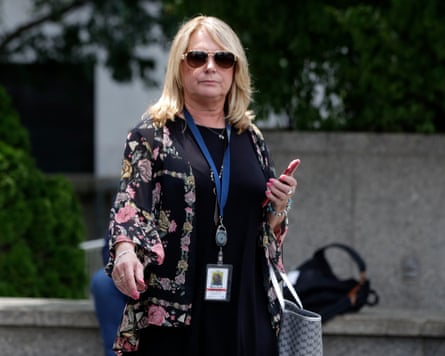
That feminist upheaval must have been what convinced Julie K Brown’s Miami Herald editors to back her many months of investigation of Epstein’s crimes, which gave voice to the dozens of victims whose trust she earned. That led to the arrest of Epstein and his death in jail and to the government seizure of what’s called the Epstein files, whose revelations continue to terminate reputations and careers (though obviously it should also lead to more abusers going to prison, and also it feels as if Trump and others are being protected from what the files might suggest about them). The Epstein files are now like a miasma of contamination, touching more and more members of the elite who continued to socialise with and cultivate Epstein after his status as a child abuser and registered sex offender was clear. In that sense, #MeToo is ongoing.
The Epstein files also offer the public an education in the ideology of that elite in which some people mattered too much to them to be held accountable and others mattered so little that crimes against them were of no significance. A striking feature of the current response to the Epstein case is the greater involvement of men in addressing it directly – it was, after all, congressmen Thomas Massie and Ro Khanna who led the campaign to release the files – and in commentary and discussion. Feminism used to be cast as women’s work, and until very recently most men seemed at best detached from the issues, though the idea that women can change our status and society without men’s participation is at best unrealistic.
Not only are we not at the end of the story, but a lot of people don’t seem to remember where we were in the story even a few decades ago, let alone before the birth of second-wave feminism in the 1960s and queer rights movements around the same time. The other evening, I mentioned to my friend Pam that I’d been remembering back to my youth when people would regularly assert that they didn’t know anyone who was gay (back when people mostly said gay or lesbian and the LGBTQ+ acronym and its variations had yet to be born). Pam said that in the 1990s, when she was a young physician as well as an out lesbian in Utah, patients would tell her that she was the first gay person they’d met. She’d politely suggest that she was almost certainly not. If that illusion is far less common than it once was, it’s because countless queer people asserted their existence and fought for their rights and made it more possible for yet more to come out of the closet. Even people who think they don’t know anyone queer personally are likely to know public figures from Elton John to Ireland’s former prime minister Leo Varadkar to the old guard of Tracy Chapman and Melissa Etheridge and Ellen DeGeneres and the new wave of Chappell Roan and Brandi Carlile (and even rightwing gay men such as treasury secretary Scott Bessent and tech oligarch Peter Thiel). Half a century ago, queer people were close to invisible because being queer was criminalised and stigmatised.
Things change. They change for the better because we make them change, or for the worse because we don’t show up or lose the battle. But if you forget the sheer profundity of the changes of the last several decades, you can mourn what the right is trying to do to pretty much everything from the climate to women’s rights without seeing that what they’re really trying to do is change things back, to return to their version of the good old days that for a lot of us were the bad old days. That’s a reminder that we changed a lot of things, and the fact that they’re not happy about it should feel like confirmation that these changes matter. The key is to remember, either through the direct experience of change that older people like Pam and I have, or through histories, stories, memorials; whatever measures the distance between then and now and documents how things used to be.
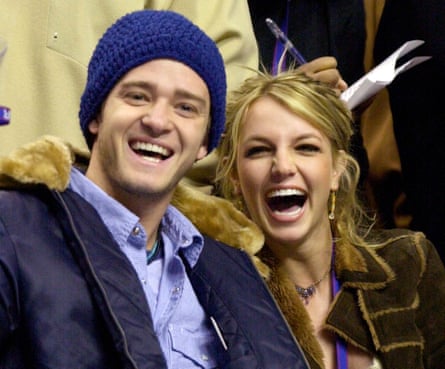
I’m reminded constantly of the sheer scale and scope of change. A woman in her 30s recently reminded me how grotesquely the female pop stars of the early 2000s were treated, especially Britney Spears. Then I went and watched a video of network anchor Dianne Sawyer berating the 21-year-old singer for her revealing clothing, her sexuality, her nail-biting, her recent breakup with Justin Timberlake (“You did something that caused him so much pain … so much suffering. What did you do?”), and made her cry on national television. Kate Manne had not coined the word himpathy yet, for sympathy that automatically swerves to the guys, but Sawyer embodied it unselfconsciously, in that era when shaming and blaming the young women in the public eye was routine. Maybe that’s why the term slut-shaming was coined around 2004. The present is different from the past, but that’s no use if you can’t remember the past. With feminism, the immensity of its achievements over the past 50 or 60 years disappears if you forget things used to be worse in ways almost unimaginable to those who didn’t live through them or study them.
There are many ways of looking at the overturning of Roe v Wade; I think of them as akin to cinematographic options. One way is to zoom out to look at the world rather than the US alone and see that other countries, including Ireland, Spain, Mexico and Argentina, have expanded reproductive rights, including abortion rights, in recent years. Overall, 60 countries, reports the Center for Reproductive Rights, have expanded abortion rights in the past 30 years; only four, including the US, have narrowed them.
Another way is to pan the long arc of time and see that before Roe v Wade women in the US lacked this right along with a host of others. You only have to go back a few years further to the US supreme court’s Griswold v Connecticut in 1965 to be reminded that the right to access birth control was not a given, either – and that decision only granted the right to married couples (a 1972 court decision expanded the right to unmarried couples). A third way is going in for a closeup to see that only 13 out of 50 states have banned abortion altogether, and less than 30% of US women live in those states. Other states have strengthened reproductive rights. It is, too, a story, that is not over; the struggle to expand or further contract those rights continues.
This is not to dismiss the nightmarish situation in the rightwing states where not only is abortion criminalised, but miscarriages are treated as potentially criminal acts. Nor to ignore the attempts by the Trump administration and its allies to take away access to birth control and other reproductive rights nationwide (while also defunding reproductive care worldwide). The justification that they’re “pro-life” or concerned about the unborn has receded, and the sheer punitive rage against women is no longer hiding behind those pretences. It’s coupled with the bitter fantasy that somehow women, specifically white ones, can be coerced into a captive-breeding programme that will produce a white-baby-boom that will assuage the racist anxieties of those who subscribe to the great replacement theory.
Another important principle is that a right once recognised and embraced can be taken away by law, but the belief in it is not so readily surrendered. I do not think that the majority will go back to believing women do not deserve these rights, should routinely be saddled with motherhood for every unwanted pregnancy or, as is currently the case in Texas and other anti-abortion states, risk death following a miscarriage and otherwise be denied essential healthcare. Surveys confirm this. A 2024 poll shows that almost two-thirds of Americans support the right to a legal abortion, and more than three-quarters of people under 30 do so. Laws so at odds with public opinion seem unlikely to be permanent. I do not believe the story ends here.
Also, any attempt to render women less equal and less free is a reminder that, in fact, we are more equal and more free than we were. The reason why is called feminism. But the backlash is real. There has been a lot of justified attention to the manosphere – the online realm of misogynist influencers who have too much of an impact on too many boys, who preach a gospel of inequality and a form of masculinity that seems inseparable from misery (the sheer resentful joylessness of its leaders and culture deserves an essay of its own). There should be attention to its distortion of reality and its harm. But that attention perhaps distracts from the fact that most men have actually embraced quite a lot of feminism, whether they recognise it as such or not.
Again, without knowing how normalised was inequality in all spheres of life – home, work, school, religion (first female rabbis ordained by seminaries in the US were in the 1970s, first female Church of England priests only in 1994), public life and politics, codified into law, and perpetrated in language, entertainment and culture – and how airtight gender roles once were, it’s hard for people to perceive how much things have changed. But they have. Maybe one of the best examples of this shift is in domestic life. Strikingly, social scientists speak of the gender revolution, by which they mean the way that women have entered the public realm of work and more slowly, men showed up more in the private sphere of home and family.
What is revolutionary has unfolded slowly across the decades, and it might be imperceptible to someone who doesn’t remember how normalised this division was and the power differentials it produced were. One study puts it this way: “The gender construct of the ‘separate spheres’ is neither biblical nor eternal; it emerged with industrialisation and was the dominant force structuring adult gender relationships for approximately 100 years. The gender revolution is in the process of undermining that structure, first by the entry of married mothers into the public sphere of the economy as co-breadwinners, and eventually by men’s entry into the private sphere of the family as co-nurturers.”
There might be another revolution in the number of households headed by same-sex couples whose relationships, of course, are not templated by gender inequality and the very resistance by the political right to marriage equality as an equal right is because it demonstrates that marriage can be a freely negotiated relationship between equals, which threatens the patriarchial order.
Things are both far more equal than they were and far from equal. We’re on a long journey away from the subordinate status of women (with marriage to a breadwinner as the main option for women, and mandatory heterosexuality for everyone). For the most part, men do not do as much as women at home, but women and society expect them to show up in ways they didn’t in, say, 1966. There are a lot of studies that are both amusing and embittering, measuring the difference between how men and women in these arrangements perceive the amount of work men do around the house: the gender gap there is pretty real. A 2025 study notes that in the US, “during the highly gender-specialised era of the 1960s, married women did seven times more housework and four times more childcare than their husbands”. Now, the study says, women do twice as much housework and childcare, which is both far from equal and far from what it was.
This is the news from the middle of the story, about a gradual and far from finished journey toward equalisation of the roles of the sexes. This has perhaps been most striking with parenting, which was considered largely women’s work; fathers now spend far more time with their kids than they once did, and fatherhood itself has been radically redefined from the detached breadwinner-disciplinarian role that was once the widely (if not universally) accepted norm.
Too many people have written too many obituaries for feminism. Maybe it’s schadenfreude, maybe it’s defeatism, but it’s definitely also about drawing up pictures that lack context and detail. To look back on 60 years of transformation is not to say that further expansion of rights and equality is inevitable. Every step of the way, feminists have worked and struggled and fought and educated and argued to win the rights and equality we have. I tell these stories to encourage people to see how far we have come, with the hope that the evidence will make the case that the work is well worth continuing. And I tell them as a witness to dizzying transformation, as someone living in and benefiting from a world that is profoundly different for my gender than the world I was born into, let alone the one my grandmothers were born into. Don’t stop now.