3 months ago
169
3 months ago
169
Since Saturday, my mind has been torn between the place I live, Abu Dhabi, and Tehran, which has been the focus of my work and research for more than 15 years, and where I still have family. When I saw that Israel and the US had attacked Iran, I started worrying for family, thinking about potential consequences. But I barely had time to consider that before Donald Trump announced that this was about regime change. At that moment, I knew this was going to be big – worse than last June – and that it would lead into a regional schism. Predictably, Iran’s response started shortly after: first against Israel, then against states across the Gulf region, including the United Arab Emirates. It all followed the worst-case escalation scenarios we had been outlining since June, and especially since January, when – in the midst of protests – Donald Trump said “help” was on its way.
I kept on trying to reach family when the internet there was working, which is, at best, for a few minutes a day. Each conversation is short, practical: are you OK? Is your area affected?
My main worry is for those in Tehran, the city targeted most so far. Relatives describe being asked to continue going to work as the authorities try to project a sense of “business as usual”, even though the reality is far from normal. Communication is patchy, there are no sirens or alerts before an attack, news arrives in fragments – and ordinary people navigate risks they did not choose, absorbing the consequences of external events. There is fatigue in their voices – not panic. And at times, they write to check on me, on us. Which is even more surreal.
In the UAE, the approach has been reassuringly methodical. Schools moved online. Workplaces shifted to remote arrangements to avoid risk. Air defence systems have been visible, with warnings and alarms as incidents occur. Life continues, but every day brings more questions: how long will this last? What will prolonged instability mean for our lives, for our children? Even in a city that is prepared, our daily routines are steeped in uncertainty.
What has also been stark is how gravely administrations in Washington and Israel underestimated the response from Tehran, with Trump admitting that he was surprised by Iran’s retaliatory strikes on the Gulf – the very thing those of us who had modelled regional escalation warned of in the event that Tehran felt cornered or under existential threat.
So, the million-dollar question. What happens next?
This is unlikely to be decided by a single strike or statement, but by how long this pressure is sustained, how many red lines are crossed and how much damage accumulates before restraint re-enters the calculation. But for now, neither side seems ready or willing to de-escalate, using a maximalist position despite the regional spillover.
For Iran, the stakes are existential: regime survival, territorial integrity and the credibility of its deterrence capability are all on the line. For Israel, the calculus is strategic but uncompromising, shaped by the belief that this moment represents a narrow window to permanently degrade Iran’s military and nuclear capabilities, even at the risk of wider escalation. For the United States, the stakes are geopolitical and systemic – balancing regime-change ambitions, alliance credibility and domestic political pressures against the costs of being drawn deeper into another prolonged Middle East conflict.
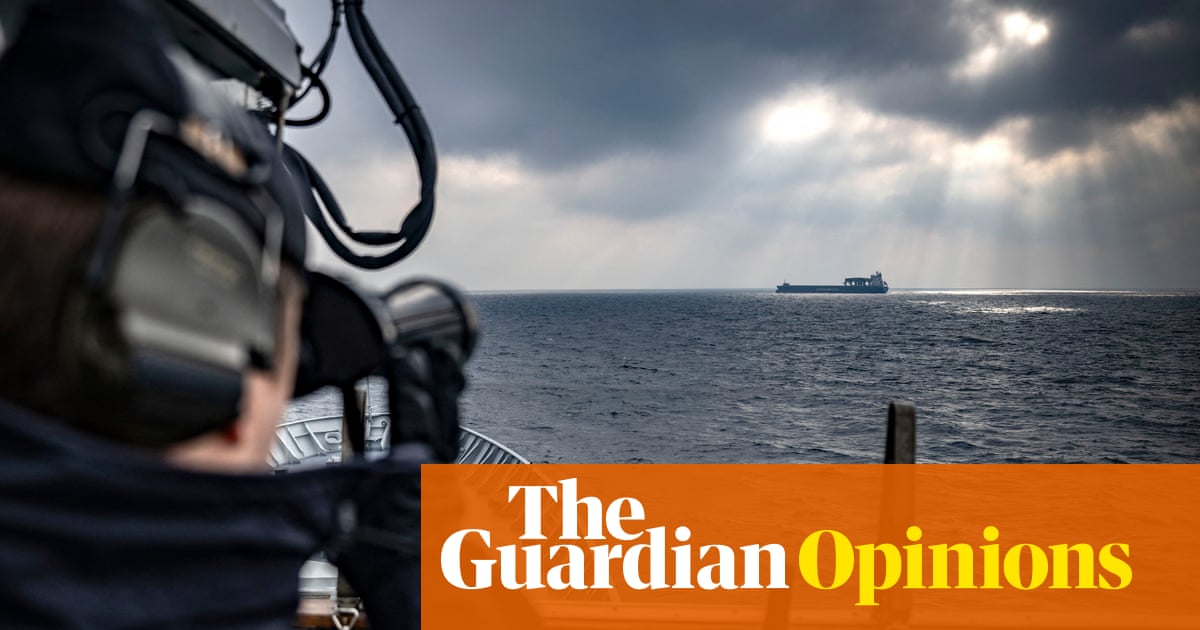
For the Gulf countries, the risks are structural, threatening internal security, economic stability and their hard-won positioning as nodes of global trade and investment. For global markets and supply chains, the consequences are systemic, as sustained instability in a region central to energy flows but subject to maritime choke points reverberates far beyond the Middle East.
Meanwhile, escalation rarely stays confined to one place. The wider region is watching. Gulf states are quietly recalibrating, strengthening defences and updating contingency plans. Traders and markets are alert, and governments around the world are preparing for potential spillovers. For ordinary people – in Tehran, in Beirut, in Gaza, in Tel Aviv, and increasingly across the Gulf – the cost is paid in uncertainty, disrupted lives and a constant recalibration of what “normal” now means.
Iran, the US and Israel will continue their fight. But we should remember this isn’t just about military strategy and deterrence; for those across the region, it is about human endurance.
-
Aniseh Bassiri Tabrizi is an associate fellow at the Chatham House Middle East and North Africa programme