3 months ago
155
3 months ago
155
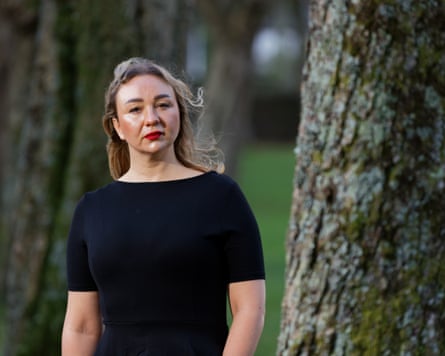
Yuliia Bond works two jobs, raises two children and is studying at university. In the autumn, she also found time to take on Reform UK when it tried to win the Caerphilly byelection.
Bond, a Ukrainian refugee who has settled in south Wales, said she could not remain silent as Reform tried to win the seat in the Senedd (Welsh parliament ).
“Members of our Ukrainian community spoke up,” Bond said. “We challenged the disinformation because we didn’t want our neighbours to be misled into resenting us. I didn’t want people to turn against us because of lies. So I spoke up and others did, too.
“Reform UK tried to create panic and hate with tactics used not only in the UK, but by far-right political parties all over Europe and across the world. The messages they used in Caerphilly didn’t feel local. They felt imported – like someone copied a script from another country and dropped it through our doors.”
Nigel Farage’s party was confident it could win the byelection, especially as Labour, the dominant party in Wales for a century, appears to be in freefall. An energetic campaign by the Welsh nationalists, Plaid Cymru – and people like Bond – kept out the rightwing party.
“Their biggest mistake was assuming that people here have no critical thinking,” Bond said. “They thought nobody would check the facts. They assumed that refugees are not just vulnerable, but somehow stupid. That is not true. We may have escaped a war, but we are not stupid. We understand policies.”
One of Reform’s key claims was that the Welsh government’s nation of sanctuary scheme showed both it and Plaid supported a “mass immigration agenda” and “asylum seekers” were receiving “preferential treatment”. The claim did not hold water – more than 80% of the nation of sanctuary money has been spent on supporting Ukrainian refugees.
Bond said: “When I read the leaflets, all I could see was a clear attempt to divide people, to scapegoat a small group, and increase hate in a place that had been welcoming to us.
“It didn’t work in Caerphilly because the Ukrainian community and refugees from different backgrounds are not outsiders. We are part of the community. People know us.
“They see us at school gates, in shops, at work, volunteering. They know what we contribute. The picture in the leaflet simply didn’t match reality. Most residents could sense that something wasn’t right. It felt like manipulation, not truth.”
Bond spoke to the Guardian in the “gratitude orchard” in Caerphilly, planted by members of the Ukrainian community in the town as a thank-you for the warm welcome they have received.
She said the arrival of Reform had put pressure on Ukrainian people in the area. “Vulnerable people should not have to carry this burden. Yet, during the election, we had to raise our voices first. Only later did support come – from local residents, politicians from different parties, and local media.”
There are full Senedd elections in May when Reform has hopes of becoming the largest party in Wales.
Bond said people campaigning against Reform in Wales in May and in other elections across the UK had to challenge the party’s messages swiftly and with conviction.
“As a Ukrainian, I know how dangerous disinformation can be. The war in Ukraine did not start with weapons. It started with disinformation, propaganda and lies that prepared the ground for violence.
“Disinformation must be challenged early, strongly and clearly, because hate spreads faster than facts. The two months of that byelection were truly exhausting. We just had to survive it. But we survived together, and that is why the hate campaign failed in Caerphilly.”

For Lindsay Whittle, the successful Plaid candidate, the aftermath of the byelection was a whirlwind. When he popped into the pub, people wanted selfies; at a Wales rugby match, he was applauded into his seat. “There have been points when I’ve been fighting back the tears, because it’s been so emotional,” he said.
Whittle said both Reform campaigners and their opponents had believed the party might sweep all before them. She said: “The thought was that they’d spend obscene amounts of money and beat us.”
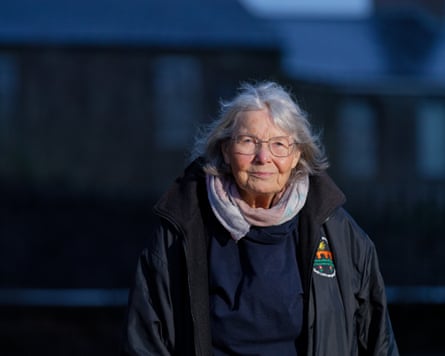
So how did they halt the juggernaut? One reason, Whittle believes, is that Plaid ran an upbeat, positive campaign. “Don’t attack anyone personally because people don’t like that. Keep the message positive. Try and unite people. I think Michelle Obama had the best phrase: ‘When they go low, we go high.’
“People in Caerphilly have friends of different nationalities and they don’t like people threatening their friends. Voters recognise that without certain people coming to this country, you’re not going to have an NHS or social care. I think Reform misjudged the people of Caerphilly.”
While Whittle made the front pages and news bulletins, an intense grassroots campaign was under way in the background. People like Judith Pritchard, a Plaid councillor who acted as “captain” for the St Cattwg ward, knocked on thousands of doors.
“We think it was the most important byelection we’ve ever fought,” she said. Pritchard said Plaid won because it had good policies – and people who believe in them passionately.
“Many Plaid members really believe in independence for Wales and believe it is a fight for survival of the Welsh language, Wales as a community of communities and Welsh values. It was a hard slog but in the end I think it came down to conviction versus cash.”
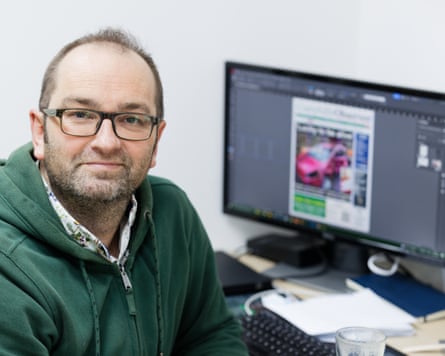
Richard Gurner, the editor of the Caerphilly Observer, was taken aback at how divisive the campaign was. “We had communities turning on each other, Reform posters torn down, really sharp debates online. I grew up in this area and I know everyone’s lovely so to see that side come out was a surprise.”
Gurner believes the turning point was a BBC debate when an audience member challenged the Reform candidate, Llŷr Powell, and told him people like her, who had someone not born in the UK in their family, did not feel welcome in the area since Reform had arrived.
“That was someone from our community who had a mixed race family explicitly stating the impact all this rhetoric had,” Gurner said. “Caerphilly isn’t the most multicultural of places but we’ve always welcomed people from overseas. That was the line in the sand.”
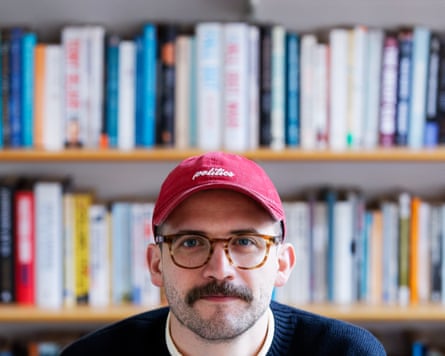
As a lecturer in politics at Cardiff University and a native of the village of Senghenydd in Caerphilly, Jac Larner has a unique perspective on the byelection.
He said Plaid was extremely successful in presenting the election as a straight two-horse race between them and Reform – but this will be harder at the Senedd elections in May when a new proportional system comes in.
Larner said seeing Caerphilly get so much attention was often uncomfortable and emotional. “It tended to be quite uninformed or, at times, condescending. But Caerphilly isn’t some post-industrial wasteland passively absorbing whatever political winds blow from across the border – it has its own political traditions and, like Wales more broadly, it has its own dynamics and can’t simply be read through the lens of what is happening in England. It was gratifying to see my home town confound those lazy assumptions.”