3 months ago
125
3 months ago
125
The Trump administration is slowly dismantling the federal disaster management system that protects the nation from chemical catastrophes, such as fires and explosions at high-risk facilities.
The US Environmental Protection Agency’s Response Management Program (RMP) requires more than 12,500 high-risk facilities to develop protocols to prevent catastrophes, or limit fallout, and was largely designed to protect workers, first responders, and fence-line communities.
In 2024, the Biden administration finalized a rule 12 years in the making that meaningfully strengthened protections. However, industry in early 2025 asked the incoming Donald Trump EPA to undo it because, chemical companies claim, its provisions are too expensive to implement.
The Trump EPA is now moving to kill most of the 2024 rules after it eliminated a public website that informs communities and first responders which chemicals are in use at facilities. The White House has also targeted the Chemical Safety Board, which reviews accidents and develops actions to avoid a repeat.
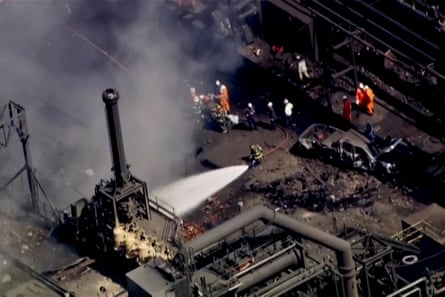
The US experienced a chemical accident that harmed humans or the environment every other day on average between 2004-2025. Among recent high-profile incidents are a Clairton, Pennsylvania steel plant explosion that injured 10, and a Roseland, Louisiana oil facility explosion that caused oil to splatter onto homes as far as 20 miles away.
The Trump EPA is stacked with former industry lobbyists, and its attempt to dismantle the RMP is a case study in the administration “putting industry profits ahead of public safety”, said Marc Boom, a former EPA policy advisor and senior director with the Environmental Protection Network.
“These standards exist because catastrophic explosions and toxic releases are not theoretical risks – they are real events that devastate communities,” Boom said. About 180 million people live within several miles of a plant covered by the rules, and dozens have been killed in recent years.
The EPA told the Guardian it is strengthening the law by providing “clearer and more workable” rules.
“The proposed revisions maintain all core accident prevention protections while eliminating duplicative, contradictory, or unproven requirements that add cost and confusion without improving safety results,” an EPA spokesperson said in a statement.
Congress approved the program in 1990 under a Clean Air Act revision in response to a series of deadly chemical facility accidents across the globe that killed hundreds of people.
Among other requirements, the law mandates that facilities take protective steps like installing technology that detects chemical releases, installing fire suppression systems, and developing a personnel plan for how each employee at the facility is to respond to an emergency.
Public health advocates say the first law’s first iteration was not strong enough. In the wake of more fatal accidents in the years around 2010, including a Chevron explosion that injured 15,000 people, the Obama EPA developed new rules to strengthen the law.
The first Trump administration derailed their implementation before the Biden administration redeveloped the Obama-era rules with even more improvements.
Among other measures, the updated rules require hazardous facilities to put in place newer technology that would prevent disasters, put in place backup measures in case a first line of defense fails, and replace hazardous chemicals with safer alternatives. Measures could include kill switches easily accessible to employees, or automatic shut-offs that would kick in if a worker was incapacitated.
The rules also require facilities to develop plans for dealing with “double disasters” that occur when hurricanes, earthquakes or wildfires hit a chemical facility. When Hurricane Harvey hammered Houston in 2017, the flooding shut down refrigeration units at the Arkema chemical plant, causing a massive explosion, forcing an evacuation around the plant, and injuring first responders who were not warned of the toxic fumes they would be encountering.
“The new Trump proposal erases most of those requirements,” said Emma Cheuse, an attorney with Earthjustice legal non-profit, a legal non-profit that has litigated on RMP issues. “These are common sense measures and yet they want to take them out completely.”
The 2024 rule, which has not yet been fully implemented, also gives workers more power. It required chemical companies to consult with workers and unions when developing emergency responses, grants workers stop work authority, provides emergency response training, and provides a mechanism for workers to report unaddressed hazards.
The Trump administration plan is an attempt to “shift the balance of power from workers to corporate executives”, said Rick Engler, a former EPA Chemical Safety Board member and labor advocate who founded the New Jersey Work Environment Council.
“This administration … fundamentally does not care about workers or that so many facilities have had catastrophic events that sometimes lead to mass layoffs and closures,” Engler said.
The administration also took down a “public data tool” that provided a map of where hazardous facilities are located and lists the chemicals that are used in each. The law requires that information to be public, and may have helped avoid problems at the Arkema explosion.
But the EPA has moved it to a reading room at one of its offices, citing national security concerns, Bloom said. Advocates dismissed the security justification as pretext.
“This fits into the broader pattern,” Bloom said. “They’re taking actions that are putting more people at risk … and we’re seeing across the board, but this is particularly egregious.”