3 months ago
135
3 months ago
135
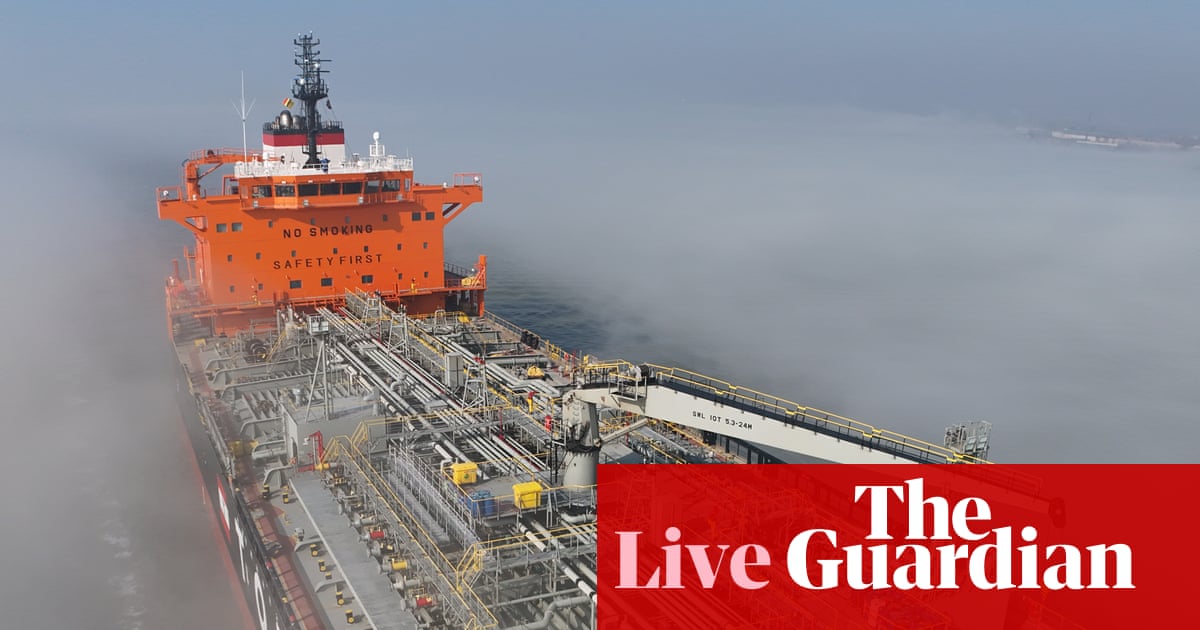
The United States has temporarily waived sanctions on Russian oil stranded at sea as Trump administration officials attempt to reverse a surge in prices that is causing mounting apprehension about global supplies.
Scott Bessent, the US Treasury secretary, announced a “temporary authorization” late on Thursday, allowing countries to buy the stranded Russian oil for 30 days. Trump is “working to keep prices low”, he said, after average US fuel prices rose by 65 cents per gallon in a month.
“This narrowly tailored, short-term measure applies only to oil already in transit and will not provide significant financial benefit to the Russian government, which derives the majority of its energy revenue from taxes assessed at the point of extraction,” Bessent claimed.
Brent crude, the international benchmark, remained above $100 per barrel during early trading on Friday despite this latest in a string of measures designed to soothe concerns around the economic impact of the US-Israel warn on Iran.
The Middle East conflict has all but closed the strait of Hormuz, one of the most important arteries in global trade, through which about a fifth of the world’s oil and seaborne gas tankers typically pass.
While the Trump administration has repeatedly pledged to escort vessels through the strait, activity has yet to recover. The Iranian regime has declared that it will not allow “one litre of oil” to be exported from the region while US and Israeli attacks continue.
The Trump administration last week permitted Indian refiners to temporarily buy Russian oil for 30 days – a month after Trump claimed India had agreed to stop purchasing it, in a shift that he said would “help END THE WAR in Ukraine” by cutting off a vital source of funds for Russia.
There were about 124m barrels of Russian-origin oil on water across the world as of Thursday, Fox News reported.
Brent crude was up 0.3% at $100.74 per barrel after Bessent’s announcement, having broken above $100 earlier this week for the first time since Russia’s invasion of Ukraine four years ago. The oil price started the year at about $60 per barrel.
Moscow claimed on Friday it was “increasingly inevitable” that Washington would lift sanctions. The US is “effectively acknowledging the obvious: without Russian oil, the global energy market cannot remain stable”, Russia’s economic envoy Kirill Dmitriev wrote on Telegram.
Some US allies have pushed back, however. The paralysis of the strait of Hormuz “in no way” justifies lifting sanctions on Russia, French president Emmanuel Macron said after a call with other G7 leaders about the economic ramifications of the war in Iran.
The International Energy Agency, the world’s energy watchdog, ordered the largest release of government reserves in its history on Wednesday, when its 32 members unanimously agreed to release 400m barrels of emergency crude.
But ongoing strikes across the Middle East have overshadowed such efforts, as Iran stepped up retaliatory strikes on economic targets across the region – and goaded the US to “get ready for oil to be $200 a barrel” after its bid to topple the regime in Tehran.
Iran started to lay mines on Thursday in the strait of Hormuz, the New York Times reported, citing US officials.
Trump has tried in recent days to play down concerns about high oil prices. “The United States is the largest Oil Producer in the World, by far, so when oil prices go up, we make a lot of money,” he wrote on social media on Thursday. “BUT, of far greater interest and importance to me, as President, is stoping [sic] an evil Empire, Iran, from having Nuclear Weapons, and destroying the Middle East and, indeed, the World. I won’t ever let that happen!”
As November’s midterm elections loom, however, higher fuel prices could pose a challenge for Trump, with his Republican allies defending their small majorities in the Senate and House of Representatives.