3 months ago
165
3 months ago
165
This new year, you may be embarking on Veganuary, or have resolved to eat less meat and dairy in 2026. What are some of the simplest switches to make and most nutritious dishes to try with minimum fuss? Vegans share their tips on how to eat a balanced plant-based diet.
Eat the world
Sophie Sugrue, who last autumn became the first plant-based finalist on MasterChef, says: “It has pushed me to experiment so much more with different flavours from all over the world, because there’s so much naturally plant-based food.” Her favourite cuisines are “Japanese, because although they use fish sauce, it can be subbed out, and they use a lot of tofu; Vietnamese food is incredible, because a lot of people follow a plant-based diet. If you go to a Vietnamese grocery store, you can find loads of substitutes.”
Ensure your diet is balanced
“Make sure that you’re hitting all of your food groups,” says the dietitian Reena Sharma, who suggests using the Eatwell Guide. Check that “you still have protein, you still have healthy fats, you still have omega-3”. Although you can also get plant-based omega-3 from things such as walnuts and flaxseeds, the rate at which it is converted to what our body needs is low, so Sharma recommends taking a supplement.
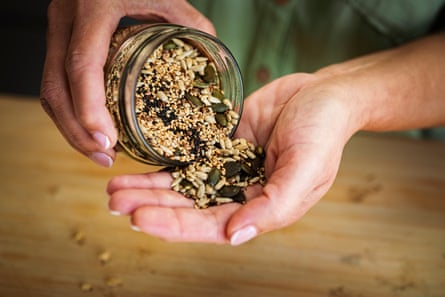
Ian Theasby, one half of the vegan meal company Bosh!, moved to a plant-based diet a decade ago; co-founder Henry Firth followed suit a few weeks later. “Mix up your plate so you’ve got a good variety of vegetables,” he says. “Colour is a great way to see if you’ve got variety on there, and then add little bits on. I tend to have a jar of mixed seeds that go on practically everything. It is about making sure that you’re getting a good variety every single day.”
Find your go-to protein sources
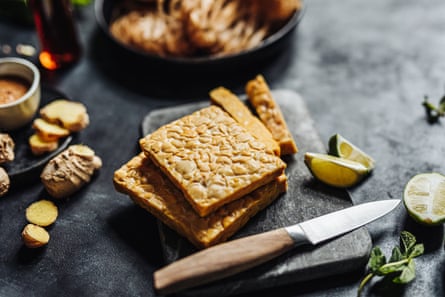
Theasby gets most of his protein from tofu, lentils and beans: “Ten years ago, I would have looked at those and gone, ‘That is so boring and bland; why would I want to eat any of that?’ But actually, 50% of the protein that I get now is from those three ingredients and they are so wildly versatile.”
Don’t be put off if your uptake in beans initially has a gaseous affect, says Rachel Ama, the author of One Pot: Three Ways and founder of Ama’s sauces who went vegan nine years ago. “People always say: ‘The more beans you eat, the more you fart.’ But your body is adjusting, your gut is realigning. So if you do get gassy, it passes; it’s not a for ever thing. Your gut is enjoying it and it’s going to be able to handle it.”
“One of the big revelations for me was tempeh,” says Richard Makin, the food writer behind School Night Vegan and the author of Anything You Can Cook, I Can Cook Vegan. “Tempeh is a complete protein source, so it has all the major amino acids. It is much higher in protein than tofu. It tends to be closer to 25g of protein per 100g. Also, because it’s fermented, it is much easier to digest. I try to get tempeh in as many things as possible.”
“Stick a block of tofu or tempeh into your pasta sauce and blend, to add additional fibre, calcium and protein,” says Sharma.
Embrace tofu
“At first I really missed scrambled eggs, because it is just such a cheat code for quick nutrition and tasty meals,” says Theasby. “So we came up with the ‘two tofu technique’.” This involves blending silken and firm tofu with a few other ingredients including black salt (kala namak). “It gives you exactly the same mouthfeel, texture and satisfaction.”
“Tofu can get a bad rep,” says Ama, “but if you just cook it nicely …” How so? “Get firm tofu for starters, and either pull it apart or chop it into little pieces. Then toss it in a tablespoon of cornflour, get a nonstick pan, a bit of oil, and cook it. This crisps up the outside layer and makes the inside a bit softer, so you have two texture comparisons. Smother it in a sauce, and then you get the flavour, a bit of crunch and a soft centre, and it’s just a lot more enjoyable and fancy.”
“If you freeze tofu you can get an amazing texture,” says Sharma. “You thaw it, squeeze out all the water, and it becomes quite porous, so you can cook it in a broth and it will soak up the flavours. Then you can fry it, or cover it in batter. Or you can get blocks of silken tofu and just pour over chilli oil: it tastes so good and requires no cooking.”
Fuel well for fitness
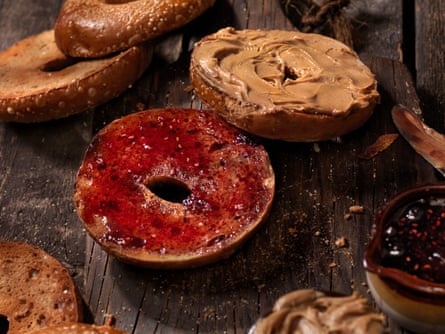
“People say that you can’t get enough protein or energy on a plant-based diet – that is nonsense,” says Theasby. “I run ultra marathons.” How does he fuel himself for that? “For races, which are 31 miles and up, I prep by loading myself up with carbohydrates at least three days before. So that would be a big plate of pasta, sweet potato, or rice. And then on race day, my standard breakfast would be bagels with a good amount of raspberry jam and peanut butter, for fats, proteins and sugars and carbs. During the actual race, it’s just nailing loads of gels.” Afterwards, and during training, he has plant-based protein powders and shakes.
Use plant milk and oil
When baking, says Makin, “I tend to use plant milk as an alternative to eggs. I swap 50ml for a large egg, because it pretty much does exactly the same thing. I tend to use unflavoured, unsweetened soya milk because soy is the plant milk highest in lecithin, which is a naturally occurring emulsifier in soya beans – and also in egg yolks – and it mimics the way an egg binds quite closely.”
With regards to butter, says Makin, “Unless you really do need a plant-based butter for buttercream, it is easily replaceable with either vegetable oil or extra virgin olive oil. What I learned from Philip Khoury, an incredible vegan baker and chocolatier, is that if you’re replacing the butter in a recipe with oil, whether it’s vegetable, sunflower or olive, you only need 80% of the butter’s weight because a lot of butter is water. So if you’re trying to convert a recipe, keep that in mind.”
Snack well
Make sure you are organised when you are out and about, in case plant-based options are limited. Sharma says she “always carries nuts”.
“I’ve become one of those vegans who will eat raw tofu or tempeh as a snack to hit a macro target for my protein,” admits Makin. “It doesn’t bother me any more, whereas I think five years ago that would have been unthinkable.”
Leave the cheese
Ama says cheese is the thing she missed the most: “There are some really nice nut cheeses that are super cheesy and umami. But as far as melty vegan cheese, I’m not the biggest fan.”
“I still don’t think that we have nailed vegan cheese,” agrees Makin. “There are some products where the flavour is there, but the texture isn’t. I tend to just do without.”
Focus on versatile veg
Before going vegan: “Me and aubergine did not know each other, and now we are best friends,” says Ama. “Because it has that unique texture, you can use it to thicken stews or a bolognese, or you can smother it in a teriyaki and have a silky pull-apart texture. It can be used in many different ways and makes a main feast or a side.”
“I wasn’t a big fan of mushrooms when I was a kid, because they used to remind me of slugs,” says Sugrue. “Now I’ve opened up to the world of mushrooms: there are so many different types, and you can do so much with them.”
Veganise your favourite meals
“I like to think that we all have eight recipes that we rotate, and maybe sometimes we’ll switch up the ingredients a bit,” says Makin. “My advice is always to just try to veganise those things, then you tend not to feel quite so dislocated in your diet when you’ve made that switch.”
Use the same formula as you would when cooking your favourites, says Ama. “I like to use coconut milk, cumin, turmeric and onions. Instead of adding the usual chicken or whatever meat you’d have, just put beans in it and more vegetables, so it’s not a completely unfamiliar recipe.”
When lacking in week-night inspiration, try …
“I have a tofu tikka masala recipe on my blog,” says Makin. “It calls for vegan cream, which is probably the only processed ingredient in there. But what I found recently is that you can actually just blend silken tofu with a stick blender and it replaces the cream completely. It is delicious and really high in fibre and protein, so it gives an extra nutritional boost. I’ve got a cauliflower cheese recipe as well, which I am obsessed with. It teaches you how to make a really creamy white sauce that doesn’t require any vegan cheese. And then obviously you can use that as a bechamel, in a moussaka or lasagne.”
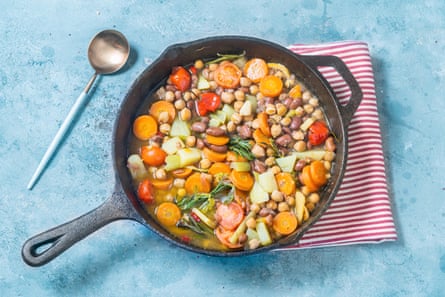
Ama recommends “a big bean dish with black beans, kidney beans, brown beans and beluga lentils. Cook them with cinnamon, paprika, cumin, ground coriander and tomato paste. Add some onions, peppers, tomatoes, veg stock, salt, pepper, then just leave that to simmer on low and let the flavours infuse. It will last you a few days and you can serve it with different things like a jacket potato, pasta, or rice and avocado.” She also rates sweet potato brownies: “They are full of superfoods, like the sweet potatoes, cacao, almond butter and dates,” and even small children go wild for them.
Theasby says he lives by the mantra “chop, toss, roast”: “Take a block of tofu. Cut it up into 2cm chunks. Take a vegetable of your choice, be that tomato, aubergine or carrot. Chop that into roughly the same size as the tofu, then toss it in the seasonings of your choice. I always add a little bit of nutritional yeast, because it gives a really beautiful, umami flavour, but also is really good for B12. Toss it with a bit of olive oil. Roast it for about 30 minutes, put it on a plate with some kimchi, hummus and salad. What you’ve got is a plate of excellent food, but also loads of fibre, protein and plants. It is very easy and there is minimal washing up.”
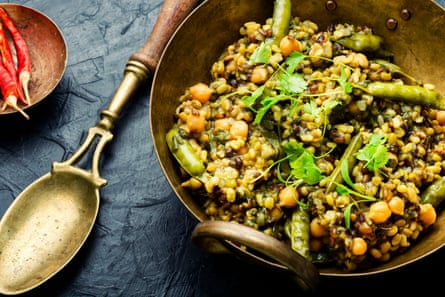
Sharma swears by a dish her mother used to cook for her. “It’s an Indian dish called kitchari, and it’s just lentils with rice. You stick it in a slow cooker, or a saucepan on a low heat, and add some spices like turmeric or garam masala, cumin and salt, and you just boil it until it’s like a risotto. You can have it for breakfast as congee, or for lunch or an easy dinner, and you can add extras to it, like pickles, to make it a bit more exciting.”
Sugrue likes to make a pot pie with whatever is left in the fridge: “mushrooms, leeks, onion, garlic, and then I use soy cream to make the sauce. You can add in plant-based chicken alternatives or chickpeas.” Homemade pastry? “No – we haven’t got time for that midweek. It is store bought.” Surprisingly, some of the ready to roll varieties are dairy-free anyway: “There are some good things that you wouldn’t ever think are vegan, that are.”
Don’t worry if you have occasional lapses
“Don’t beat yourself up if you find it too difficult and occasionally fall off the wagon,” says Theasby. “Most people will find the immediate restriction very difficult, because it is new to them. So give yourself the opportunity to have that cheeky bacon sandwich every now and again, or a plate of scrambled eggs. It is about introducing a lot more plant-based food into your diet, which is great for your health and the planet.”