1 month ago
73
1 month ago
73
There really is, it turns out, a true story involving cheating in chess and a vibrating crotch. Only this one is a whodunnit that dates back more than 30 years and was only solved last week.
Imagine the scene at the World Open in Philadelphia in 1993 when a mysterious unrated player with fake dreadlocks and headphones, and with a bulge that vibrates in his trousers, shows up. Now multiply it 100-fold when this unknown amateur, who calls himself John von Neumann after the founder of game theory, draws with a grandmaster, Helgi Ólafsson, in round two.
“I was sure I was playing a complete patzer,” Ólafsson said afterwards. “He had no idea about the game, and I even thought he was on drugs. He took way too much time to reply to obvious moves, and he was very strange.”
To make things even weirder, in round four Von Neumann then loses on time after only nine moves – despite having two hours for the game. Yet he still ends up winning a few hundred dollars in prize money. At which point he is asked by suspicious organisers to solve a simple chess puzzle, flees, and is never seen again.
So what really happened? According to a gripping new book, Lucky Devils, Von Neumann was actually a former US marine, John “The Duke” Wayne. And he was working with his friend, the mathematician and gambler Rob Reitzen. As Reitzen explains to the author, Kit Chellel, their dream was to win big in games like backgammon using homemade tech and chess was their guinea pig.
Their system worked by the Duke transmitting his opponent’s moves using toe switches in his shoes. Reitzen, in his hotel suite, would then send the computer’s reply to a buzzer in the Duke’s trousers. The problem was the reception was patchy and the computer would take ages to calculate even simple moves.
Inside Chess splashed the story on its front cover in 1993, calling it the Von Neumann Affair and issuing a warning: “If computers become strong enough to be of genuine assistance to top players then watch out!”
Which takes us neatly to the new Netflix documentary, Untold: Chess Mates, which retells the story of Hans Niemann being accused of cheating after beating the world No 1, Magnus Carlsen, in 2022.
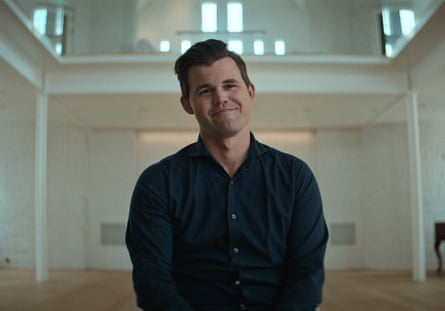
You may remember what happened. Carlsen shockingly pulled out of the prestigious Sinquefield Cup, posting a gif on X of José Mourinho saying: “If I speak, I am in big trouble.” Niemann then admitted he cheated in online games when he was 12 and 16, but denied allegations that he cheated to beat Carlsen by receiving messages from a vibrating sex toy. Anal beads became a punchline, Niemann a punchbag.
The world had moved on by the time Niemann was cleared of cheating in his over-the-board game against Carlsen. But, four years on, grudges still fester. And while Netflix has unearthed no fresh bombshells, the documentary serves as a cautionary tale of what can happen when the dollar signs start flashing, the rulebook is flimsy, and trust evaporates.
“We had our Covid bump, Queen’s Gambit bump,” says Chess.com’s co-founder and chief executive, Erik Allebest, at one point. “Anal beads have been super good to us … don’t use that!” At which points he begins to laugh.
It isn’t the only uncomfortable moment. Chess.com knew that Niemann had cheated online as a kid but kept it to itself – which in other sports would surely be a red flag. Yet its stance suddenly changed when approached by Carlsen’s dad, Henrik, after his son’s defeat – which again is unusual.
Incredibly, in an era where Chess.com’s daily players shot up from one to six million, and the company’s valuation was heading towards a billion dollars, its mentality carried the whiff of a tech-bro start-up.
And what of Niemann? Well, his story is even more complicated, especially for those who see the world in light and dark, goodies and baddies. He insults opponents. He trashes hotel rooms. More than one person who has met him tells me he wants to be Bobby Fischer, the brilliant but hugely controversial and unstable former world champion. And as he admits himself: “I am not a nice guy.”
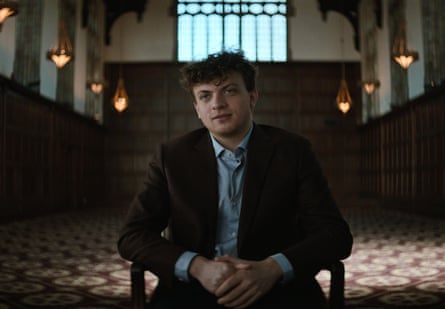
He is undoubtedly a brilliant player but also a former cheat. But how long should the sins of youth remain a stain? Some I spoke to in the chess world still don’t trust him at all. Others admire his resilience. As one put it to me: imagine being 19, and seeing the chess world using you for content and drama, and your name being globally associated with a sex toy. Imagine the extreme force of will to get through that.
Carlsen, meanwhile, comes out of it well and pointedly criticises Chess.com for gaslighting him into thinking it had the evidence against Niemann over the board, when it didn’t.
So what does this journey from the Von Neumann to the Niemann affair tell us? First, that the chess landscape has dramatically altered. In 1993, as one grandmaster put it to me, the notion of an amateur trying to cheat was startling, but this was still an era when Garry Kasparov was regarded as a mystical genius and could beat any computer. Nowadays Carlsen would lose to a novice with a phone.
But this isn’t just about vibrating crotches and anal beads but suspicious minds. While online sites such as Lichess and Chess.com have cheat-detection software, it is imperfect. So the question arises: am I playing someone who has discovered a brilliant move with their mind or their computer?
So far grandmasters caught cheating over the board have largely done so in a remarkably low-tech way: usually by hiding a phone in the toilet and checking it between moves. Since the Niemann affair, players now get scanned with wands to check for electrical devices. But no one is entirely sure these methods are watertight.
A final point. Someone really should turn Lucky Devils into a film. Reitzen is still alive, having made and lost several fortunes, but sadly John “The Duke” Wayne died of cancer in 2018. Still, his name should live on in infamy, despite his more famous namesake. After all, he was the first chess cheat of the modern computer age.