3 months ago
176
3 months ago
176
Unlike some other less resilient horror subgenres, the zombie movie is, fittingly, never going to really die. Neither will film-makers attempting to add their own twist, understandable given how repetitive the die, wake up, lumber, bite and repeat formula has become. Australian director Zak Hilditch’s attempt, the rather buried We Bury the Dead, is therefore not quite as striking as it might have seemed a decade and change ago. Using words such as “contemplative” and “mournful” to describe a film that includes its fair share of gnarly head-smashing has become something of a cliche, so much so that last month’s meta-comedy Anaconda reboot had its characters joke that these days, even a film about a giant snake needs “intergenerational trauma” to work.
But Hilditch mercifully avoids drowning his film in drab self-seriousness. Yes, it’s a zombie survival thriller that’s also about grief – but it’s also just a zombie survival thriller, albeit one with less carnage than some might expect. Those gearing up for gore would be forgiven for expecting such given the film’s cursed 2 January release date, typically handed over to the silliest of studio horror, from One Missed Call to Texas Chainsaw 3D to Season of the Witch (they’ll likely be satiated by next week’s killer chimp schlocker Primate instead). We Bury the Dead, which was part funded by the Adelaide film festival before premiering at SXSW, is less focused on death toll and more on the toll left on those who’ve lost someone, in this iteration as the result of a US government blunder.
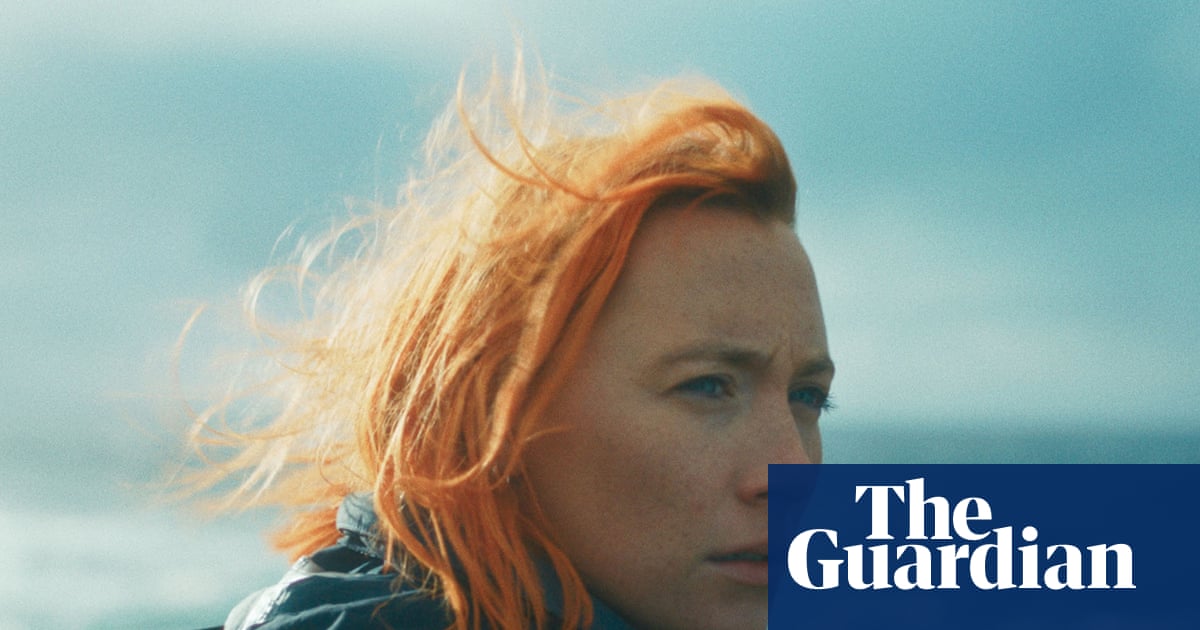
In a turn of events that doesn’t seem awfully far-fetched given the clown show that is Trump’s military, a catastrophic accident involving a weapon of mass destruction kills around half a million people in Tasmania. One of those was the travelling husband of Ava (Daisy Ridley), who has now flown over to join a team of volunteers to help with body retrieval, going inside the homes of the dead and helping with identification and cataloguing. But she’s really hoping to break away from the pack and find his body, left in an area that’s out of bounds with fires still raging. Her presence isn’t all that popular given how many Australians still blame the Americans (Ridley’s accent takes a while to even out) but she finds a friend in brusque rule-breaker Clay (Brenton Thwaites), who agrees to go with her into uncharted territory. Oh and there’s a slight hitch: some of the dead have started to wake up …
It’s unclear why this is happening or why certain corpses start twitching while others remain still which might explain why there’s a remarkable lack of fear on display. The undead are treated more like a curiosity, as if no one in this universe has ever seen a zombie film, and it’s only when “agitation” occurs during the later stages of the transformation that anyone starts to run and grab something pointy. Instead, Ridley’s Ava is more focused on the awfulness of what she has lost, her big eyes always on the verge of tears, and whether finding her husband’s body will help bring any sort of closure. What if he’s awake? Would that be better or worse?
After her Star Wars duties ended, it was perhaps for the best that Ridley’s by-the-book attempt to be a multiplex mainstay didn’t work out all that well. She stumbled away from cursed YA mess Chaos Walking and has found more joy in smaller fare instead. She was wonderfully specific in her portrayal of an anxious office worker in the otherwise so-what Sundance comedy Sometimes I Think About Dying and effectively unsettled in 2024’s little-seen Brit thriller Magpie (a film with a brilliantly wicked final twist) and now she’s great on a smaller canvas once again. She gives real emotional depth to a slightly underwritten protagonist, navigating a frightening world while processing a terrifying truth – that the person she gave her life to is never coming back. She’s as effectively forceful with her physicality while things worsen as she is with conveying the gnawing horror of grief, a character light on dialogue that relies on Ridley’s impressively modulated facial reactions.
She works hard to involve us in her quest, although our interest starts to flag a little in the final act. Hilditch, who gave us one good Netflix horror (1922) and one genuinely terrible one (Rattlesnake), is more confident with visuals, capturing the beauty of the natural landscape with some genuinely incredible shots and stretching his budget to make a small film often seem huge, than he is with tone. There are some switch-ups that work (there’s a sequence involving a grieving soldier and an unusual dance that neatly slides from sadness to suspense) but too many that don’t, quiet moments of reflection followed by big needle drop-soundtracked scenes of “fun” or familiarly middling zombie action.
As Ava’s journey comes to an end, we realise there’s not much here that’s all that new when it comes to the walking dead and how humans would really process their existence (a fact made clearer by an underwhelming finale that asks a question already posed by last year’s 28 Years Later). But in a genre plagued by a lack of effort, I’ll take a solid try.
-
We Bury the Dead is out now in cinemas in the US and to rent digitally in the UK and will be released on 5 February in Australia