3 months ago
54
3 months ago
54
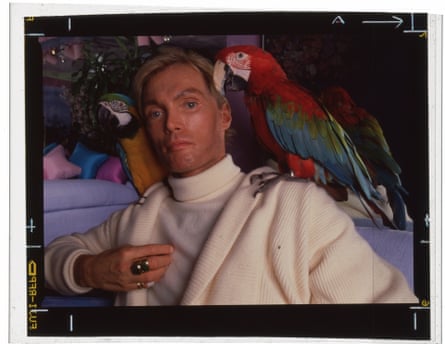
Documentary film-maker Chris Smith made the seminal 1999 film American Movie, about an indie director’s struggle to complete a horror film, which he hopes will then finance the completion of his dream project. More recently, he’s profiled well-known subjects in projects for Netflix about Jim Carrey and Andy Kaufman, the bands Devo and Wham!, and the disastrous Fyre festival, among others. His new HBO miniseries Bring Me the Beauties is similarly connected to popular culture, but through a story with far less immediately available background material: the rise and fall of Eternal Values, a cult started in the 80s by the eccentric Frederick von Mierers, consisting largely of models.
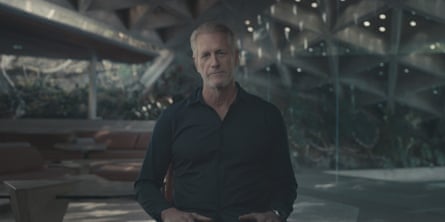
“What was odd about this story,” Smith said, “is that there was very little about it online.” He met Hoyt Richards, sometimes referred to as the first male supermodel and a former Eternal Values member, on another project, “and as we started talking, hours went by”, Smith said. “It was one of those situations where I just became more and more curious about his life.” Richards became the backbone of the series, sitting for many hours of interviews, but wasn’t sure if Smith and his collaborators would be able to coax anyone else into participation. As seen in the series, not everyone’s account of their experience with Von Mierers is the same; not everyone is even convinced they were involved with a cult in the first place.
“Hoyt said to us, one of the challenges is that you won’t find anyone else who will speak to you about it. But we always like a challenge and we’re also really patient. So it took years to make inroads and relationships to get people to speak to us on camera.” What he found, Smith continued, “is that they were all incredibly thoughtful, insightful, articulate people [who would] talk about their experience in a way I found interesting and thought-provoking”.
Some of the details about Eternal Values skew woo-woo new-age in a way that feels very 1980s, when the group began; other aspects are more overtly menacing, particularly the stories Richards tells about the organization (and its attempts to keep control of his life) after the death of Von Mierers in the 90s. Toward the end of the series, the film-makers bring up parallels to a number of active organizations, whether religions or political groups. (Yes, there is a brief reference to Scientology.) But followers of contemporary culture may also think of more recent, less formally organized, and more influencer-related developments related to topics like wellness or “looksmaxxing”, sort of a DIY digital-age version of the supermodel fixation. “When we were doing the initial research, it was shocking to us how ahead of the curve Frederick was in terms of what he was promoting for the group – keeping yourself at peak performance,” Smith noted. “He was incredibly handsome, very fit, always looked like he had this radiant glow to him. It would be interesting to see him in the age of social media. I think he would have done incredibly well in an online environment.”
At the same time, Bring Me the Beauties becomes particularly beguiling because so much of its archival footage has a different sort of radiant glow – a retro, lower-resolution transmission from a different era. This includes material from a show Von Mierers hosted himself. “I’m not aware personally of that many cults that had a public access show,” Smith said with a laugh. “I felt like a character of the story was New York in the 80s and 90s. We chose all of our archival footage from that period to evoke a feeling that was emblematic of the time they were living.” Embracing the textures of old, less well-preserved video was key. Smith mentioned his work on the Wham! documentary, where he found that the band’s music videos had been transferred to film. “So all of a sudden these videos that we grew up seeing that had this really soft, beautiful quality to them now were sort of harsh, like The French Connection. So we actually took the upgraded masters and degraded them to look like the videos they once were. This was very similar. I wanted it to feel like you were being transported back to that time.”
Bring Me the Beauties accomplishes that, all the more so for covering a story that hasn’t been rehashed as heavily as some other 80s and 90s artifacts – pointing to the fact that there’s still digging to do when analyzing relatively recent popular culture (and its strange underbelly). “In the pre-internet era,” Smith said, “the information that we were seeking out was through any means possible. I remember trying to find weird old VHSs, of Andy Kaufman or Devo. For people that were interested in something outside of what was being presented to us, there were channels you could explore, and it could lead you down roads that could lead you to something like this.” The wealth of material, both contemporary interviews and dug-up archival footage, meant that Smith and his collaborators had plenty of shaping to do in the editing room – especially at a time when documentary material can sometimes be cut together in a number of different configurations, as episodes or a feature film. “It’s one of the most sprawling stories of anything I’ve worked on,” Smith said. “There was so much to cover. At some point we realized there was enough story to make four episodes, but we were able to communicate the experience better with three. Episode one is the hope and promise of the group, episode two is the downfall and three is the aftermath. Once we unlocked that, it made much more sense.”
Yet the series’ treatment of Eternal Values ultimately isn’t completely damning; the show isn’t treated as an opportunity to expose wrongdoing or hypocrisy so much as a prismatic look at how one person’s self-help studies can be another person’s cult. “For me, it was a genuine desire to understand all points of view. Life is rarely black and white,” Smith said. He continued: “Hoyt has a very particular view on his experience with this group, and I was really interested to try to understand how other people viewed their experiences [with Eternal Values]. Everyone we spoke to seemed to have a slightly different take on it. You can look at a story like this with one point of view, but you look at it from another person’s point of view and they felt what they learned and experienced was positive. And those are always more interesting than painting with one broad brushstroke.”
It’s very much a part of Smith’s larger career project, where his work is guided by what and who he finds interesting, and how those subjects may relate to others. “For me personally,” he said, “movies shaped the person I became. So I always look at movies as having the ability to hold up a mirror to people’s own lives. Being able to see the different routes that different people took within this organization, you may relate to different aspects of the story. If you think you’re looking from the outside and judging it, you may have cult-like relationships that you’re not even aware of it. We all can be susceptible to these things to different degrees.”
-
Bring Me the Beauties begins on HBO in the US on 1 June and Max in the UK and Australia on 2 June