2 months ago
55
2 months ago
55
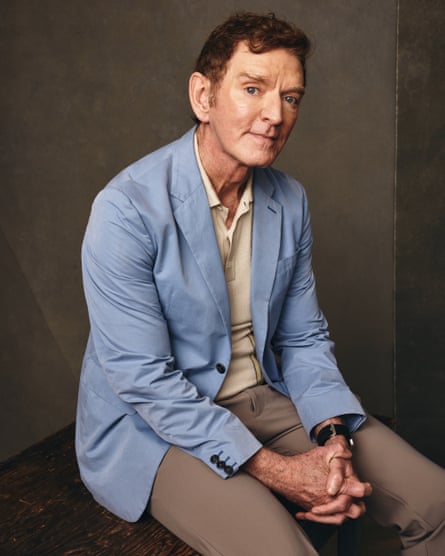
TV veteran Michael Patrick King has had a long, lively career, writing, directing and producing on shows including Murphy Brown, Will & Grace and 2 Broke Girls. He’s best known, though, for his work on the Sex and the City franchise, serving as its showrunner for the bulk of its run, writing and directing its two films, and masterminding its controversial 2020s revival And Just Like That. But this month sees the return of one of his most loved, and perhaps most underwatched, shows: The Comeback.
Co-created and co-written with Lisa Kudrow, The Comeback first aired in 2005, telling the story of a gormless sitcom star named Valerie Cherish, played by Kudrow, trying to return to stardom through the then-new format of reality TV. The show had an awkward, blackly hilarious tone that was a hit with critics and the Emmys, but failed to find much of an audience. Nine years later, in 2014, it returned for a masterly second season in which Valerie – now playing herself in a gritty HBO dramatisation of the events of season one, and filming the whole thing as an audition tape for The Real Housewives – confronts her failing marriage and relationships.
Diehard fans have been clamouring for a third season ever since. And although King says “we never expected to come back”, here he is, promoting The Comeback’s triumphant, and steadfastly final, new season. “Lisa and I would get together all the time and have lunch,” he says, “and towards the end, the conversation would drift to, ‘What do you think Valerie’s doing?’ There was an open door, but everything was unspoken, because we were all very happy after season two.”
But Hollywood, which has been experiencing some of its most tumultuous years in memory thanks to the rise of streaming and social media, plus a spate of strikes, was begging for Valerie’s return. At one of King and Kudrow’s lunches after the WGA and Sag-Aftra strikes of 2023, Kudrow mused that it would be funny to see Valerie, rarely a good person to have around in a crisis, deal with her industry in distress. King immediately saw an opportunity: the Writers’ Guild had forewarned that its next big negotiation, in 2026, would be about AI. “The only reason to come back,” he says, “was because it felt like a perfect Valerie storm. We thought it was worth the risk.”
Season three of The Comeback begins in the middle of the strike. Valerie is – of course – haranguing strike negotiator Fran Drescher, playing herself, for a photo. But the bulk of the season takes place in 2026, when Valerie has been cast as the lead in a new sitcom called How’s That? The studio making the show has given Valerie executive producer status, with a caveat: How’s That? is written by AI, and she’s not allowed to tell the cast or crew.
Valerie is still being followed around by a film crew – Laura Silverman returns as put-upon documentarian Jane – as well as a social media assistant, played with droll hilarity by Ben Stiller’s daughter Ella. Of course, that doesn’t feel so novel any more. “Everything that was considered desperate and ruthless in season one is now commonplace,” says King. “We know what people will do for attention, or to create a brand. Sacrifice husbands, bring their children on camera.”
The strong implication of this season – and its finale end-credits tag reading “No AI was used in the making of this show” – is that AI is already rampant in Hollywood. King says he hasn’t heard about any shows using AI, but that their discussion of AI in the show is informed by research he and Kudrow conducted. “The idea of keeping the AI a secret came from experts we met,” he says. “They told us that the one place the public pushes back on AI is in art.”
Before she was an actor, Kudrow was a scientist – a biologist, actually. “So,” says King, “we didn’t want to make stuff up that would look foolish if it was put on TV.” He still remembers one bone-chilling meeting with a researcher whose AI model predicted what season three would be about.
“It sounded kind of like Jodie Foster,” he recalls. “It had a very smart, warm voice.” The model began talking about how it liked some of King’s past work, at which point he demanded it be turned off. “According to our research, AI is much further along than ChatGPT,” he says. “They say GPT is like a toddler compared to where they are. Everything in the show is very possible – nothing is fantastical.”
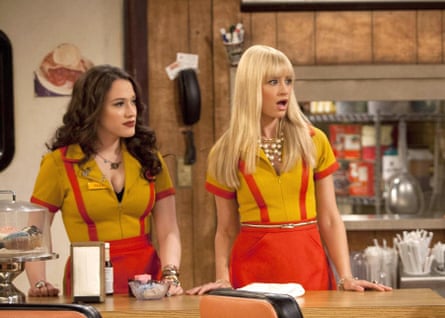
What’s curious is that, given the extent of their AI research, they decided to place Valerie back in a multi-camera sitcom. This is largely seen as a dead format, although King calls sitcoms “Valerie’s holy grail”. He loves the format, having started his career there. His show 2 Broke Girls, which ended in 2017, is one of the last examples of a major long-running multi-cam sitcom. It was derided for its retrograde jokes about race, gender and sexuality. How does he feel about that now?
“As Valerie says to her husband in this season, ‘You told a joke at a time when jokes were illegal.’ There were a lot of illegal jokes in 2 Broke Girls. It was designed to be situation comedy meets burlesque. I call it high-low. I don’t know if AI would have written a lot of those jokes – they were too sharp, and potentially dangerous. Everything is somebody’s opinion. That’s the trickiest thing about television – somebody’s opinion!”
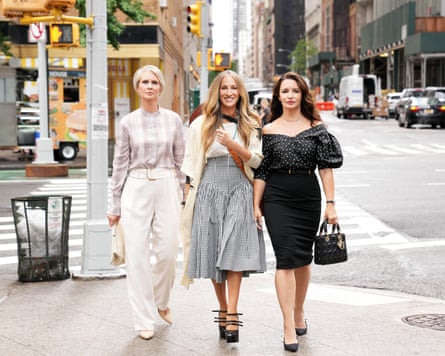
Speaking of viewer feedback, that brings us to And Just Like That, one of the most widely debated shows HBO has ever aired. King still holds the belief that viewers will eventually come to understand the series, which ended its three-season run last year.
“If The Comeback has taught me anything,” he says, “it’s that perceptions can change over the years. The Comeback’s first perception was: it failed. Then it grew in relevance as the world caught up. I think And Just Like That will potentially age well. It has the same DNA as the original Sex and the City, which was society telling 35-year-old women they should be married. In And Just Like That, society was telling 55-year-old women they shouldn’t be wearing tulle. I’ve always tried to be excited about writing the individual v society.”
The risk of having fans dislike a character as they get older, he says, is worth it if it opens up the potential for great television. “I’m interested in how characters change,” he says. “The surprise for me was discovering that fans don’t want their characters to change – they want to see them frozen in the time they fell in love with them. That’s a particular dilemma if you’re trying to move things forward. If there was a great disaster, it would have been if And Just Like That tried to be Sex and the City. It’s much better to come back, break it, and be a new show, even though you’re going to get hit with, ‘We like the other show better.’ Well, OK – it’s still there.”
Will the third season of The Comeback finally garner the sort of audience figures that Sex and the City luxuriated in, as Valerie is seen to have changed and grown? “We got cancelled and we’re here 21 years later,” says King, before dipping into an impression of Valerie: “It’ll come around!”