3 months ago
231
3 months ago
231
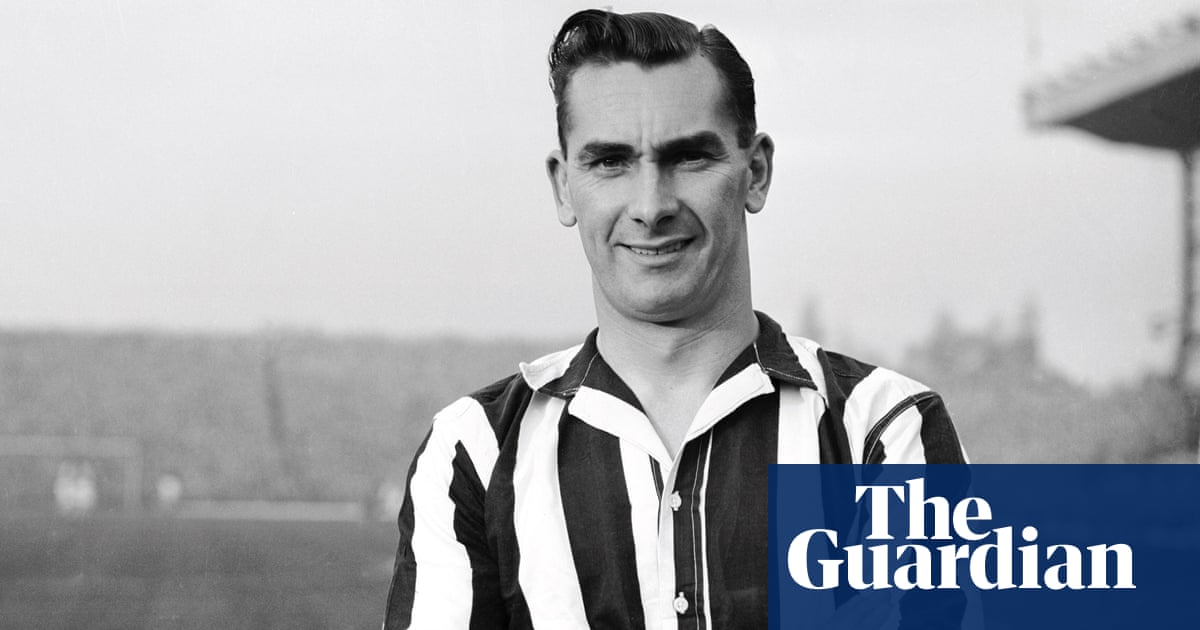
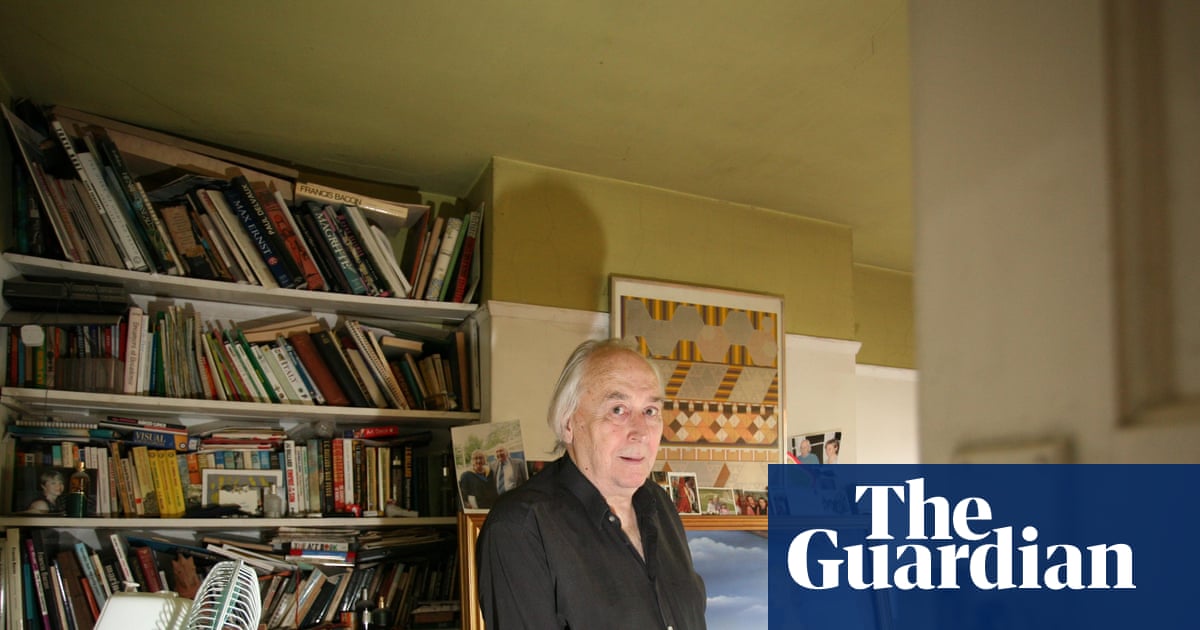
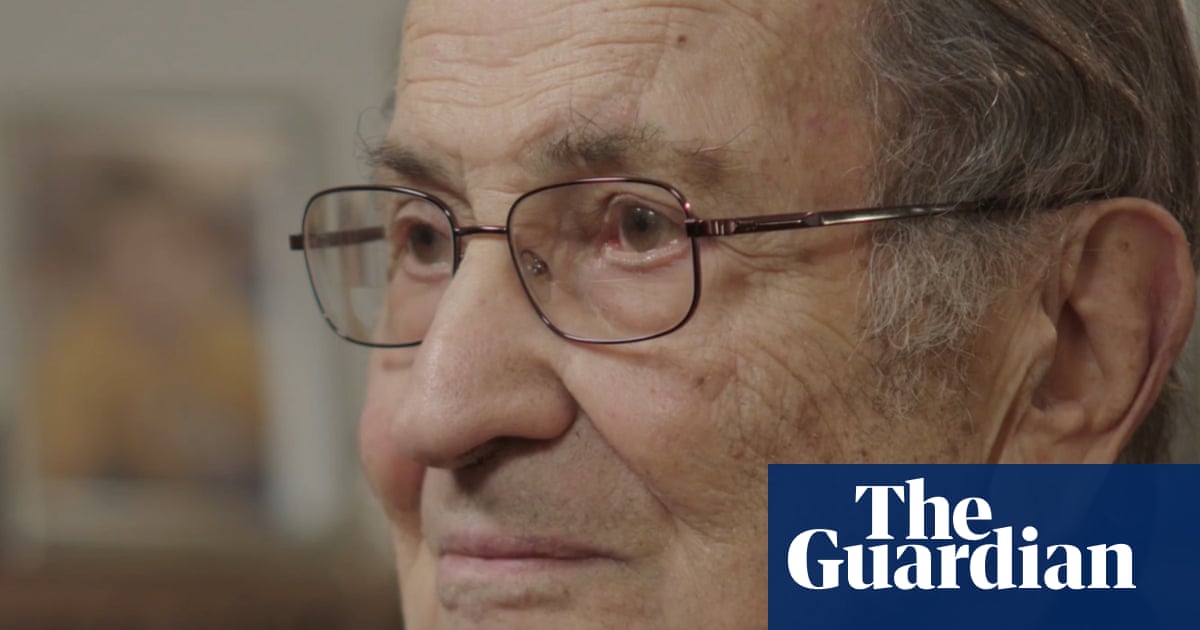
In New York social circles, he was known as the “Jewish James Bond”: a refugee from Nazi Germany whose gratitude to his American hosts was such that he volunteered to join the US army and became the CIA’s first station chief in Berlin as a mere twentysomething, filing early warnings about Soviet activity that have been credited with ringing in the Cold War.
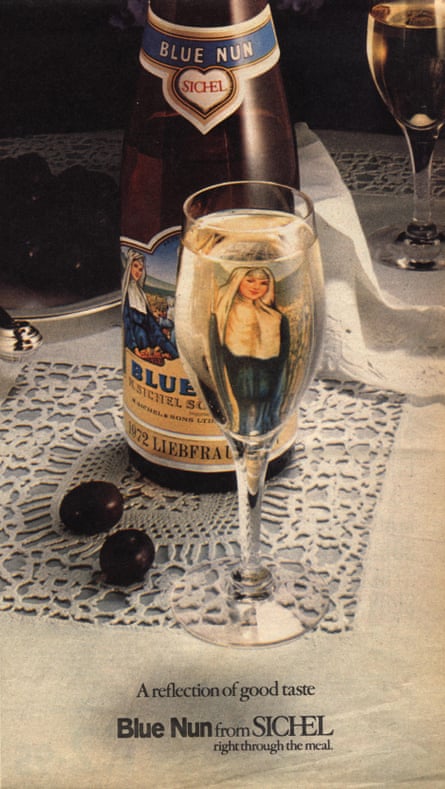
Like 007, Peter Sichel also appreciated a fine tipple, and after leaving the US foreign intelligence service it was he who briefly turned a sweet German white, Blue Nun, into one of the best-selling wines in the world.
A film released in UK cinemas a year after his passing aged 102, however, shows Sichel as something more akin to a Jewish Jason Bourne: a former agent who grew increasingly disillusioned with CIA meddling and turned a trenchant critic from beyond his grave of US foreign policy – especially in Iran.
In the documentary The Last Spy by the American-German filmmaker Katharina Otto-Bernstein, Sichel openly criticises US governments of the past for acting against the advice of its intelligence community to depose democratically elected leaders in Guatemala, Indonesia, Congo and especially Iran.
In 1953, Iran’s socialist prime minister, Mohammad Mossadegh, was overthrown in a coup d’etat instigated by Britain’s MI6 and the CIA in order to protect British oil interests from nationalisation. The coup strengthened the rule of the shah, Mohammad Reza Pahlavi, until he was toppled by the 1979 Iranian revolution.
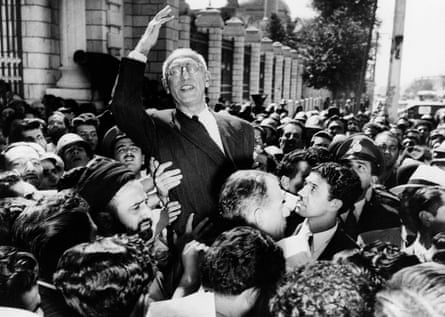
“If we had not got rid of Mossadegh, Iran today would be a good member of the family of nations, a socialist democratic country,” Sichel is captured saying on camera in the documentary. Boosting the authoritarian rule of the shah, he adds, “caused a revolution” and “indirectly caused the arrival of the mullahs”, the Islamic theocracy that Donald Trump has described as “evil” and sought to remove in the current war with the republic.
While Sichel is not the first CIA agent to criticise their former employer’s conduct – in 2023 the agency admitted for the first time that its intervention in Iran was “undemocratic” – the US historian Stephen Kinzer said it was rare for operatives to be so clear-sighted in tracing the consequences of their own actions.
“I don’t think there has ever been a film in which such a former CIA officer so thoughtfully reveals what he did, what he saw, and analyses it in such a way that is deeply critical, but also thoughtful and sophisticated,” said Kinzer, the author of Overthrow: America’s Century of Regime Change from Hawaii to Iraq. “He’s arguing that actually we wasted a lot of lives and we intensified conflicts in the world rather than trying to resolve them.”
“We don’t think it through until the end, that an action we take today might in the long run be against our interest,” Sichel says in the film, which is released in select UK cinemas on 24 April.
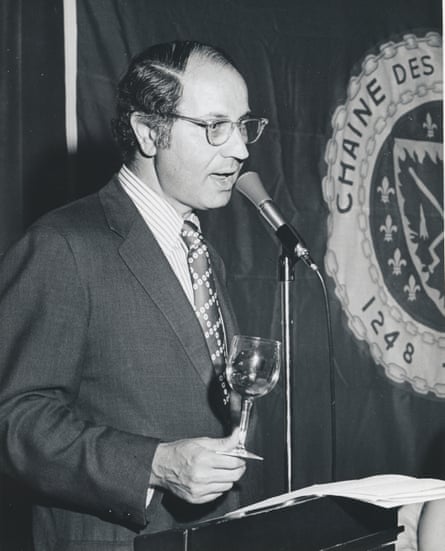
Born in 1922 in Mainz, into a well-off family of wine merchants whose clients included the Ritz in Paris, Sichel’s early upbringing included a stint at a public school in Buckinghamshire.
But after the introduction of the Nuremberg race laws in 1935 the Sichels escaped first to Bordeaux and then to New York, where the young man volunteered to join the US army the day after the Japanese bombing of Pearl Harbor.
Sichel’s language skills and affable manner drew the attention of the Office of Strategic Services (OSS), the precursor organisation to the CIA, and he was recruited to extract intelligence from German prisoners of war.
Even then, a firm belief in the value of carefully amassed information over head-first action put him on a confrontation course with the military. “He’s considered a hero, but he was a bad general,” Sichel said of George S Patton, often hailed as one of the most brilliant US generals of the second world war. “He was a very stupid man.”
After the allied victory over Nazi Germany, the OSS director, Allen Dulles, asked the 23-year-old “wunderkind” to stay in Berlin and run the intelligence agency’s activities in US-occupied territory.
Sichel took over the handling of key informants and laid a spy network across the eastern zone, infiltrating the KGB headquarters in Karlshorst with a honey trap – a woman who had an affair with the KGB head’s chauffeur – and managing to recruit two members in the SED (Socialist Unity party) Central Committee and the DWK (German Economic Commission) as US agents.
After being moved back to Washington in 1954 to head the CIA’s German and eastern European desk, he was involved US propaganda efforts such as the establishment of Radio Free Europe, and oversaw “Operation Gold”, the digging of a 450-metre (1,400ft) tunnel from West to East Berlin to tap Soviet-controlled underground telephone cables.
Early on, he lobbied the US government to redirect its attention to the Soviet Union. “He recognised that the Soviets were closing up before George Kennan wrote his long telegram, so in a way he rang in the cold war”, said Otto-Bernstein. “But [he] was also the first one to recognise that the Russians had no intentions of marching west.”
While loyal to CIA chief Allen Dulles, Sichel grew suspicious of the fervent anti-communism of his brother John Foster, the US secretary of state under Eisenhower from 1953, whom he described as “hated” within the intelligence community.
Under the leadership of the Dulles brothers, the CIA transformed from an agency that collected intelligence to one that also acted on it, and the reckless nature of some of its operations took Sichel aback. According to his testimony, an “unbelievable” number of US operatives lost their lives when they were airdropped into Poland, Ukraine and Albania to set up resistance networks, only to be quickly taken out by the Soviets.
“People in high places have an idea of what the picture should be, and if the intelligence doesn’t fit, they don’t believe the intelligence,” Sichel says in The Last Spy.
It’s a mindset that Sichel argues led the US to view any nationalist leader elected around the globe who defied American hegemony to be a Soviet puppet-in-waiting, and justified taking covert action to unseat leaders like Iran’s Mossadegh, Guatemala’s Jacobo Árbenz, Congo’s Patrice Lumumba and Sukarno in Indonesia.
Sichel was involved in some of these operations, sending a female agent disguised as an air hostess to retrieve a stool sample after Sukarno had visited an onboard toilet, to investigate a (false) rumour that the nationalist Indonesian president was suffering from ill health.
But inside the CIA the German-born spy chief was now a vocal critic, leading to him being investigated by the FBI under suspicion of harbouring communist sympathies in the late 50s. Disillusioned, he retired from the intelligence agency in 1960 and took over his family wine business, which he ran from New York.
The phenomenal commercial success of his brand of sweet-tasting liebfraumilch wine, christened Blue Nun to make it more easily pronounceable to customers in the US and the UK, meant Sichel did not look back on his career with bitterness when he passed away in February 2025 aged 102.
“Sichel explains the mentality that divided the world between good and evil, and laments our inability to understand any bit of nuance,” said the historian Kinzer. “The reaction to challenges to American primacy is a violent lashing out rather than a thoughtful policy trying to ease differences. This is an impulse that is still strong today, and maybe it’s getting even stronger in recent times.”