3 months ago
173
3 months ago
173
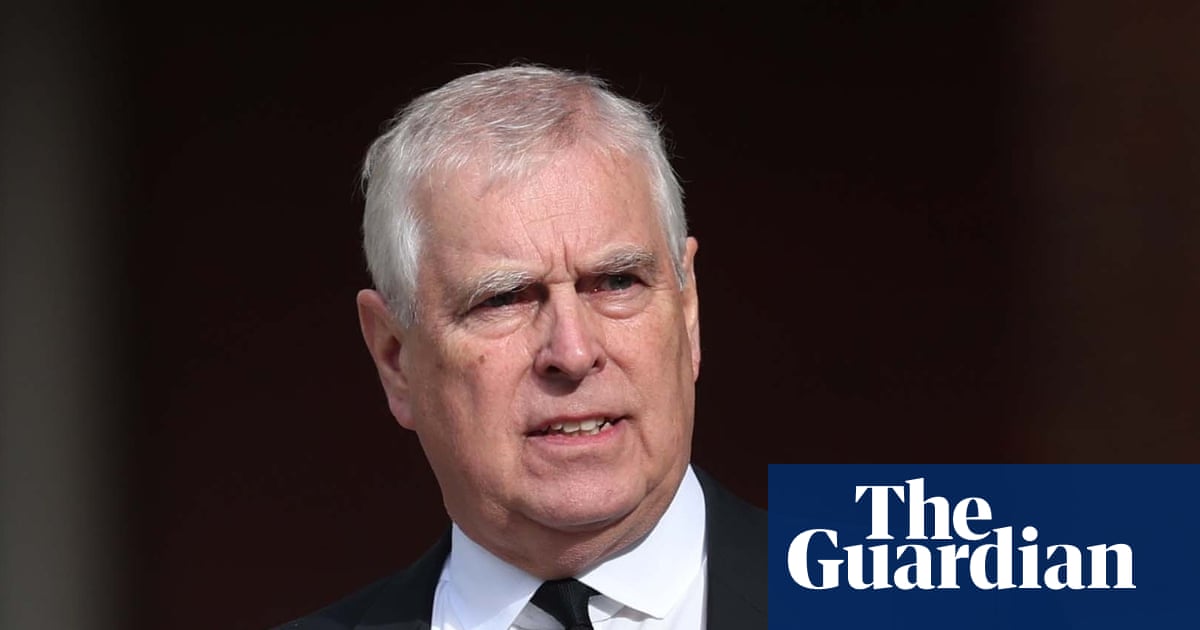
It is both sad and ironic that, 250 years after the revolt against George III, the British monarchy is teaching its former colony lessons about accountability. While elite impunity is rampant in the US – from a president who conspired to steal an election, to the “Epstein class” – the man formerly known as Prince Andrew is facing both shame sanctions and legal consequences. The same is true for a towering member of the British establishment, the man still known as Lord Mandelson. Just what explains the difference?
Being shamed is not the same as being convicted in a court of law – a difference that those pushing back against #MeToo and other supposedly woke movements never failed to emphasize. But both can be crucial for upholding norms of decency as well as democracy. Successful shaming depends on someone credibly accused of misconduct being part of groups whose approval matters to them. Larry Summers might well be resigning from Harvard because it would just have been too uncomfortable to face students and colleagues who might have voiced their disapproval of the attitudes revealed in the Epstein files. By contrast, certain Republicans appear to feel utterly unashamed, no matter how cruel or racist their utterances, because constituents do not seem to mind or because they can safely keep away from any unpredictable encounters (after all, GOP congressmen systematically cancel town halls).
In principle, elites can select the people with whom they interact – status translates into the power to exclude. But in politics, even the most powerful find themselves subject to institutions which, as long as they remain halfway intact, can constrain them. This is a major difference between the American and the British political scenes today.
For all its faults, the British press – including the tabloids with all their morally abhorrent features – remains an institution that can bring down politicians. Here things are different: as the social scientist David Karpf has explained, politicians used to think that journalists represented and to some extent shaped public opinion; whatever they considered a scandal with no exit could end careers. Then politicians discovered – not least via social media – that they might get away with so much more. Add to that the profoundly asymmetric public sphere in the US – where about a third of the country is sealed off in a rightwing media bubble into which plenty of factual news never penetrates – and the rampant shamelessness of our public life becomes less surprising.
The other crucial enforcers of shame are political parties. For many years, observers diagnosed a parallel between Trump and Boris Johnson, two figures with seemingly supranatural talents for surviving scandals. But with one, the Teflon eventually came off: Johnson was forced by his party to resign. For all the things one might say about the Tories, they remain a halfway functioning political party. The same is not true for the personality cult that was on display at Trump’s State of the Union address. North Korean levels of adulation of the dear leader – with Republicans excitedly jumping up after almost every sentence to clap and chants of “USA-USA” – confirmed that one was looking at a fan club, not what Thomas Jefferson hoped would be a “natural aristocracy” of mature leaders putting country, and not least their own institution, Congress, above a quasi-king.
As biographers have pointed out, many of those close to Trump eventually start to imitate his conduct; the shamelessness becomes contagious, and the higher the frequency of shameless acts, the more difficult to make a scandal out of any of them: “flooding the zone with improper behavior” prevents the public from ever focusing on any particular one.
Even more insidious: shaming might become a rightwing populist’s resource. Legitimate criticism of Maga is not just evidence that “crazy Democrats” do not respect “real Americans”; any actual shame felt as a response can be relieved by doubling down on shameless conduct to enrage the liberals. According to the social scientist David Keen, in order to secure political power, the leader also has to keep producing the very feelings of shame from which he supposedly then seeks to liberate his followers.
It is not all just outrageous statements, though; the seeming madness of minimizing all inhibitions also relies on a method yielding material benefits, one familiar from the mafia. Those who show absolute loyalty have a chance to get in on corrupt acts and enjoy impunity. Kashyap Patel might be using FBI planes for joyriding, delaying crucial FBI responses, according to a Democratic senator, but as long as sycophants stick with the boss, no one gets fired. After all, Trump made clear what deal was on offer during the first day of his second administration: exchange impunity for criminal behavior that benefits him personally, as evidenced by the pardons of the January 6 insurrectionists.
In other democracies, courts have played an important role in holding aspiring autocrats accountable: Jair Bolsonaro and the former South Korean president Yoon Suk Yeol ended up in prison. In the US, by contrast, a court captured by a Trumpified right has guaranteed the incumbent immunity for anything that could possibly count as an official act (what John Roberts dismissed as “extreme hypotheticals” of criminal behavior in Justice Sotomayor’s dissent is now a daily occurrence). Add to that Trump’s uninhibited use of the pardon for political and financial advantage, and one sees why accountability post-Trump 2.0 constitutes an unprecedented challenge.
-
Jan-Werner Müller is a Guardian US columnist and a professor of politics at Princeton University