3 months ago
222
3 months ago
222
Why does my vet charge more than a private hospital for humans? I’ve been quoted £1,500 for an MRI scan for my dog. When I looked at how much it would cost for a person to have the same type of scan privately, it was about £700.
As technology improves, the treatments and diagnostics available for pets are getting closer to what is on offer for human patients. While we used to rely on a vet to assess what was going on inside an animal, they can now recommend hi-tech scans to see exactly what’s happening. But progress costs money.
The insurance company NimbleFins says the typical cost of an MRI for a dog was £3,789 in 2025 in the UK, for a cat it was £3,161 and for a rabbit, it was about £2,500. Meanwhile, thanks to the NHS, many of us humans in the UK pay nothing for MRIs. At private hospitals, insurance broker WeCovr estimates a full-body scan will cost £1,500-£2,500. So the prices you quote are both on the low side, but the point remains: getting a dog or cat scanned is a more costly business than conducting an MRI on a person.
One big factor in the difference is VAT. This tax is not payable on most private hospital care but it is applied to vets’ bills, at the standard rate of 20%. Assuming your £1,500 is the total after VAT, then £250 of that has gone to HMRC.
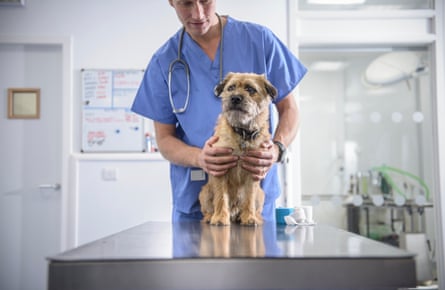
After that, we need to look at what you’re paying for, and how the vet is covering their costs. And according to Rob Williams, a vet and president of the British Veterinary Association, a trade body for independent practices, comparing human and animal scans is not comparing like with like. “When a human is having an MRI they are usually conscious but when a dog or cat has a CT scan, MRI or even an X-ray, we tend to anaesthetise them,” he says. “It’s as simple as the dog won’t sit still.” This requires two people, “one to monitor the anaesthetic and one to do the scan”. Williams estimates 25%-40% of the cost could be accounted for by the cost of anaesthetising the animal.
The machines are the same as those used for humans, Williams says, so the installation and servicing costs are the same, but the usage is not. “In most vets’ practices there will be maybe one or two cases a week, or maybe one a day. In the case of humans, they will have the machine running all day. In a 12-hour period they will get through lots of cases,” he says.
The machine needs warming up before it can be used, and that uses energy, which costs money. Again, that cost is distributed among fewer customers at a vet’s. “There are really significant costs associated with offering these services,” says Williams. “Economies of scale come into place. You can afford to charge less if you are seeing more patients.”
Another factor is the person doing the scan. While in a hospital a radiographer will typically interpret the results, a vet will usually have to send it off to get a report. “That’s another layer of cost that isn’t there with humans,” he says.
The veterinary industry has been under the spotlight because of concerns about profiteering. During a two-and-a-half year investigation into the industry, the UK’s Competition and Markets Authority (CMA) found some big problems, which it said were pushing up prices at some practices. It highlighted shrinking choice, as a result of chains taking over, and a lack of transparency around costs. According to its report “average prices of vet services have risen sharply and much faster than general inflation – 63% between 2016 and 2023.”
To tackle this, the CMA says vets will have to publish prices, including those for MRIs. Owners will have to be given a written estimate in advance for any treatment likely to exceed £500 (including VAT), which will typically catch any MRI that is recommended. This is designed to give pet owners the chance to decide if they want to go ahead, and they could even compare the prices at other vet practices.
Williams, who does not speak on behalf of big chains, says he doesn’t expect the CMA’s work to bring down prices but pet owners will have “clearer transparency around who owns and operates the practice and a better understanding of how much things cost before they get emotionally invested in the idea of having treatment”.
This transparency could make a big difference. Richard Wilkinson, founder of price comparison website Vet Fair, has gathered price information from 1,400 vets’ practices in the UK and says there are big differences within small areas. “The thing that stands out is that often you’re not talking about 20% either side of the median. You’ve got differences of 100-150% in pricing between one vet and another one three streets down for the same thing,” he says.
He doesn’t collect data on MRIs but his numbers show the average price for ultrasounds by big chains is 57% more than that charged by independents in his sample. Currently, he says, “trying to shop around is like being back in the 90s where you had to pick up the phone and call them all to find out the prices”. But the CMA reforms should make it easier. You might still be paying more than for a human but you will at least be able to make sure you are not paying over the odds.