3 months ago
154
3 months ago
154
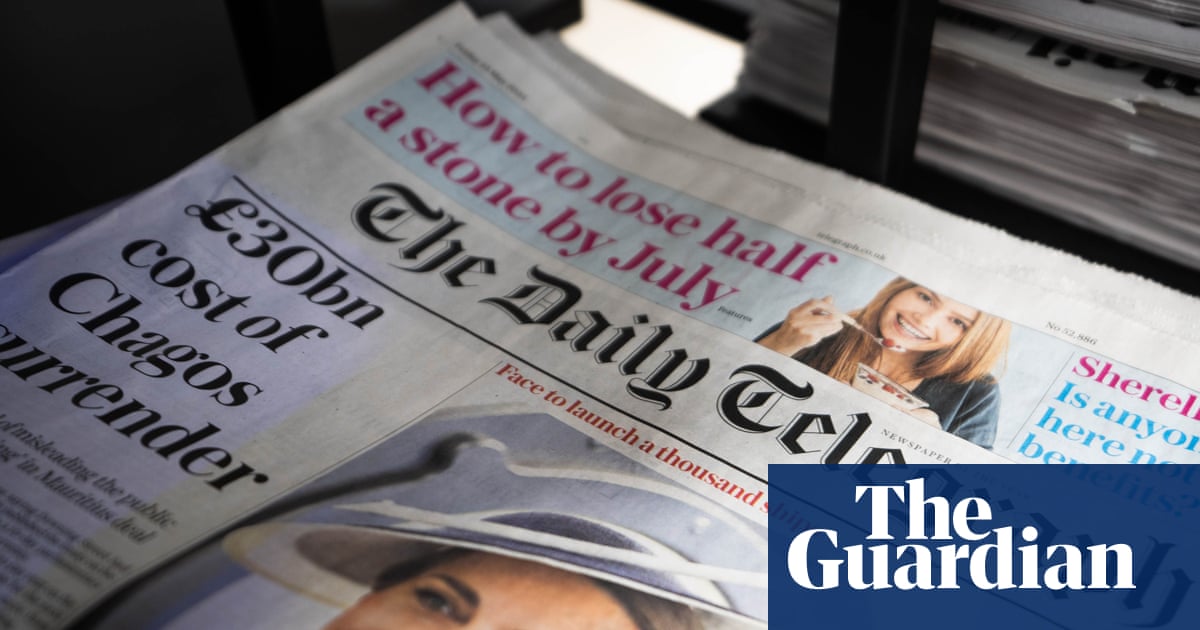
After fighting off one foreign takeover, staff at the paper that broke the news of the second world war might have been expected to react badly when meeting their potential new German owners on Monday. Instead, journalists at the Telegraph felt “optimistic”, “enthusiastic” and even “cautiously pleased” – one called a takeover by media conglomerate Axel Springer the “best possible outcome”.
The reason for this Panglossian response is partly hope that Axel Springer and its boss, Mathias Döpfner, might genuinely be keen on journalism, and partly exhaustion at the end of a wildly convoluted three-year takeover battle. The fight says a lot about the state of the print news business – upended by technological and economic headwinds yet still seen as an attractive bauble for rich power players and important as a home for journalism. For how much longer this persists could well depend on what Axel Springer and its part-owner and boss Döpfner do with it.
First, a brief recap on the torrid history of one of Britain’s oldest papers since the start of this century. Axel Springer was runner-up in the last auction of the Telegraph Media Group in 2004, when it was pipped to the post by the British Brexit-loving Barclay brothers. Congratulated for not really being around much, the Barclays banked Telegraph profits while using the papers as collateral for enormous debts.
When the banks eventually seized the papers, the Barclay family helped arrange a back-room deal with Redbird IMI, a US-fronted group funded by the ruling family of Abu Dhabi. This prompted a battle for control that led to a change in the law restricting foreign states owning news organisations – despite successive British governments not wanting to upset state investors which thought a newspaper could simply be added to all their other British possessions, from nuclear plants to football clubs.
The power of the Telegraph editorial team to unite friends in government against the Abu Dhabi-backed deal showed the continuing soft power of the press, if nothing else. The law change led to two other bids, including one by the owner of the Daily Mail group, which was gazumped by Axel Springer.
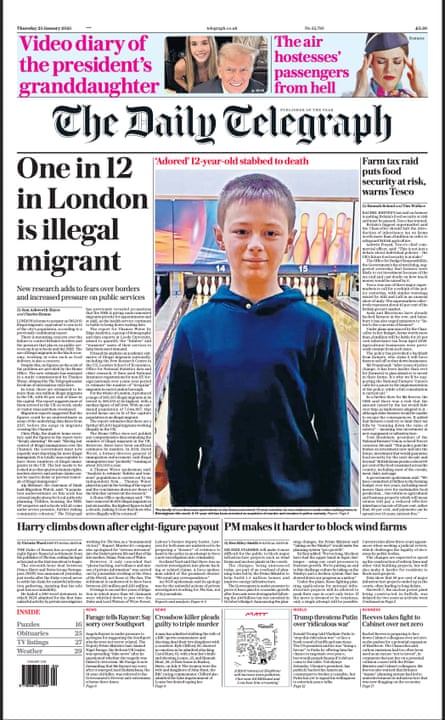
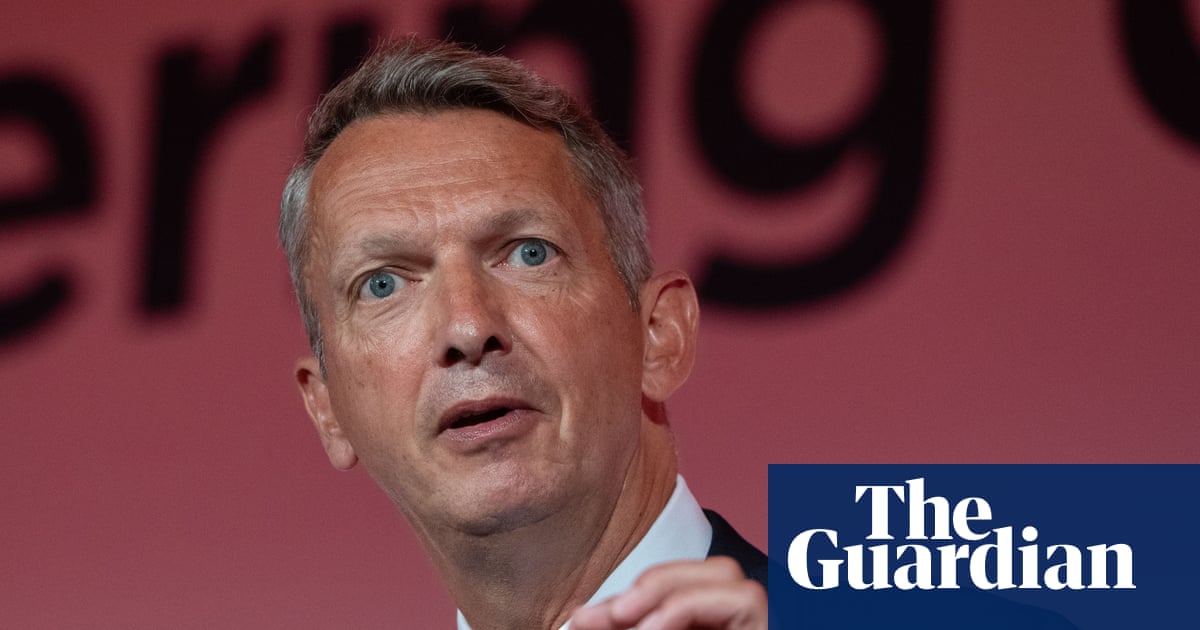
Having waited 22 years to finally be considered the frontrunner to buy the Telegraph, Döpfner said the deal was his “dream come true” – calling the paper his company’s “north star”. He has paid a high price for this dream; his £575m offer speaks more to both the history and influence of the Telegraph rather than anything on its balance sheet. While this is now common for newspaper owners – make your profits elsewhere then splash it on soft power – Döpfner’s takeover shows the enduring appeal of old newspaper brands.
His company’s own history may have something to do with it. Now one of Europe’s biggest publishers, Axel Springer was set up in 1946 by an eponymous founder whose known anti-communist views formed the basis of five company “essentials”: the others were upholding free speech and democracy as well as support for the transatlantic alliance and the right of Israel to exist. Its flagship German papers are conservative: serious Die Welt and populist Bild. It also owns Business Insider and Politico, the latter called “a leftwing rag” by Donald Trump last year, but widely respected by most.
Döpfner himself is a more mercurial character. He has praised Trump to staff (something he later said was effectively a wind-up) and is a friend of Elon Musk, having not only suggesting it would be “fun” for Musk to buy the then Twitter (which of course he did), but asking him most recently to write in support of the German extremist party Alternative für Deutschland (AfD) for Die Welt.
One senior Telegraph journalist told me Döpfner represented “mainstream conservatism”, whereas in Germany he courts controversy with taboo-busting opinions about free speech. He says his “contrarian bet” is on non-partisan journalism in democracies around the world. His reputation has prompted fears among some that he will seek to promote the wilder excesses of the newspaper’s most recent journalism – an anti-migrant stance that would work in the market he most wants to conquer, the US.
Like those who believe that the mainstream media are dominated by the left, Döpfner wants to make the Telegraph “the most read and intellectually inspiring centre-right media outlet in the English-speaking world”. How he will do this remains to be seen, but he has already mentioned technology as a way of doing so. With a stated “mission” of becoming “the leading digital publisher of AI-empowered media in the free world”, he has sought to ease fears about job cuts with warm words about journalism.
In an interview last year, he lauded “investigative journalism – in-depth research to find out something that was not supposed to be found out”.
As social media suffer from a reputation crisis, is this colourful editor-turned-owner really the man to help journalism win back its reputation as a trusted source of information?
Axel Springer’s bid is not expected to face the sort of commercial, geopolitical or regulatory headaches that scarred so many in the battle for the Telegraph. The culture secretary, Lisa Nandy, has already said she wanted “a resolution” to the bid “without further delay”.
The jury is still out on the future of the Telegraph. The saga of its most recent sale is not just the story of money, power and politics played out in a beleaguered industry, but one which speaks of Britain’s place in the world. In other words, a bit of a mess.
-
Jane Martinson is an academic and Guardian columnist. She is a board member of the Scott Trust, which owns the Guardian Media Group, and writes in a personal capacity