2 hours ago
12
2 hours ago
12
Almost 30 years ago, not long after the final episode of This Life, the BBC series that launched Daniela Nardini’s career, I interviewed her at a swanky hotel in Covent Garden, London. I had expected her to be exactly like her This Life character, Anna Forbes, the provocatively sharp and messy woman now being credited by critics as the prototype for Fleabag. She did not disappoint. My memory of that encounter remains vivid: a giddy hour covering love, ambition, sex and fame. She wore a pink lily in her hair, and wine might have been consumed.
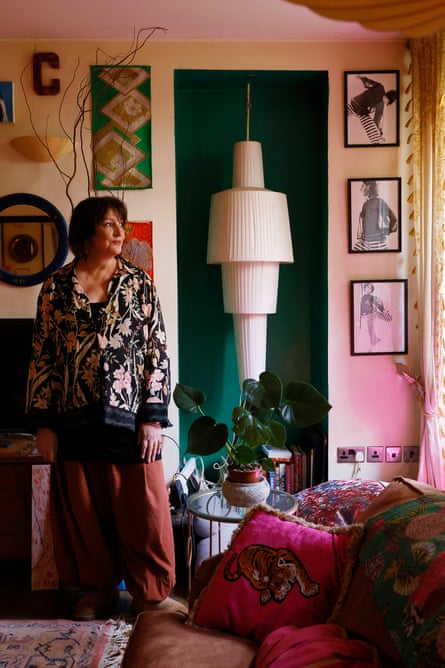
Nardini now lives and works as a therapist in the West End of Glasgow. As I stroll through the tenement-lined streets to interview her, there are other reasons I’m ruminating on the past. In the short walk from the subway, I pass my first home, my nursery and my primary school (now inevitably repurposed as luxury flats). I am getting timewarp vibes at every turn, but the sensation evaporates when Nardini comes to the door. The woman on the threshold has a very different demeanour from the one inhabiting my memory. She remains striking, with the same soft, dark gaze. But what is most compelling is her unsmiling stillness.
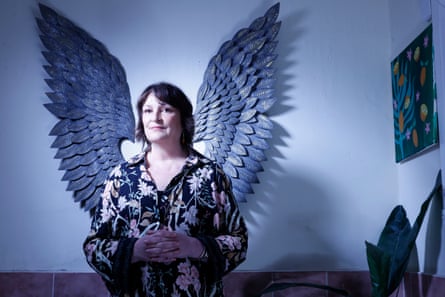
There is an awkward formality as she ushers me into her consulting room. The space is filled with plants and zen art. Gesturing for me to sit in what is presumably the therapy armchair, she offers coffee and within moments is deftly extracting my life story. For one stricken moment I wonder if she thinks I am her next patient. In an attempt to wrest back control, I blurt out a question I had been intending to leave until much later. “Do your therapy clients ever seek you out because of This Life?”
A look of astonishment flits across her face. “That just hasn’t happened!”
I tell her that I’m surprised, particularly when she mentions that most of her clients are women, many in midlife.
“Well, in a therapeutic environment, you’re having a conversation about real stuff, and some of it’s dark and some of it’s difficult, and it’s about helping a person to find the best way through it. A couple of people have mentioned that they’ve maybe seen me in something, but I downplay it.”
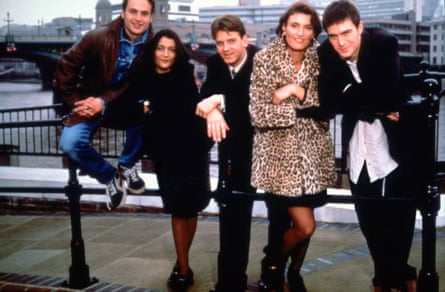
At its peak, when people would rush home from the pub to catch the next episode of This Life on BBC Two, the show had 3.5 million viewers. Nardini’s character resonated with a generation of young women who found themselves floundering while trying to make their way in the work-hard, play-hard professional milieu of late-90s Britain. Her bravado, her swearing, her wildly confident sexuality all chimed perfectly with those Cool Britannia times.
Nardini had discovered acting at school, before going to drama school in Glasgow and getting parts in the Scottish soap Take the High Road, the TV adaptation of John Byrne’s Your Cheatin’ Heart and, inevitably, Taggart, in which she played a detective. She also acted in several fringe theatre productions, including the title role in the Liz Lochhead play Mary Queen of Scots Got Her Head Chopped Off. The following year, 1995, she heard a rumour that This Life was seeking a Scottish actor to play Anna. She didn’t think she stood a chance. But, as fate would have it, Lochhead was asked if she could recommend anyone and Nardini was called for audition.
“It was crazy, really, because This Life was such an instant success,” says Nardini, beaming at the memory. “It provided me with lots of opportunities. But at the time, I had moved down [to London] from Scotland and I found it all quite overwhelming. I’m a family girl and I missed everyone back home.”
When the series was abruptly cancelled after two seasons, Nardini found it hard to shake off the character, for which she earned a Bafta in 1998. “Casting directors kept asking: ‘Can you do her again, but in a different way?’ The only way to really break out was to do theatre. Then slowly, as I got older, things changed anyway. I started playing mothers and different kinds of parts.” As well as numerous theatre roles, she went on to win a Scottish Bafta for her role as a ruthless estate agent in Annie Griffin’s New Town in 2009.
She expresses surprise when I tell her about the comparisons to Phoebe Waller-Bridge. “Really? I’ve never watched Fleabag.”
Seven years ago, Nardini made the decision to retrain as a therapist. However, you couldn’t call it anything as simple as a “pivot”.
“Therapy has always been something I’ve been interested in, and, well …,” she breaks off, looking sheepish. “Actors always lie about their age. My younger brother says he gets confused about what age he is, because I’ve always taken a couple of years off mine. I’m having a big birthday next weekend, and I’m glad to just admit I’m going to be 60, and leave the past decade behind. Quite a lot happened in my 50s.”
This is something of an understatement. Not long before her 50th birthday, Nardini’s beloved father, Aldo, died. She has previously said that her family could have been in The Godfather – not because of any crime links but because of all the internal feuding.
“Did I really say that? Well, my dad was definitely the don.”
Aldo was the co-founder of Nardini’s ice-cream palace, a white art deco cafe on the seafront at Largs in Ayrshire. I can still recall its monumental knickerbocker glories, the highlight of summer day trips.
In the aftermath of grief, her marriage to the restaurateur Ivan Stein ended. The couple had moved back to Glasgow from London in 2009 with their young daughter, Claudia. “My husband was retraining to be a chef and I wanted to be close to my family,” she says.
Stein went on to launch The Gannet, one of the most stellar Glasgow restaurant successes of recent years. I suggest it must have been great fun to have had a ringside seat during its glory years.
“Well, I had a little child, so I was in the house most of the time.”
It was ironic that she married someone who was in the same business as her family. “Yes, my father had really long hours as well. So, I understood it.”
There is a significant pause. “A chef and an actress … perhaps it’s just not a good idea.”
She says it in such a deadpan way that I start to laugh, and then so does she.
“We’re fine. Sometimes, things don’t work out and you just have to get on with it.”
Then, summoned for her first post-50 NHS mammogram, she was diagnosed with breast cancer, which had spread to one lymph node. She underwent a mastectomy and breast reconstruction.
“When I was diagnosed, I felt that it had happened because my heart was broken. It felt it was connected to what I had gone through in my life. And I’ve talked to quite a few people who have felt the same thing about their cancer. I felt it came from an emotional place.”
She considers herself “very lucky” because the cancer was caught early and she didn’t need to have chemotherapy.
“I knew quite quickly that it wasn’t going to kill me and I was going to be OK. And once it was done and I’d been through this treatment, I felt it had been dealt with physically, but not emotionally.”
How did it affect her? She leaves the room and returns with a beautiful canvas, one of a series of colourful portraits of women she painted during lockdown. The woman has had her breast removed and the space is adorned with red roses.
“As a woman, to lose your breast is a very profound thing. The way I’d previously been recognised by the public, it was very sexualised. Then suddenly to lose that part of yourself is very challenging. It changes your relationship with yourself, and not in a negative way.”
She says she has a new appreciation for what the human body can withstand. “The narrative becomes: ‘I was ill; now I’m healthy. I have survived this. A different strength has come through. My sexuality is still here, but it’s different because of that experience.’”
All these events would test anyone’s emotional resources and, in the midst of it, Nardini realised that she needed help. “There was just so much happening. My marriage, my dad, both things kind of dissolved at a similar time. I was very close to my dad – he was a massive character, and that was mixed in with the grief of a marriage failing, ending. And then the breast cancer. It was just too much for me to process.”
After seeing a therapist and experiencing first-hand the difference it could make, she started her own training – but negative things kept on happening. First came lockdown, then her mother died in 2022, and then her aunt, to whom she was very close. “Because I’d been hit with a further emotional onslaught, training took me a while.” She finally qualified in 2024.
“If you’ve lived a life and you’ve been through stuff yourself, you are going to have more empathy for people who are going through similar things. Sometimes, I think if you are a therapist and you’ve never experienced low mood or anxiety, how can you share about it or talk about it with someone who’s going through it?”
Nardini tells me that as a therapist, she has a supervisor to enhance her practice, which has helped her greatly. “Mine has been teaching me about schema, the self-defeating patterns of your life. Once you understand where those are coming from, it’s inspiring, and you can say: ‘OK, now I know that’s not my stuff any more.’”
So, what was her stuff?
“My stuff was probably being the only girl in quite a strong male family. I also lost my brother Pietro in a car accident when I was in my teens. I think I was just numb for several years.”
When she was 21, Nardini started having panic attacks. “I remember standing outside the drama school building in Glasgow and suddenly my heart was beating really fast and the sky went really big and I felt this overwhelming fear. And I believe it was because I hadn’t allowed myself to fully experience my grief.”
Learning the impact of unexpressed emotions first-hand has had a big impact on her therapeutic approach. “Clients will come to me and say: ‘Oh, I just block that out’; or, ‘It just all goes over my head.’ I tell them: ‘No, you have got to bring it into the light because that’s the stuff that stopping you from living a happy and healthy life.’”
Is being a therapist so very different from being an actor, in the sense that you are drawing on your own experience? “To be a therapist, you’re listening to a person talking about their challenges. Being an actor, you go on a kind of psychological journey. So, yes, there are similarities.”
Did she enjoy being famous? “Well, for all of us on the cast, it was our first big job. We were all making money so we had great fun. We got invited everywhere and had a fantastic time. We all got on great.”
However, she did not enjoy being recognised by the public. “I’d be out with my mum and someone would come barging up and ignore her, just focusing on me. I found that disconcerting. I don’t miss that. Also, if you’ve been in the public eye, people think they can ask you questions about stuff that’s really private.”
Now that Nardini is single, this has added an unwelcome dimension to the prospect of dating. “I’ve been on two online dates in 10 years. One was with a psychiatrist, and we just didn’t fancy each other. The other was with a guy who had Googled the hell out of me. He was bringing up all this stuff about my family. I asked him: ‘Exactly how long did you spend researching me?!’ After that, I was like: I don’t know about this.”
It made her wary. “Right now, I’m glad that I don’t have a partner, but it has taken a long time to get to this point. A lot of your identity is wrapped up in who you’re married to.”
Nardini says she is not entirely against the idea of meeting someone new. “But he’d have to be quite some guy. Because right now I am really happy. I have a social life. I have a professional life and I feel pretty content. I don’t want any problems coming into my life. I don’t want anyone coming in and telling me what to do, what to eat, what to watch on the telly. You become very contented in your own space. You know, sometimes I think I’d kind of like it, but I’d like it to be with someone amazing.”
Recently, she asked one of her clients if they would give up their job if they won the lottery. The client said they would. “See, that’s the thing. I wouldn’t stop working. I would want to keep doing what I’m doing now. Being a therapist. My acting life is quieter now, but people still come to me with small parts. So I’d like to keep doing that too. Doing it all is what makes me tick. It’s been a good move for me.”
Despite everything, Nardini still feels lucky.
This Life is available now on BBC iPlayer for its 30th anniversary