1 month ago
69
1 month ago
69
If a high-profile academic is reviewing a movie for the London Review of Books, that movie in question must be making some kind of mark on some kind of culture. And if people are actually reading a movie review in the London Review of Books, and writing thinkpieces in disagreement or favor of said movie or its review, that movie may actually be a cultural phenomenon.
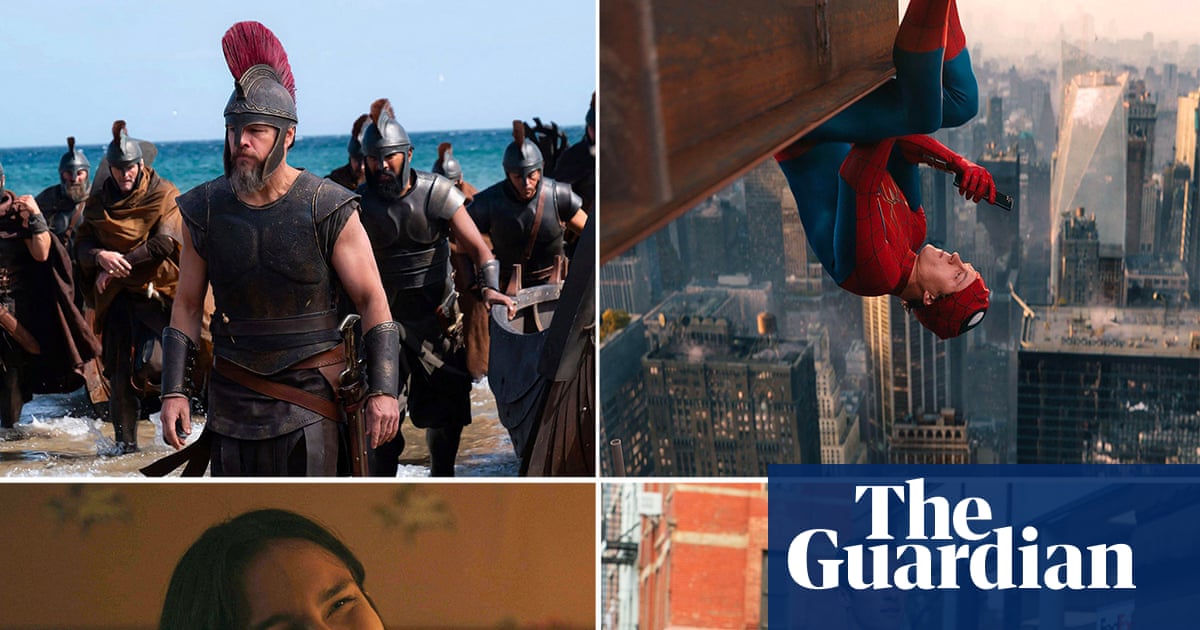
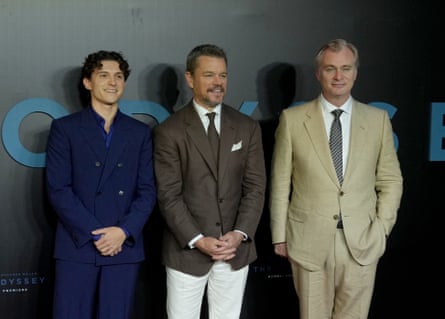
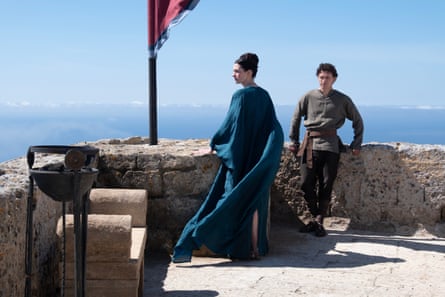
Normally, volume of discourse about a movie should not be mistaken for a sign that people are actually seeing it. Sometimes online factions just have a bored fixation not shared by the rest of the world. But Christopher Nolan’s The Odyssey has some major receipts at the box office, too: the movie has already outgrossed Oppenheimer, Nolan’s last movie, itself a shockingly popular movie for adults. Though The Odyssey’s audience skewed male in its first weekend, by its second its gender split was closer to 50/50, suggesting reach beyond the stereotypically male-driven action-adventures. It’s also reaching out to older moviegoers, an endangered demographic in a summer where under-25s have driven the success of Obsession and Backrooms. Three-quarters of The Odyssey’s audience has been over 25, while memes inspired by the movie (most popular: Matt Damon’s anguished face portraying Odysseus listening to the sirens’ song and Robert Pattinson’s slimy suitor demanding that “someone get these BEGGARS out of here!”) have indicated that younger people are paying attention too.
All told, The Odyssey fast closing in on a billion dollars worldwide, and the number of movies that have done this without superheroes, sequel hype or a whole lot of animation is vanishingly small. This is the strange, rarified air that Nolan’s film now occupies. Meanwhile, exactly those other types of movies traditionally aiming for that territory – superhero movies such as Supergirl, remakes including Masters of the Universe or Moana, animation films like Toy Story 5 and Minions & Monsters – have failed to catch on more broadly. Some have bombed, some have underperformed and some have become seemingly frictionless billion-dollar smashes, but none feel like true events. Though an incoming mega-smash featuring Spider-Man reinforces that sometimes audiences will still rush out for the right familiar superhero, Nolan’s movie still stands out in a summer that may have seen tides turn against IP.
Of course, The Odyssey is also, in its way, a form of IP; it’s a story that almost everyone purports to at least kinda-sorta know, even if the specifics are lost somewhere in the halls of high school. Nolan’s big-budget adaptation of the Homeric epic has emerged as a towering piece of monoculture that throws back to pre-fragmentation days. Or, at very least, back to less preordained smashes including Barbie or Top Gun: Maverick, IP projects that seem to dig deeper into audiences’ psyche than other, more preordained blockbusters.
Specifically, these kinds of monocultural events stand in opposition to so many 21st-century box office hits that manage to make tons of money while still feeling like a niche. This was pioneered by the Twilight movies, which would make $700m worldwide like clockwork without ever feeling like an all-demographics smash, but there are plenty of hit superhero movies that also qualify: movies that a lot of people who like that sort of thing saw, without convincing infrequent moviegoers (whose infrequency has seemingly only grown post-pandemic) to show up. Even a less expected smash such as A Minecraft Movie isn’t exactly a unifying force across demographics. Call it the difference between Avatar (massive worldwide phenom that seemed to reach across demographics) and Avatar 3 (big hit for the not-insubstantial group of people who have been watching every Avatar movie, but nothing your grandparents likely went out for).
It’s tempting to classify The Odyssey’s cultural success as reminiscent of a pre-internet time, and in some ways it is, befitting its connections to old-fashioned sword-and-sandal epics of the 1950s. Yet it’s really a convergence of old-fashioned monoculture and more newfangled discourse explosion. Rather than a superhero movie generating endless rewritings of the same nerd-to-normie translations (who was that character and are they going to be in the next superhero thing?) and glorified spoilers (is there a post-credits scene? And while we’re at it, can you describe it for me?), here is an R-rated movie, based on an epic poem, aimed at adults, prompting essays from film critics, academics and amateur Nolan scholars. It’s movie discourse fit for a 200-student freshman seminar, writ even larger.
That might sound dismissive in its own way. But as tediously rancorous as the Very Online versions of these discussions can be, fueled by sometimes-insufferable Nolan acolytes and their equally disagreeable opponents, with the bonus unwelcome intrusion of a failed pre-release rightwing culture war, there’s at least a trackable rationality to a lot of post-release Odyssey discourse. Is it even something like ... healthy cultural-studies debate?! At first, the classicist and, most crucially, Odyssey translator Emily Wilson seemed to be forming a surprise backlash (given that Nolan had cited her translation’s opening line as inspiring his work) with her London Review of Books piece, focusing on the director’s deviations from the text, what she sees as thematic inconsistencies and simplifications, and some potential blind spots in race and gender. This then turned into an internet-fueled critique of an academic’s analysis of film, which some felt included some misreadings of certain characters, scenes and ideas.
Some of the exchanges feel like a turf war between classics and film – are academics not encouraged to weigh in on movies using a different framework? Are mainstream film critics not encouraged to defend their sometimes (often) less rigorous discipline from those who feel confident dipping into it because of the subject matter? Other discussions have emerged (or re-emerged) from within the film community, reviving questions about whether the most popular name-brand writer-director in the world gives the short shrift to his female characters. Anne Hathaway’s Penelope joins her two other Nolan characters, from The Dark Knight Rises and Interstellar, as some of the strongest in his filmography. But it’s undeniable that Nolan tends to characterize his female leads as wives or wife figures, and some have opined that the new movie’s wealth of women feel marginalized in ways they aren’t in the millennia-old original text.
after newsletter promotion
Odyssey debates have touched exhibition, too: is Nolan’s film, shot entirely on IMAX cameras but only available to be shown in that native format in a few dozen theaters worldwide, placing undue emphasis on a more elitist form of spectacle? Or is he simply providing a level of showmanship that causes demand to outstrip a symbolically meager supply?
The sheer volume of back-and-forth can be wearying – even (especially?) for pop-culture writers who make their living generating reviews, essays, thinkpieces and follow-ups off of the biggest hits of the day. Here’s a bummer stat from my own experience: since the beginning of this year’s summer movie season, there have been at least half a dozen discussion-worthy movies I haven’t written about in any great detail, because of middling-to-low demand. On the other hand, I’ve written about The Odyssey and Obsession, this summer’s other major cultural phenom, close to a dozen times put together. I’m grateful for the work – and for the existence of popular movies that can withstand more robust and varied discussion than a 700-word, thumbs-up-or-down review. On the other hand, a new genuine monoculture threatens to simply refine which handful of movies generates 90% of coverage. (At least the “ending explained” industrial complex will have a chance to examine endings that might actually bear analysis, as The Odyssey in particular does.)
What’s most striking about the Odyssey discourse, however, is that even amid some built-in rancor or disdain, people actually seem excited to engage in it, rather than listlessly scrolling through it on their way to the next tempest in a teapot. That hybridization of old-school monoculture and more technologically enhanced saturation – unlike those 1950s epics and real Imax availability notwithstanding, both the movie and discussion of it feels nearly as accessible as a streaming series du jour, and probably more rewarding – doesn’t feel like astroturfing, but an actual post-release excitement that’s rarer and more fun than pre-release hype. (You have to be truly excited to successfully wring memes from the carefully controlled images of a Nolan film.) Even that ginned-up faux-outrage about the movie’s diversity became amusingly sporting with the gradual and merry realization that most people truly do not care about what infuriates Elon Musk. The movie that a vocal minority insisted was bringing about the destruction of the west, or whatever they were prattling on about, has turned out to be a great unifier – not necessarily of opinion, but towards a reminder that going to the movies and talking about them after, rather than casting about for what else is on, can still feel like a vital part of living in the world.