6 hours ago
8
6 hours ago
8
Some years before Alan Bennett spawned Talking Heads, his celebrated televised monologues on the inner lives of solitary women, Arnold Wesker created a trio of short soliloquies for women who speak their thoughts and vulnerabilities aloud in the same wistful manner.
His three-character series, written in 1981 and tailored especially for the actor Nichola McAuliffe, originally began with elderly, homeless Annie Wobbler, who wanders around London’s Waterloo station ruminating on her life in service, the changing world, and what she sees as the ever-rising tide of “foreigners” in it. Younger women follow, their names variations on Annie’s, and each incorporating a specific question or inquiry into their life.
This rejigged show, staged at the Edinburgh fringe festival last month, sees McAuliffe reprise the roles more than four decades on, and play out the series in the opposite order from the original, so the youngest woman, Anna, comes first.
Anna’s monologue comprises an awkward mix of feminist commentary and self-loathing. She speaks of her critical mother, her establishment boyfriend (a disembodied voice played by Alex Jennings) and men in general. A university graduate with a French degree (albeit from a former polytechnic, she repeats in what seems like imitation of her boyfriend’s snobbish judgment), she bears a distinct sense of imposter syndrome. If you didn’t know the play, you might think of Anna as a mature student, like Willy Russell’s Educating Rita. Some of her phrasing and insecurities sound over-egged and artificial (“I’ve got brains and black underwear”), while updated references to Chat GPT and the TV comedy Ann Droid do not prevent it from feeling dated.
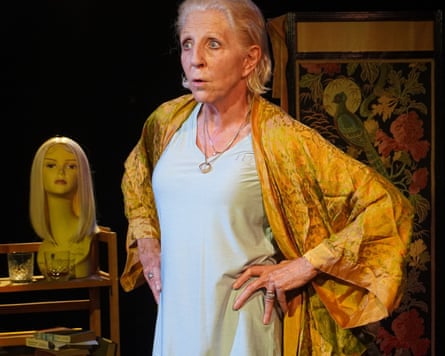
The next woman is Annabella, a celebrated novelist being interviewed by an offstage male (voiced by James Naughtie), about her artistic process and the effects of fame. There are some striking moments and McAuliffe creates pools of reflection, but confusingly the character morphs from a Dubliner in a floaty gown to a Scotswoman in lycra and then a posh Englishwoman.
The destitute Annie of the final monologue is the most haunting. She seems like a figure risen from London’s past, with an old-fashioned cockney accent, and thinks of herself as a seller of “bags of coal”. But there is also the universal sadness of a drunk woman living somewhere between her better past and this foggy present. She speaks of foreigners and Jews around her but seems less critical or xenophobic than confused by time and social change. (Wesker was himself Jewish.) She cuts a moving figure who could be from Dickens’ time or found wandering around Waterloo station today.
The three parts do not seem contemporary nor particularly enlightening about the female condition but they are curios and certainly show Wesker’s compassion for, and insight into, working-class women.