2 months ago
99
2 months ago
99
Art
Beryl Cook: Pride and Joy
For her centenary year, The Box presents the largest ever show of self-taught painter Beryl Cook. Her work may not be great art, but it is a bawdy slice of Plymouth and postwar British life. An unlikely pairing with Tom of Finland, at Studio Voltaire in 2024, recast Cook’s reputation as a queer ally. There will be drinking and smoking and ogling and people getting up to all sorts. Adrian Searle
The Box, Plymouth, 24 January to 31 May
Gwen John: Strange Beauties
Silence and solitude pervade the visionary art of this quiet hero of modernism. John didn’t take on the British art establishment – she simply ignored it. This graduate of the Slade ploughed her own route, living in France with almost no money, having a steamy affair with Rodin, for whom she also modelled, and painting simple, clear, spiritual images of women alone, and free like her, at a cost. Wales is right to be proud of her. Jonathan Jones
National Museum, Cardiff, 7 February to 28 June
Lucian Freud: Drawing into Painting
One of the greatest British portrait artists of all time can’t have enough exhibitions. This one delves into his creative process, exploring how his drawings grew into paintings – although he also demanded his models be there right through the work of painting. He wanted the subject present, even when he was painting floorboards and background. Freud’s drawings reveal the exactness of his eye, and are so precise they can be painful to look at. JJ
National Portrait Gallery, London, 12 February to 4 May
Seurat and the Sea
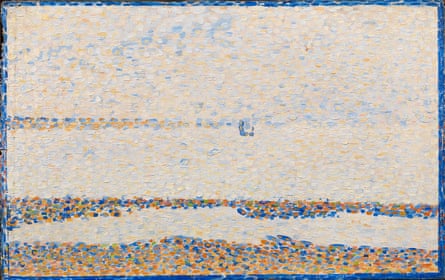
This may sound soft but, if so, take a closer look at Seurat. This restless, deep-seeing artist followed his elders, the impressionists, to the shores, ports and seaside towns of northern France but his pointillist fragmented views – a rock towering over the sea; an eerily still and unpopulated harbour; a long lonely channel connecting Gravelines, near Dunkirk, with the sea – are brilliant and achingly desolate visions of modernism. JJ
Courtauld Gallery, London, 13 February to 17 May
Beatriz González
Depicting tabloid crimes of passion and political murders, Latin American feminism and social commentary, the Colombian painter and sculptor Beatriz González developed during La Violencia, the decades-long civil war that gripped the country. Her simplified, brightly coloured paintings, assemblages, furniture and installation, are a kind of vernacular pop art, reflecting on troubled times. González’s largest show in Europe, this will be a revelation. AS
Barbican, London, 25 February to 10 May
Tracey Emin
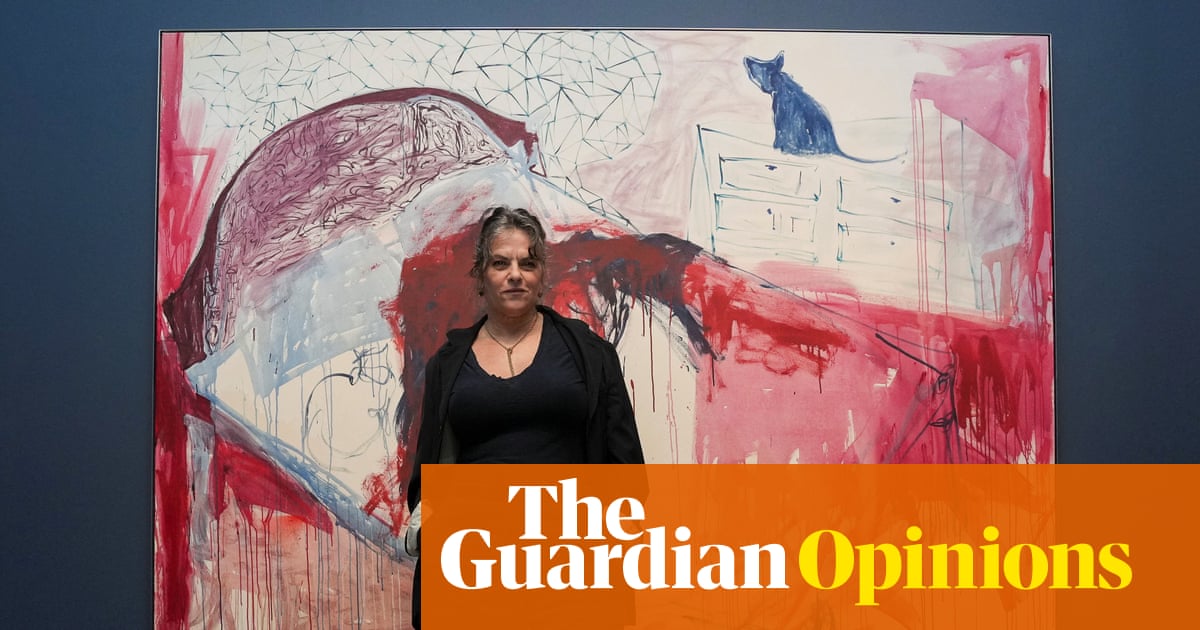
It is incredible to think that only a few years ago, critics were still sneering or even laughing at the wildest of the 1990s Young British Artists. What changed? Emin’s readiness to acknowledge she was no longer young, and to ruthlessly chronicle ageing, loneliness and a devastating illness, have made it clear to everyone her honesty is no stunt. Beyond that, her paintings have kept getting better, with her recent Crucifixion her greatest yet. Genuinely popular and truly original, Emin will give Tate Modern a boost in ticket sales and, if there is justice, rave reviews. JJ
Tate Modern, London, 27 February to 31 August
Angela de la Cruz: Upright
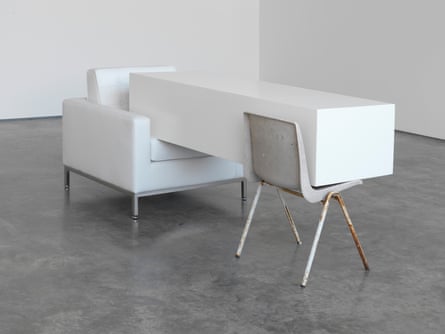
Slapstick and tragedy, pathos and humour come together in Angela de la Cruz’s paintings and assemblages. Everything is abstract, everything is figurative in this survey of the artist’s career, which includes a new commission made in collaboration with Birmingham Royal Ballet. AS
Ikon, Birmingham, 25 March to 6 September
Frank Bowling: Seeking the Sublime
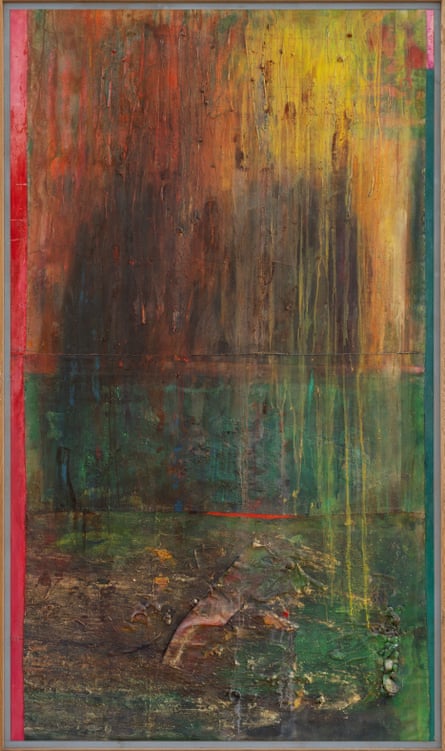
Continents swim in luminous oceans of colour. Frank Bowling’s art carries with it memories of places and people, journeys taken, voyages across the surface of the canvas as much as around the world. He was born in British Guiana (now Guyana), and his peripatetic art has taken him to London and New York and back again, in a show that maps his influences and affinities. AS
Fitzwilliam Museum, Cambridge, 27 March to 17 Jan 2027
Zurbarán
Haunting and mysterious, the paintings of the Sevillian artist Francisco de Zurbarán (1598-1664) are filled with dramatic lighting, impenetrable dark and magisterial greys. His stilled, enigmatic figures have a theatrical, sculptural presence, and for all the inescapably Spanish baroque religiosity and tailored drapery, Zurbarán’s art appears peculiarly modern and strange. AS
National Gallery, London, 2 May to 23 August
Nancy Holt
From pierced concrete tunnels in the Utah desert to the systems hidden beneath the floors and walls of our buildings, Nancy Holt’s art puts you in touch with the cosmological and the everyday. A pioneer of land art, environmental art and conceptualism, Holt (1938-2014) puts magic back into the world. AS
Goodwood Art Foundation, West Sussex, 2 May to 1 November
Whistler
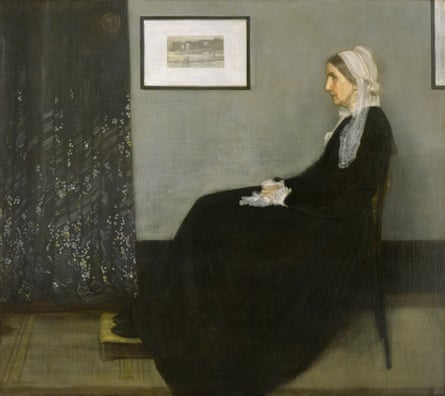
… and his mum! The painting Whistler’s Mother (Arrangement in Grey and Black No 1) will be lent by the Musée d’Orsay for this survey of an American in Paris and London. Whistler was au fait with the French avant garde: in an 1860s group portrait of them he looks like a wild west gunslinger, putting Manet and Baudelaire in the shade. He then brought their modernist ideas to London, painting a sleazy gathering at Wapping and dreamy impressions of the Thames, all while taking the critic John Ruskin to court. The original modern art star. JJ
Tate Britain, London, 21 May to 27 September
Anish Kapoor
You can’t go wrong with Kapoor – he turns art galleries into adult playgrounds full of riotous visual spectacle and sublime fun. His recent work has explored new, provocative ground with sculptures and paintings that plunge into a red, visceral imagery of human flesh. At the same time, he has been exploring the nature of the ultimate black in pieces that are as much physics as art. This readiness to follow new, unexpected ideas on top of an already stunning career makes him a dangerous and exciting artist who is sure to keep you on your toes. JJ
Hayward Gallery, London, 16 June to 18 October
Frida Kahlo: The Making of an Icon
The paintings, diaries and courageous life of this surrealist artist are endlessly compelling and a guaranteed hit for Tate. And why not? I think she is underrated. Our tendency to see her as a kind of performance artist and pop star belittles how good her paintings and drawings really are: so truthful, so frank, yet infused with mythology, religion and dreams. She invented this confessional approach decades before anyone else thought of it. Embrace this encounter with one of the truly great artists of the 20th century. JJ
Tate Modern, London, 25 June to 3 January 2027
Ana Mendieta
Working in sculpture, performance, film and photography, the Cuban-born artist Ana Mendieta put her body, its imprint and silhouette, at the core of her art. Displacement and absence were a recurrent theme. Mendieta left her trace everywhere, using water, flowers and fire, in film and photography, performance and sculpture, in all too short a career. In a career overshadowed by the circumstances of her death, her art remains vital and alive. AS
Tate Modern, London, 9 July to 10 January 2027
Richard Dadd: Beyond Bedlam
Before surrealism there was Richard Dadd. Monstrous fairies do unspeakable things in the overgrown grass of an out-of-scale garden, doctors and orderlies pose for staring portraits in lurid nature – Dadd’s world is a psychedelic hallucination, or bad-trip nightmare. His best known paintings were done in the asylum after he murdered his father while in the grip of psychosis. He was treated kindly and his art flourished, free from Victorian respectability. Venture down the rabbit hole. JJ
Royal Academy, London, 25 July to 25 October
Bayeux Tapestry
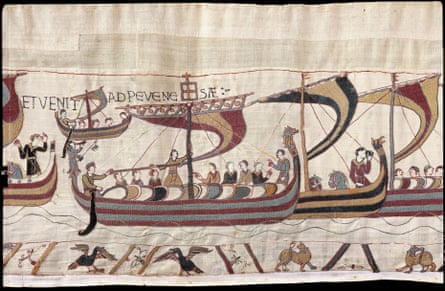
The art event of the year, by some distance, has to be this once-in-a-lifetime triumph of cultural generosity by France. The greatest and most popular early medieval artwork comes to the country whose invasion by the Normans in 1066 it depicts in epic human detail. You can, and people will, find all manner of contemporary meanings in this vast embroidery, from a condemnation of war to nationalistic nonsense to proof that Britons are Europeans … but it is almost 1,000 years old and portrays another world, other ways of being. It will move and astonish you. JJ
British Museum, London, opens autumn
Mike Nelson
In 2004, Mike Nelson buried a shack in a sand dune, in the upstairs gallery at Modern Art Oxford. Nelson’s work, with its mix of fact and fiction, history and fabulation, is always as engrossing as it is disturbing. For the 60th anniversary of the gallery, Nelson returns to Oxford with a new work, currently under wraps. AS
Modern Art, Oxford, opens autumn
Beverly Buchanan: Weathering
Remnants and ruins, sculptural versions of sharecroppers’ shacks and other fragments of lives lived and hardships endured, are key elements for Buchanan (1940-2015). In her evocations of the complex conditions of rural African American life, Buchanan’s art was often sited outdoors, where tides and weather would eventually sweep them away. What remains is a key question, both as metaphor and memory. Belatedly, Buchanan’s time has come, in this first European travelling retrospective. AS
Spike Island, Bristol, 26 September to 10 January 2027
LS Lowry
Industrial northern scenes, sometimes teeming and sometimes empty, melancholic seascapes and weirdly vacant landscapes: you think you know Lowry’s art – and perhaps dismiss him – but there’s so much more to him than the matchstick-men cliches. Fifty years after his death, MK gallery mounts this first major retrospective in more than a decade. AS
MK Gallery, Milton Keynes, 24 October to 28 February 2027
Van Eyck: The Portraits
The early 15th-century magic of Jan van Eyck will captivate you in this show of his mesmerising portraits. Van Eyck used oil paint to mirror reality. He also pioneered perspective. These huge artistic innovations make him the first true Renaissance artist. Yet he worked in the medieval world of the Burgundian court and the merchant city Bruges. His masterpiece, the Arnolfini Portrait, takes you into a merchant’s house to ponder an enigmatic relationship between a woman and man: it will be presented here alongside other uncannily true-seeming images of grave, pale faces looking back at you like ghosts with secrets. JJ
National Gallery, London, 21 November to 11 April 2027
Architecture
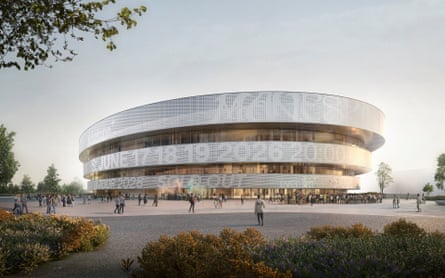
Santa Giulia Arena, Milan: David Chipperfield
It’s snowtime as the Winter Olympics glide off in Milan and Cortina d’Ampezzo, with David Chipperfield’s 16,000 capacity Santa Giulia ice hockey stadium at the heart of the slippery action. Based on the elliptical form of Milan’s ancient Roman amphitheatre and wrapped in a trio of shimmering metallic rings impregnated with LED lighting, it gives modern expression to a historic archetype and will have an Olympic afterlife as a sports and entertainment venue for the city. Catherine Slessor
Opens February
Yrjönkatu Swimming Hall, Helsinki: Väinö Vähäkallio
Finland’s oldest indoor swimming pool reopens after an extensive glow-up that preserves the character and ambience of the original pool hall. Dating from 1928, it’s a sybaritic example of Nordic classicism, designed by Väinö Vähäkallio, one of Finland’s most versatile early 20th-century architects. As swimsuits are optional, men and women partake of separate bathing sessions, while cabins around the pool’s upper level encourage patrons to relax with a glass of gin and lingonberries. CS
Opens 2 February
Maggie’s: Architecture that Cares
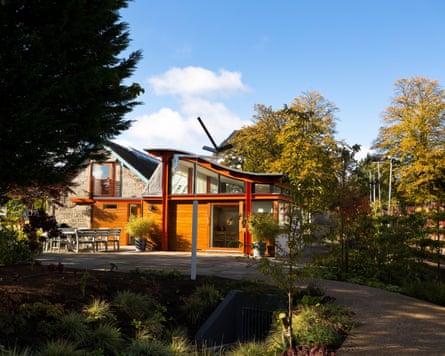
Over three decades, a growing network of Maggie’s cancer care centres across the UK has created memorable and much-needed spaces for those dealing with the impact of cancer, away from a clinical hospital environment. Shaped by founder Maggie Keswick Jencks’ ambition to help people “not lose the joy of living in the fear of dying”, this exhibition explores Maggie’s pioneering approach to design, bringing together the voices of centre visitors, staff and architects. CS
V&A Dundee, 6 March to 1 November
Architecture Against Architecture by Reinier de Graaf
Architecture, as we know it, may be coming to an end, contends Dutch architectural theorist Reinier de Graaf, and architects have only themselves to blame. The profession is out of touch, fixated by glitzy “starchitects”, and disdains to respond to wider social, political and economic change. In a provocative 14-point manifesto, De Graaf calls for unionisation, a mandatory retirement age, explains why we should stop building, and considers whether an architect should refuse a project on moral grounds. CS
Verso Books, 24 March
V&A East Museum, London: O’Donnell + Tuomey
The sculptural tailoring of Spanish couturier Cristóbal Balenciaga provides a jumping-off point for the V&A’s major new outpost in Stratford, east London. Designed by the Irish architects O’Donnell + Tuomey, the building appears as a crisply angular “folded dress”, giving the museum a distinctive form and striking identity. Helmed by Gus Casely-Hayford, it will radically reinterpret the V&A’s collections through a contemporary lens, exploring aspects of representation, identity, wellbeing, craft practice and social justice. CS
Opens 18 April
David Geffen Galleries, Los Angeles County Museum of Art: Peter Zumthor
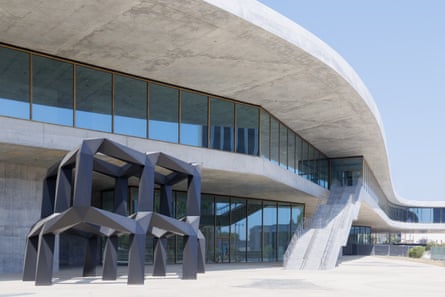
The long-awaited public opening of the David Geffen Galleries sees Lacma’s permanent collection arrayed within a concrete and glass amoeba conceived by Peter Zumthor, who brings his USP of Swiss asceticism to LA’s contemporary art world. Elevated above a plaza, the exhibition level is a single flowing space with no prescribed visitor route, which the museum sees as a means of “eliminating traditional cultural hierarchies”, placing “all works of art on the same plane”. Literally. CS
Opens April
Skate Space 50
Emerging out of a labyrinth of concrete ledges, pillars and stairs below Southbank’s Queen Elizabeth Hall, the Undercroft Skate Space lays claim to being the world’s oldest continually used skateboarding locale. First informally adopted by London’s skateboarders in the 1970s, it is now a permanent fixture on the skate circuit. As part of the Southbank Centre’s 75th anniversary, an exhibition will explore 50 years of the Undercroft Skate Space through photography, moving image and sound. CS
Southbank Centre, London, 7 May to 21 June
Basílica de la Sagrada Família, Barcelona: Antoni Gaudí
A century after its architect was knocked down and killed by a tram, the fever dream of Barcelona’s Sagrada Família, a molten, kaleidoscopic basilica for the ages, reaches a climax of sorts. Construction will finish on the final, focal, Jesus Christ spire soaring 172 metres above the city, in time for the 100th anniversary of Antoni Gaudí’s death on 10 June. Originally, his elaborate stone forms were laboriously carved by hand, but digital technology now makes his febrile visions a reality. CS
Opens 10 June
Google headquarters, London: Bjarke Ingels Group and Heatherwick Studio
Google’s UK headquarters is a 330-metre-long landscraper, as long as the Shard is high, butted up against King’s Cross station. “Continuously cascading work environments will connect Googlers across multiple floors,” says Danish architect Bjarke Ingels somewhat gnomically, but work drudgery will be leavened by an expansive roof garden, swimming pool, gym and cafe. Critics have called it the “Zombie Garden Bridge”, after co-designer Thomas Heatherwick’s now aborted proposal to connect the Thames with a landscaped crossing. CS
Opens August