3 months ago
120
3 months ago
120
Picking up my ballet shoes again after six years has been bittersweet. I have felt joy in returning to a childhood hobby yet discomfort, too, knowing that I originally stopped ballet because of my incredibly flat feet. There is no doubt that ballet challenges your feet immensely – the tips of your toes support the entire weight of your body when dancing with pointe shoes. Struggling to go on pointe left me feeling that my body was not built for ballet, which is far from true, as flat-footed ballet professionals are out there and thriving.
However, the industry still has an obsession with “perfect” feet. High arches have traditionally been praised in ballet, and some dancers today use farches (fake arches), which give the illusion that your foot is more bendy than it is.
Alex Maureen and Ruth Essel are Black ballerinas from different sides of the Atlantic. Maureen is a performer and dance instructor at New York University; Essel is the founder of Pointe Black, a London-based ballet school. They both have flat feet but reject the suggestion that it is an obstacle to success.
That idea was echoed to us all by teachers. It often manifested as a quiet withdrawal and an unwillingness to learn about our feet and how to work with them. “A teacher told me I wouldn’t make it because of my flat feet,” says Maureen. In her teens, Essel was told: “You don’t need to worry about it too much. Black people usually have flat feet. That’s just the way you are. It just means that you’re always going to find certain things really difficult.”
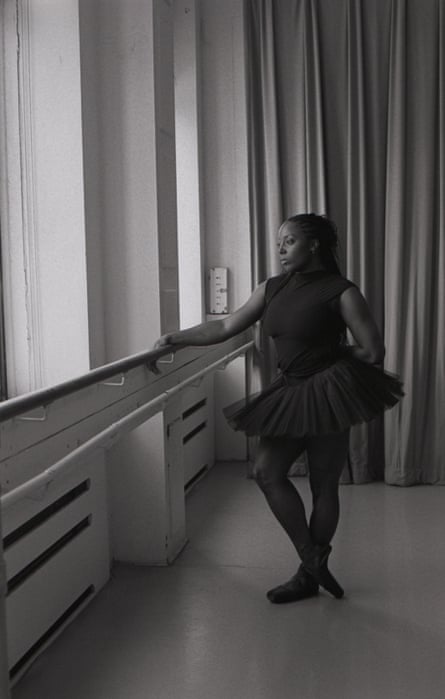
Studies do show that Black people are more prone to having flat feet, but it is not a foregone conclusion, as there are Black people with high and moderate arches. Maureen and Essel deconstructed the discouraging beliefs about their feet through research and conversations. With a background in psychology, Essel started learning more about anatomy and exercises to strengthen her ankles and improve foot mobility. She soon realised that performance on pointe “is not just about your arches. It’s a mixture of foot flexibility, foot strength, ankle mobility, ankle strength, calf strength and core strength.” Maureen, for instance, has a really flexible top of her ankle which strengthens her pointe. Flat feet come in different forms and do not automatically equate to weak pointe performance.
Injury prevention is crucial for flat-footed dancers, who tend to land on their heels. As a high jumper, Maureen was taught the importance of distributing her weight properly by her college physical trainer after experiencing a hairline fracture. Maureen and Essel stress the need for educators to do their part. Teachers are responsible for unlearning stigmas, discovering how to work with different body types and bringing in specialists when an issue goes beyond their own scope of knowledge.
“To this day, I’ve never met a Black pointe shoe fitter in the UK. I’m thankful to have Black physiotherapists that we work with who come in and have a look at our students to check posture and feet before we then go for a pointe shoe fitting,” Essel says.
Maureen and Essel have checklists for their students before they’re able to start using pointe shoes. “I would go to the store with them and say, ‘No, no, no, that’s not going to work. They need a different shoe,’” says Maureen, who cuts the shank – the stiff section between the insole and outsole – to fit her arch so the shoe will sit comfortably. “It is not that flat feet are not made for pointe work. You just need your shoe to work for you, not against you,” she adds.
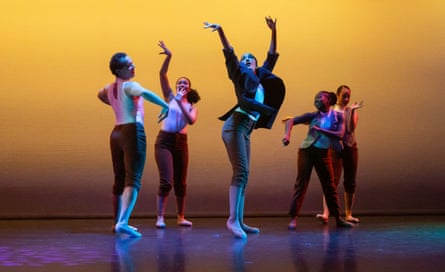
“I’ve heard of people who have done ballet up until a certain point and then when it starts to get into pointe work, they say that they feel really uncomfortable and they stop, which is a shame really,” Essel says.
I was one of those people. I thrived in ballet until my teenage years, when it became glaringly obvious that the strength of my pointe was weaker than that of most of my peers. I used a resistant band to do specific exercises to little avail. I remember trying pointe shoes for the first time, after getting approval from my teacher, and struggling to get up fully. The fitter told me I was not ready for pointe, but did not give me an explanation as to why – or offer me alternative shoes to try – which ultimately stifled my drive.
To aspiring ballerinas with flat feet, Maureen’s words stick: “Give yourself grace. Be kind to yourself.” I will carry these words with me as I embark on a journey of rediscovering my joy for ballet again. This time around, I see my feet differently – as a strength and not a weakness in my dancing.