2 months ago
111
2 months ago
111
They are humankind’s best friend, and now ancient DNA analysis has revealed that the enduring bond between dogs and humans dates back more than 15,000 years.
The groundbreaking research, published in the journal Nature, pushes back the oldest genetic evidence for domestic dogs by 5,000 years, revealing that hunter-gatherers were feeding the animals and giving them ritual burials long before the emergence of agriculture.
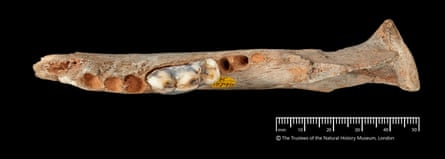
The oldest specimen, dating to 15,800 years old, was buried alongside human remains in Anatolia, Turkey. The second-oldest on record, a jawbone dating to 14,300 years, was unearthed at Gough’s Cave in Somerset, which was inhabited by a tribe known for cannibalistic rituals.
Dr Lachie Scarsbrook, of Ludwig Maximilian University of Munich and co-first author of the study, said: “This means that by 15,000 years ago, dogs with very different ancestries already existed across Eurasia, from Somerset to Siberia. This raises the possibility that domestication occurred during the last ice age, more than 10,000 years before the appearance of any other domestic plants or animals.”
Previously, archaeological evidence strongly suggested that dogs had been domesticated from grey wolves before the end of the last ice age, about 12,000 years ago. But until now the oldest direct genetic evidence for dogs dated to just 10,900 years, due to DNA from older bones being too fragmented to confidently distinguish between dogs and wolves. The precise dating, location and circumstances of domestication had therefore remained shrouded in mystery.
“For a long time the only way we could tell whether something was a dog or wolf was to look at the bones, which is not necessarily so reliable,” said Dr Anders Bergström, lecturer at the University of East Anglia and formerly of the Francis Crick Institute . He was also first author of a second study that analysed more than 200 ancient dog and wolf specimens. “Someone would say: ‘It’s a dog’ and another person would say: ‘No, it’s a small wolf.’”
The latest findings, published by two international teams, provide unprecedented detail on how our ancient partnership with dogs took root and show that modern European dog breeds, from bulldogs to labradors, share much of their ancestry with those living alongside ancient hunter-gatherers in Europe. The dogs are likely to have had the appearance of small wolves, possibly with a shorter muzzle and less powerful jaws.
“We don’t expect them to look like a chihuahua,” said Scarsbrook.
The first paper, involving Scarsbrook and scientists at London’s Natural History Museum, analysed DNA from bones at Gough’s Cave, in the UK, Pınarbaşı in Turkey, and two sites in Serbia. Advanced sequencing techniques allowed tiny fragments of ancient DNA to be pieced together to reconstruct whole genomes that could enable a clearcut species identification for the first time.

The findings revealed that dogs were already widespread across Europe and western Asia by at least 14,000 years ago. Isotopic analysis of the bones found in Turkey revealed the dogs consumed a diet rich in fish, matching the local human diet. Similar dietary patterns were seen at the other locations, suggesting dogs were being purposefully fed by humans.
There was also evidence of deep emotional bonds. The bones of three puppies were found buried over the legs of a human in Pınarbaşı, mirroring the elaborate burials of humans carried out by this group. At Gough’s Cave, where the local population performed macabre rituals with human remains, the ancient dog jawbone appeared to have holes intentionally carved in either side. Quite possibly, the researchers concluded, pet dogs were also eaten after their death.
The close genetic relationship between the dogs across the three sites suggested that, once domesticated, dogs may have spread rapidly across Europe, possibly being traded between unrelated groups.
“The fact that people exchanged dogs so early means these animals must have been important,” said Prof Laurent Frantz, of Ludwig Maximilian University of Munich and a senior author. “They must’ve served some purpose beyond being pets. It’s crazy to think they would’ve been feeding this quite large carnivore just out of the goodness of their hearts because they look cute.”
Dogs may have increased hunting efficiency, or they may have served as an early warning system against predators.