2 months ago
79
2 months ago
79
The beginning of the books calendar is usually dominated by debuts, but January 2026 sees releases from some of the year’s biggest authors. Known for his surreally bittersweet short stories, George Saunders has written only one novel so far – but that one won the Booker prize. The follow-up to 2017’s Lincoln in the Bardo, Vigil (Bloomsbury) focuses on an unquiet spirit called Jill who helps others pass over from life to whatever comes next. She is called to the deathbed of an oil tycoon who is rapidly running out of time to face up to his ecological crimes, in a rallying cry for human connection and environmental action. Ali Smith’s Glyph (Hamish Hamilton) is a companion to 2024’s Gliff, and promises to tell a story initially hidden in that previous novel. Expect fables, siblings, phantoms and horses in a typically playful shout of resistance against war, genocide and the increasingly hostile social discourse. And in Departure(s) (Jonathan Cape), Julian Barnes announces his own – this blend of memoir and fiction, exploring memory, illness, mortality and love across the decades, will be his last book. “Your presence has delighted me,” he assures the reader. “Indeed, I would be nothing without you.”

The Hamnet adaptation hits UK cinemas in January, but Maggie O’Farrell’s next novel isn’t out until June. Land (Tinder), a multigenerational saga which opens in 19th-century Ireland in the wake of the famine, is inspired by her own family history and centres on a man tasked with mapping the country for the Ordnance Survey. There’ll be much anticipation, too, for The Things We Never Say from Elizabeth Strout (Viking, May). The ultra-prolific Strout is adored for her interconnected novels, but this story of a man with a secret is a standalone, introducing characters we’ve never met before. In John of John (Picador, May) Douglas Stuart, author of much-loved Booker winner Shuggie Bain, portrays a young gay man returning home from art school to the lonely croft on the Hebridean island where he grew up. And September sees a new novel from Irish writer Sebastian Barry: The Newer World (Faber) follows Costa winner Days Without End and A Thousand Moons in transporting the reader to late 19th-century America in the aftermath of the Civil War.

Apart from his pulpy collaboration with Keanu Reeves on The Book of Elsewhere, fantasy legend China Miéville hasn’t published a novel for adults since 2011’s Embassytown. The Rouse (Picador, September) has been 20 years in the writing and promises dark conspiracies and uncanny forces in a continent-spanning epic. Other returns to look out for include John Lanchester with a black comedy of entitlement and generational resentment set amid the metropolitan elite, Look What You Made Me Do (Faber, March), and Life of Pi author Yann Martel’s ambitious Son of Nobody (Canongate, April), in which a classical scholar uncovers a lost account of the Trojan war. The translated poem unfolds at the top of the page, with heartfelt footnotes addressed to his young daughter below, in a meditation on mythmaking, homemaking and storytelling. Gwendoline Riley has built a reputation as a deadpan genius of dysfunctional relationships; she follows 2021’s My Phantoms with The Palm House (Picador, April), a sly dark comedy about a long friendship between two prickly people enduring in the face of the world’s disappointments.

Asako Yuzuki’s Butter, featuring a gourmet cook turned serial killer, has become a slow-burn sensation (“There are two things that I can simply not tolerate: feminists and margarine”). Author and translator Polly Barton are reunited in Hooked (4th Estate, March), another exploration of food, friendship and female experience in contemporary Japan.
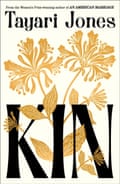
Three award winners return. Tayari Jones took the Women’s prize for American Marriage in 2019; Kin (Oneworld, March) focuses on two motherless daughters in the segregated American south. Geetanjali Shree follows up her 2022 International Booker winner Tomb of Sand with The Roof Beneath Their Feet (translated by Rahul Soni, And Other Stories, February), charting women’s lives in India. And in The End of Everything (Serpent’s Tail, June), M John Harrison, whose previous novel The Sunken Land Begins to Rise Again won the Goldsmiths prize in 2020, continues his unsettling destabilisation of our contemporary moment.
Second novels to get excited about include Louise Kennedy’s follow-up to the award-winning and recently seen-on-TV Trespasses; Stations (Bloomsbury, September) traces the relationship of two Irish teenagers from the early 80s onwards. In Jacqueline Crooks’s Sky City (Cape, August), the Fire Rush author focuses on a woman in 90s London trying to escape her past. Gabriel Tallent’s 2017 debut My Absolute Darling divided readers with its intense tale of an abusive father and his rebellious daughter; the follow-up Crux (Fig Tree, February) is a portrait of friendship and thrill-seeking between two young climbers in an impoverished California community . Megha Majumdar won high praise with her 2020 debut A Burning. A Guardian and a Thief (Scribner, January) is another depiction of Indian inequality, set in a near-future Kolkata ravaged by climate change; while in The Last of Earth (Oneworld, February) Deepa Anappara follows her acclaimed 2020 adventure about children under threat in an Indian shantytown, Djinn Patrol on the Purple Line, with a historical novel featuring outsiders venturing into the Forbidden Kingdom of Tibet.

Short stories from Colm Tóibín delve into the inner lives of people living far from home in The News from Dublin (Picador, March), which ranges from Ireland to Argentina to the Spanish civil war, while American author Sigrid Nunez publishes her first story collection, the career-spanning It Will Come Back to You (Virago, August).
Finally, a treat for the autumn as Louisa Young embarks on a continuation of her aunt Elizabeth Jane Howard’s ultimate comfort read The Cazalet Chronicles, the sprawling saga of an upper-middle-class English family set around the second world war that has enthralled readers since the first volume was published in 1990. The Golden Hours (Mantle, September) opens at Christmas 1962, in a country on the brink of change. It will explore the final years of the old guard and the changing fortunes of the family, as well as new characters and new stories.