4 hours ago
12
4 hours ago
12
Have you ever wondered why it is that most houses in the UK are reliant on gas boilers? Not what’s stopping more people from replacing them with heat pumps, but instead why and how the gas boiler became so ubiquitous in the first place?
Arthur Downing, the author of the new book Power and the People: A History of British Energy, can tell you exactly why. “We only have boilers in our houses because of a state-owned enterprise that went into everybody’s home and installed natural gas-suitable appliances at no direct cost,” he says. The nationalised gas industry of the 1940s to the 1980s, which oversaw this huge project, was for three decades one of the “most dynamic, innovative, efficient industries in Britain”, Downing says. Yet few of us would use these terms to describe it as such now.
Instead, Britain’s electricity and gas industries are “fragile, fragmented, comically complicated and hopelessly dependent on imported fossil fuels”, Downing writes. On top of that, as consumers, we are facing soaring energy bills amid a cost of living crisis.
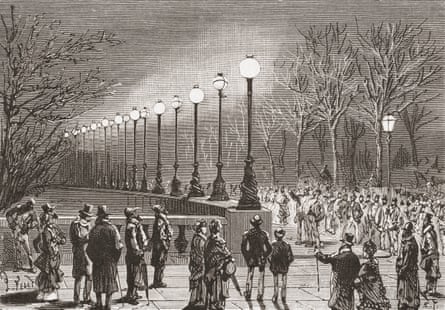
Unearthing how this happened, by exploring the history of Britain’s energy industry, is the subject of Downing’s book. It’s one he lives and breathes – by day, Downing works as the director of strategy at Octopus Energy, the UK’s largest supplier of energy, but the book itself is written in a personal capacity.
Central to his argument is that this is a history a lot of us, even people working in the industry now, know little to nothing about. Yet it is instructive for the present, Downing argues, showing why we have the system we do – and, importantly, how we might change it for the better.
This summer’s string of climate crisis-driven heatwaves makes his book feel even more urgent. Although the UK has reduced greenhouse gas emissions by 50% compared with 1990 levels, Downing explains: “The second half of the journey will be much harder than the first. All the low-hanging fruits have been picked, like deindustrialising and switching from coal to gas.”
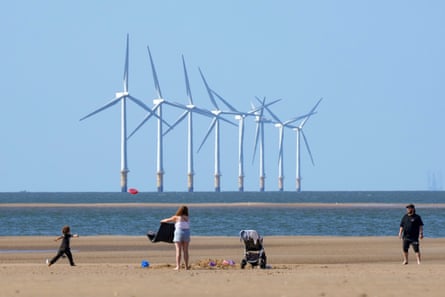
Yet debates about the energy system often happen behind closed doors, and part of his aim was to make it more intelligible. An economic historian by training and with encyclopaedic knowledge about energy, both shine through in the book, which charts how the crisis came into being.
His argument is straightforward: ownership matters. “Who owned and controlled the means of making, moving, and selling energy shaped which technologies were developed, what infrastructure got built and the extent to which citizens and consumers benefited,” he writes. Between 1926 and 1979, for instance, state-owned enterprises built huge infrastructure – from hydroelectric plants to power stations inside mountains – faster and cheaper than Britain’s private sector companies today. The system has been privatised since the start of the 1980s, and despite the mess it’s currently in, the orthodoxy tends to still be that private is always better than public ownership – cheaper, more efficient and more creative. Downing does not agree.
“I tend to view things from the perspective of political economy – the institutions, the ownership models, the organisations and the people make the system,” says Downing, who speaks with energising enthusiasm and expertise. “For me, the technology is interesting, but it is very strange to think of the [energy] system composed of inanimate objects, as if these things have agency and they don’t. They’re only there because of [human decisions].”
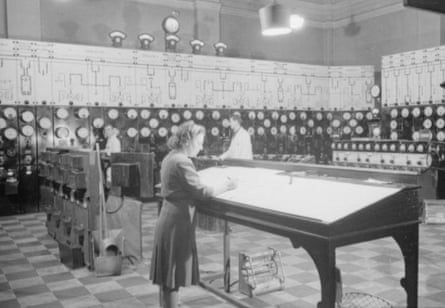
Downing’s book charts four phases over the last 200 years, each given a chapter of its own. In the first phase, from the late 1880s to the 1920s, ownership of Britain’s energy system was overwhelmingly public and municipal. This meant that even where private companies were involved, they were highly local, embedded in regional networks, and with municipal authorities making the decisions about how to plan and coordinate the gas and electricity system. The second phase, 1920-1945, saw government become a major owner and operator of some energy infrastructure. The third, from 1945-1979, saw energy nearly completely nationalised. And the final, before the mess of the system we have today, was characterised by almost total privatisation between 1979 and 2010.

Although 1,500 energy entities were brought into two state-owned enterprises after the second world war, nationalisation didn’t begin in the 1940s but rather started in that second phase. In fact, in 1926, it was the Conservative prime minister, Stanley Baldwin, who set up the Central Electricity Board (CEB) – a state-owned public corporation that built the first National Grid. Unlike now, this was done on time and at cost.
Downing says the energy system we have now is a zombie – a “dysfunctional hybrid” of public and private. For example, it remains privately owned but feeds off state subsidies, meaning few benefits of either model but most of the costs in that it is expensive and inefficient.
In February, Engie, the electric utility company in which the French government is the largest shareholder, bought UK Power Networks (UKPN), which owns and maintains electricity cables in the south and east of England, from a conglomerate. On that very day, Downing points out, 10-year bond borrowing rates of the French state went down and the stock value of Engie went up, meaning every French citizen got a bit richer. It didn’t play out the way the British media often claims – the bond markets didn’t blink and the government didn’t collapse.
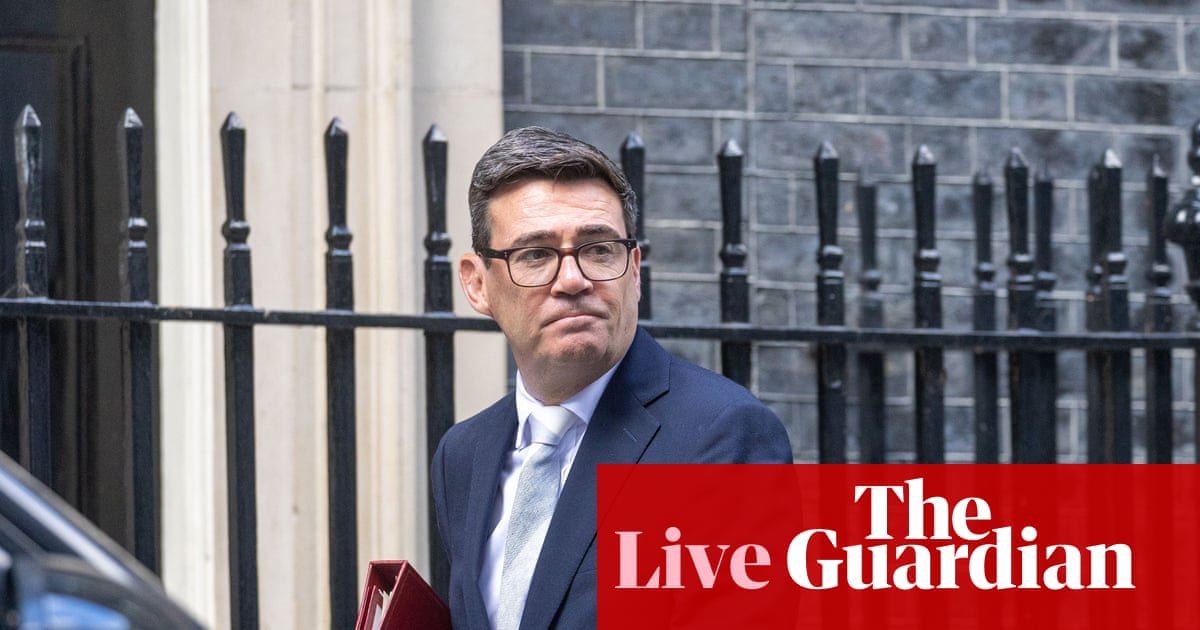
Downing suggests Andy Burnham’s early announcement of a VAT cut on energy bills was a good first move. But if he could ask Burnham to do anything else, what would it be? “Shift the focus from producers to consumers, from investors to citizens,” he says. This would include getting bills down by taking off levies, which are added to fund environmental and social programmes. But it would also mean looking at questions of ownership.
after newsletter promotion
“Public ownership was an extraordinary tool for building infrastructure at pace while delivering benefits for citizens,” Downing says. “It can be again.”
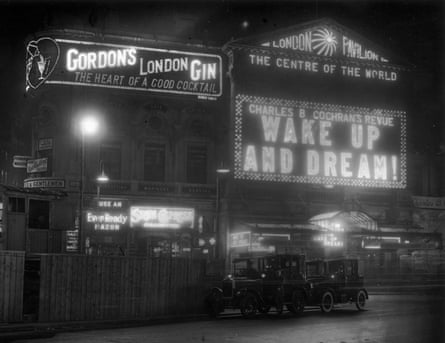
Downing doesn’t want a return to a 1940s-style system. Instead, he advocates for a mutualised system, meaning neither nationalised nor privatised. “The old labels don’t fit,” he explains. “The principle is that energy should be built around mutually beneficial relationships between capital, citizens and the state, with ownership and decision-making spread out rather than concentrated.” What does that look like in practice? “Public corporations owning the networks and part of generation, councils and community schemes taking real ownership stakes in local infrastructure, and households owning solar, batteries and electric vehicles and being paid properly for the flexibility those provide. Citizens as owners of the system, not only customers of it.”
The state would become even more involved in regulation, because regulatory institutions make the system more complex. For example, Ofgem is tasked with setting the price cap and assessing the components of bills but in many instances it doesn’t actually control the costs that are accruing.
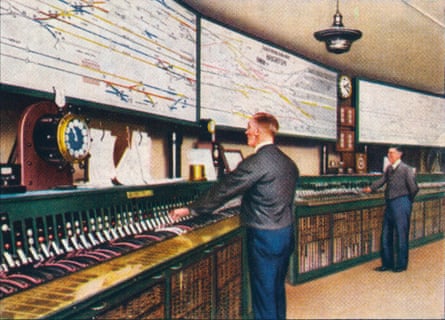
Markets would still be involved. Natural monopolies – in networks and onshore transmission, for instance – would be publicly owned, while markets would stay for retail, electrical vehicle charging, home solar and batteries. “Public ownership and markets are not opposites,” Downing says. “The Nordic countries introduced competition in [power] generation and retail shortly after Britain and kept extensive public ownership. China is running markets at huge scale within a publicly owned system. The US has the longest tradition of private ownership and some of the least competitive markets in the world.”
To make such a change would require bold political intervention. Maybe the local aspect, which is a big part of Downing’s proposal, appeals to Burnham’s talk of devolution, nationalisation and reindustrialisation.
Energy transitions are rare and protracted, usually taking around a century, Downing says, and if this were to happen, it would be the “first all-encompassing rapid energy transition in human history”. His book suggests it is possible. We just have to reject the British orthodoxy that says the state is useless in a way private companies never are.
“We have a strange situation where we are OK with public ownership, just not by our own state,” he says.
Power and the People: A History of British Energy is published by Verso on 1 September