5 hours ago
6
5 hours ago
6
The twins were 19 and still in high school when they were taken from their beds in the dead of night by masked men later identified as being sent by the Islamic Revolutionary Guards Corps.
After four months of desperately seeking news from hospitals and state institutions, their mother, Marzieh Nourmohammadi, finally learned their fate. Taraneh and Romina Rahimi had been seized over their decision to join millions on the streets of Iranian cities during the January protests against the regime. The twins were unrecognisable by the time of their mother’s prison visit in May.
The women’s scalps were patchy from being dragged around by their hair, and their faces were bruised, according to their US-based cousin. It is claimed that Taraneh, who dreams of running her own horse stable one day, had been told the prison guards would rape Romina in front of her unless a confession was signed.
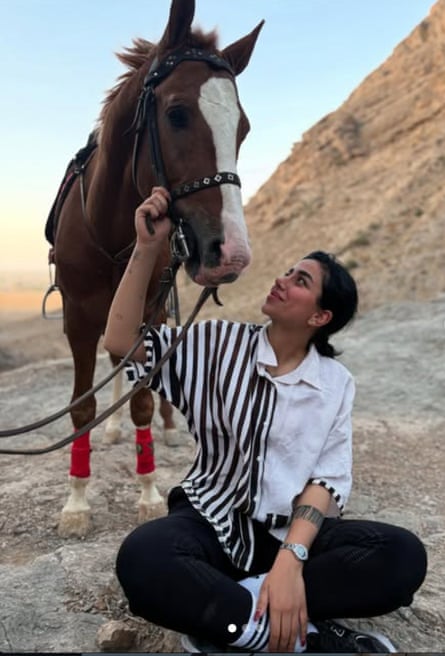
The visit by their mother to Dowlatabad prison, in Isfahan, the main city in central Iran, was five months ago. It has now emerged from the Iranian courts that Taraneh has been sentenced to death for her participation in the January protests, and that Romina has been given a 25-year prison sentence. Neither of the women have been seen by their family since the sentencing.

The difference in the sentences remains a mystery, but the twins’ cousin, Masoud Nourmohammadi, who lives in the US state of Utah, said he struggled to understand anything done by the regime.
“They do not follow their own law,” said Nourmohammadi. “There is an 18-day period that lawyers can go and appeal but in a lot of [execution] cases recently that has not happened. They just sentence and take the kids and execute them and hang them. So I mean, nothing, nothing really makes sense.”
Nourmohammadi, 43, said he believed Taraneh was sentenced to death by hanging because of her obvious innocence. “You can see her eyes and you know right away that she is a kind person,” he said. “My sense is like they’re looking to put fear within the people, to say: ‘Look, no matter how fine you are, no matter how innocent you are, we can get you, and don’t come to the streets any more.’”
Despite the logistical difficulties presented by the war with the US and Israel that began in February, Iran has executed more than 500 people this year, including at least 29 people in connection with the anti-government protests in January.
At least 16 women have been among those executed. Hundreds more protesters have either been sentenced to death or are facing charges which could carry the death penalty, including more than 70 in Isfahan.
Last month, the UK and 30 other countries signed a joint statement condemning the executions of the January protesters and describing them as an attempt to silence dissent.
Nourmohammadi, a healthcare IT specialist who arrived in the US from Iran 22 years ago, is speaking out despite receiving death threats via text messages and social media from people who say they know his home address. His cousins’ case, he said, should instil a determination to end the Islamic regime.
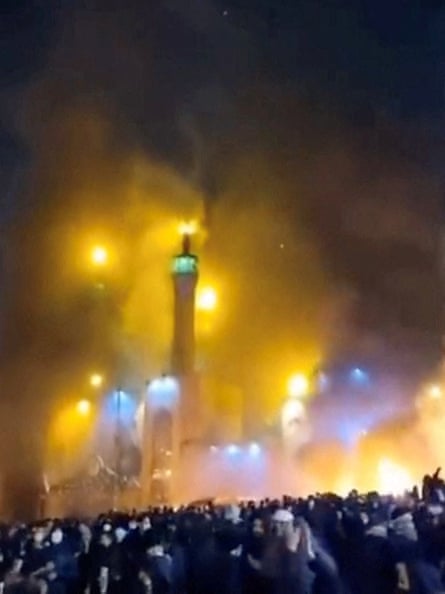
The two women joined the protests on 8 and 9 January in Istafan, along with 18 million others. The men who came for them a month later dragged them out with bags over their heads and offered no explanation. “The family didn’t know where they were,” Nourmohammadi said. “They had no idea. They were searching for them everywhere, different courts, hospitals. Then my aunt received a call saying: ‘We have your girls, come to see them at the prison.’”
Seeing her daughters was heartbreaking for his aunt, Nourmohammadi said. “She did not recognise her own children: they were beaten up, badly swollen faces, bruises all over their body, broken elbows, knuckles, feet, and they basically had no hair because they would pull their hair and drag them from one cell to another cell. She found out that they had been in solitary confinement.”
Marzieh Nourmohammadi, who raised her daughters, now 20, on her own, was not allowed to attend their trial. Their lawyers said Taraneh told the court that any admissions had been secured through torture. No evidence of the sisters’ involvement in violence was provided, it is claimed. They had never been involved in protests before.
“My mum lives with me,” he said. “There’s not a single second that I pass her and she’s not crying.”