5 hours ago
7
5 hours ago
7
Across Finland, Sweden and Norway, cold war bunkers are being given a new lease of life as Russia’s war in Ukraine revives fears of conflict in northern Europe.
In the three countries, the work brings together multiple eras. The traces of the second world war and the cold war now coexist with contemporary infrastructures, revealing how these societies have adapted their protective measures over the decades.
-
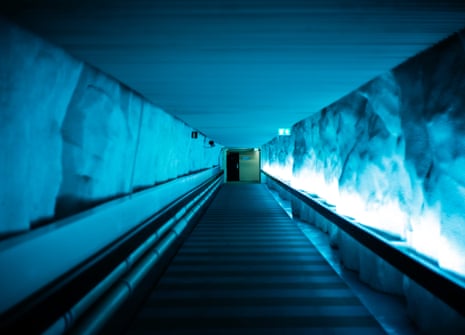
The underground levels of a hotel in Helsinki.
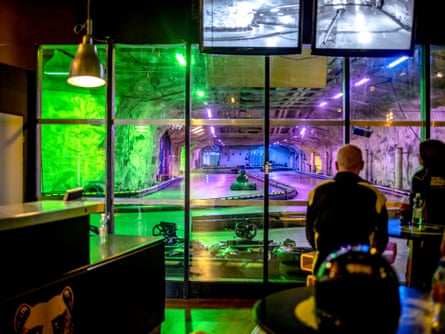
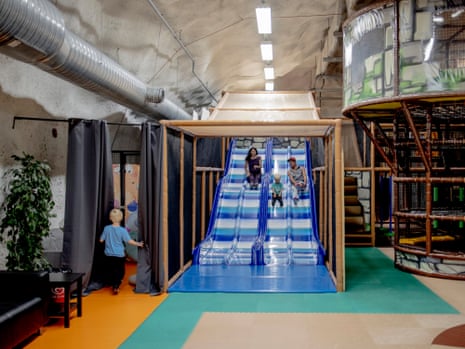
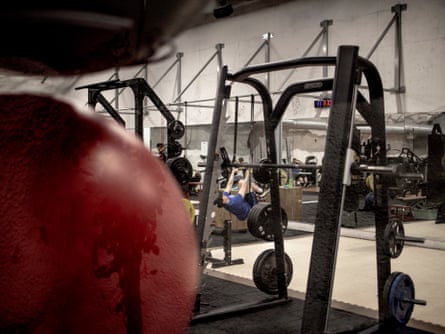
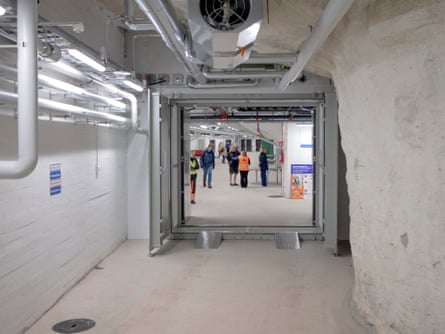
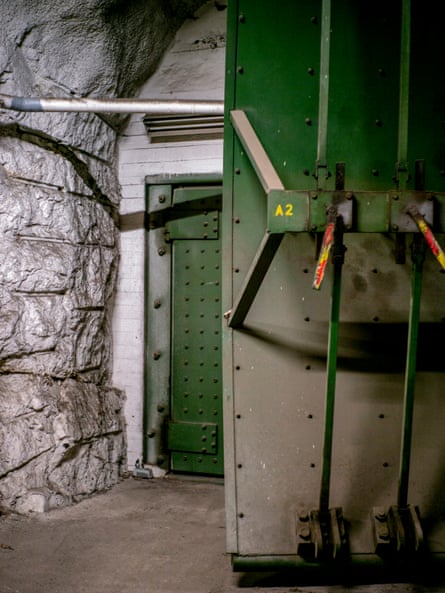
Finland has about 50,500 civil defence shelters with space for a total of 4.8 million people – a substantial proportion of its almost 5.7 million population. Most (approximately 85%) are private, reinforced concrete shelters in individual buildings. In Helsinki, the entrance to one of the city’s largest shelters is hidden behind an ordinary car park. Thirty metres underground, a tunnel designed to absorb the blast of an explosion leads to a vast complex protected by two 13-tonne steel doors and a decontamination chamber. The bunker contains football and hockey pitches, a gym, a children’s playground, a cafe and even an area with inflatable structures.
-
Formula Center, a go-kart track located in a bunker in Helsinki.
-
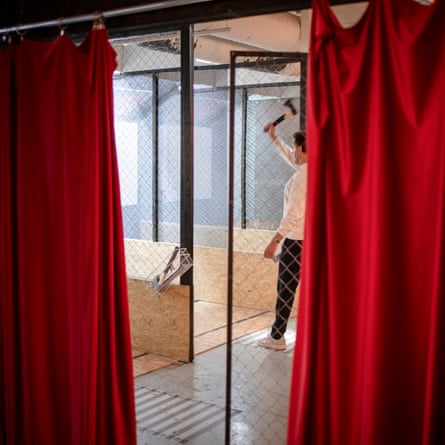
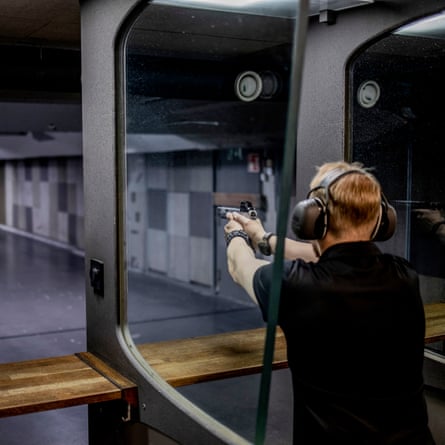
A Swedish tourist plays a game of axe-throwing in a bunker, and a reservist trains at a shooting range set up in a bunker, in Helsinki.
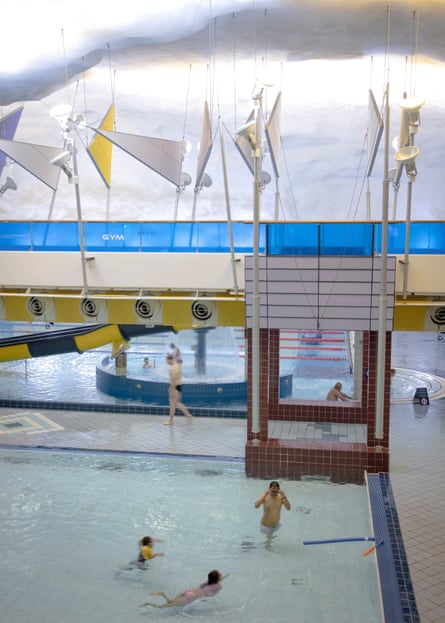
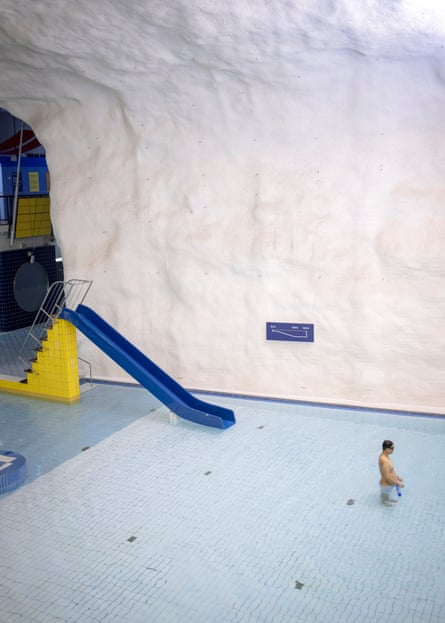
This is the paradox at the heart of Finland’s civil-defence system: spaces designed for war have become part of everyday life. Across Helsinki, underground bunkers now contain a 300-metre karting track, a popular axe-throwing club, garages and a shooting range used by reservists. Another complex, completed in 1993, can shelter up to 3,800 people but normally operates as a swimming pool, complete with an Olympic-sized basin, water slides, diving boards, a gym and a sauna.
-
A children’s playground set up inside the Merihaka bunker in Helsinki.
-
A sport room set up in the Hakaniemi bunker in Helsinki.
Behind these recreational spaces, however, the original infrastructure remains intact. Ventilation systems, filters, emergency beds, showers and facilities for dry toilets are regularly maintained. One of Helsinki’s public shelters can accommodate 6,000 people, and the city has 15 other large shelters of the same type. Private companies are allowed to use some of them during peacetime, provided they can clear the premises within 72 hours if the authorities issue an alert.
-
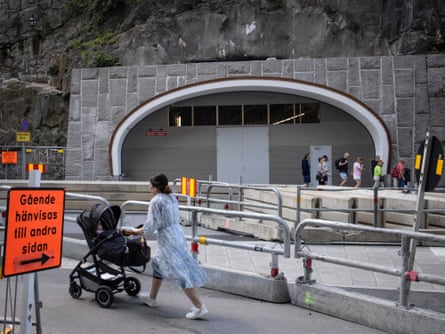
The entrance to a recently renovated bunker, exceptionally open to the public, in Helsinki.
-
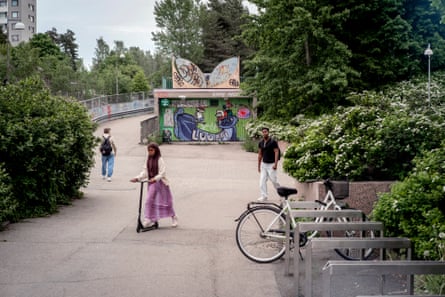
The entrance to a bunker in a working-class neighbourhood in Helsinki.
-
The Itäkeskus aquatic and multi-sports centre installed in a bunker, in Helsinki.
-
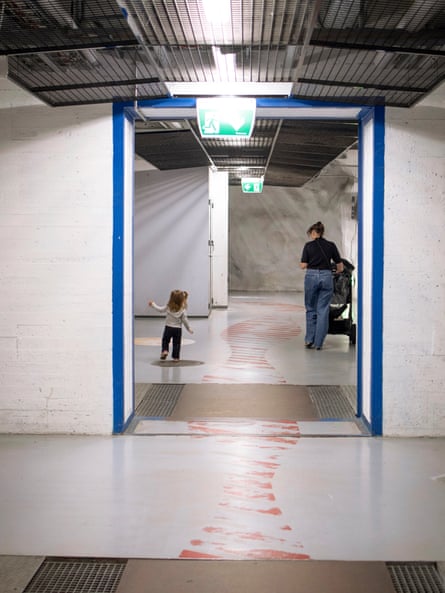
The entrance to a bunker in Helsinki. A mother and her child emerge from the Merihaka bunker in Helsinki.
-
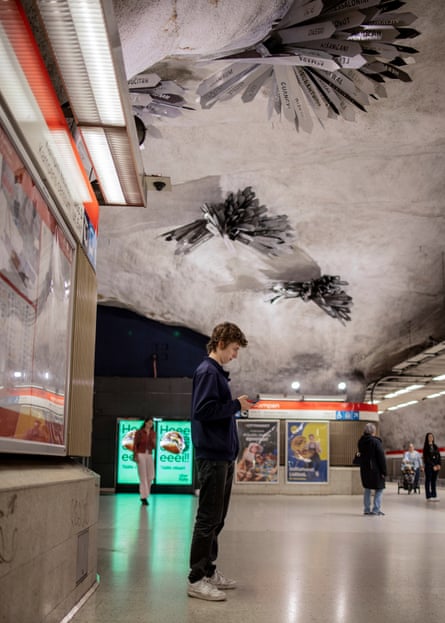
Kamppi metro station in Helsinki would also serve as a nuclear shelter.
Combined with mandatory shelters in the basements of residential buildings, Helsinki’s capacity exceeds the city’s population of almost 700,000. For decades, this system was regarded by many as a costly legacy of the cold war. Now the mood has changed.
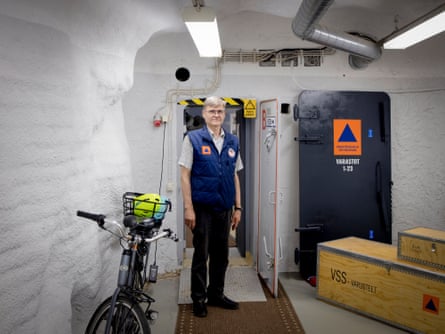
-
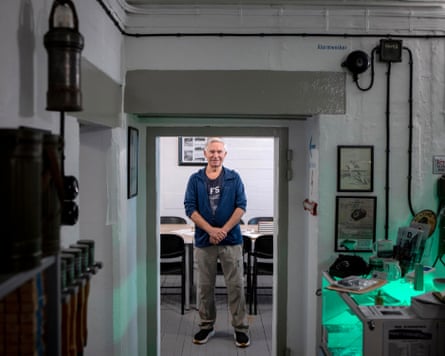
Jukka Lehtiranta, head of the Civil Defence Association in Helsinki.
“It was a debate before, but thanks to Putin, it no longer is,” says Jukka Lehtiranta, the head of Helsinki’s Civil Defence Association. He continues to train volunteers for a possible wartime emergency. The oldest bunker he shows visitors dates from 1941. During the second world war, 38 families took refuge there from Soviet bombing. Today, the bunker remains fully operational.
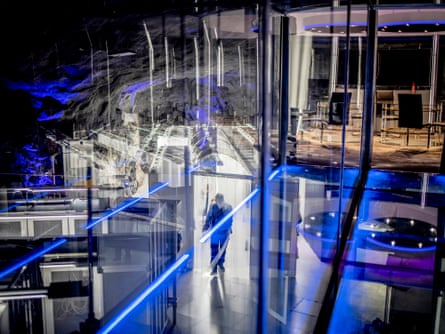
-
A bunker in Stockholm has become the home of a Bahnhof datacentre.
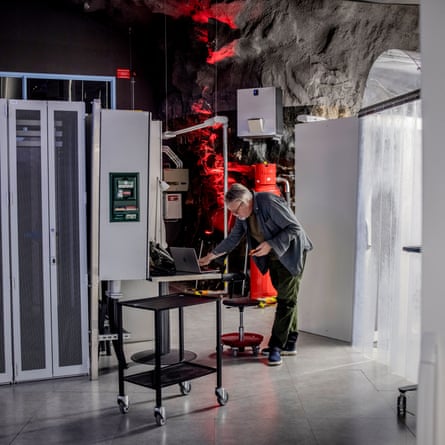
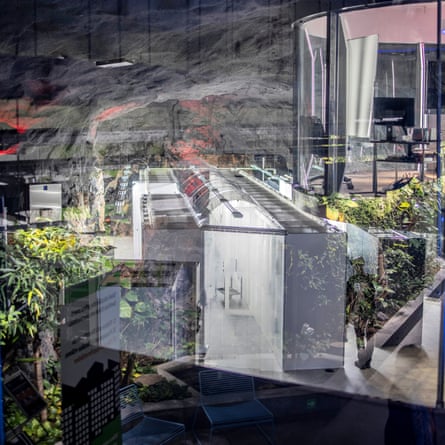
-
An employee at work, and reflections at the Bahnhof data centre.
-
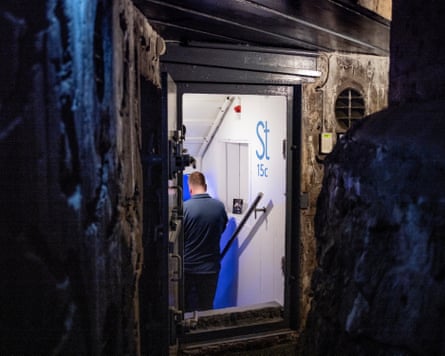
The entrance to the Katarinaberget bunker – one of the largest in Europe – in Stockholm, Sweden.
In Sweden, some of these cold war spaces have found a very different purpose. Thirty metres beneath Stockholm, a former bunker houses the datacentre of the Swedish company Bahnhof. Generators stand beside a wall of vegetation, while rows of computer servers occupy a vast chamber carved into granite and gneiss. The company sees the underground facility as more than a striking piece of architecture. Meanwhile, the country takes the risk of conflict very seriously. Conscription, which had been suspended in 2010, was reinstated in 2017.
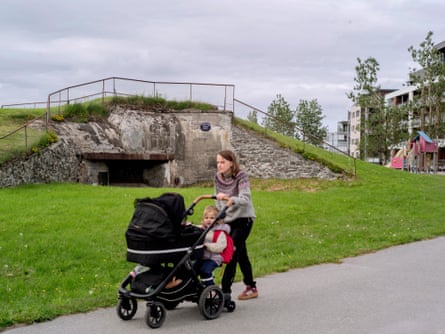
Norway reveals another layer of this history. In Bodø, a bunker built during the German occupation was part of the Atlantic Wall. Restored in 2014, it is now a museum maintained by former air force personnel. Its thick concrete walls still contain an air-filtration system, communications equipment and an Enigma machine once used by the German military.
-
A second world war bunker near a building under construction in Bodø, Norway.
But Norway also illustrates what happens when civil defence infrastructure is allowed to deteriorate. The country has about 18,600 shelters, yet stopped building new ones after 1998. Oslo’s largest shelter, designed for 1,100 people, has not been renovated since 1992. Following Finland and Sweden, Norway has shifted to “total defence” mode this year The concept is designed to prepare all sectors of society, including the armed forces, government agencies, and businesses, for a major crisis or even war.
-
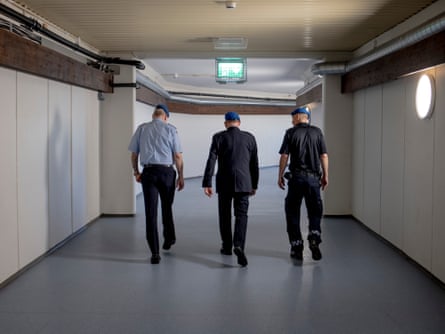
Members of the Norwegian civil defence service emerge from a bunker beneath a school in the suburbs of Oslo, Norway.
Across the three countries, these places reveal the uneasy coexistence of ordinary life and preparation for war. Bunkers have become swimming pools, sports centres, museums and datacentres, while their doors, filters and ventilation systems remain ready for a crisis.
The war in Ukraine has given these hidden spaces a new significance. What once seemed like relics of a vanished conflict are once again being considered essential infrastructure.