6 hours ago
12
6 hours ago
12
‘I don’t eat mozzarella outside Puglia,” says our friend Savio. “It’s not the same.” Savio is a very opinionated foodie, so I take his words with a pinch of good Puglian sea salt (see below). He was adamant about the superiority of the stretched-curd cheese from his home turf.
Puglia is also the birthplace of ingredient du jour burrata, which originated in Andria, a few miles from Savio’s home town of Barletta. Andria forms one part of the triangular Barletta-Andria-Trani (BAT) province, but despite the cheese connection and Barletta having miles of palm-backed, sandy beaches, it is often passed over for better-known parts of Puglia. So I asked Savio’s company, Unexpected Italy, an app that calls itself the antidote to overtourism, to organise a trip to the area.
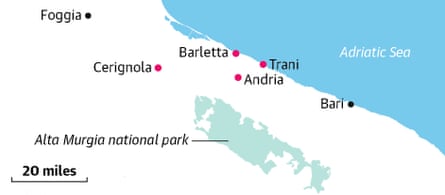
About a century ago, in the hills outside Andria, farmer Lorenzo Bianchino was snowed in and couldn’t get his milk to market. To save what he could, he revived an old technique for preserving butter (burro, hence burrata), stuffing cream mixed with mozzarella scraps (stracciatella) in a casing of the stretched-curd cheese.
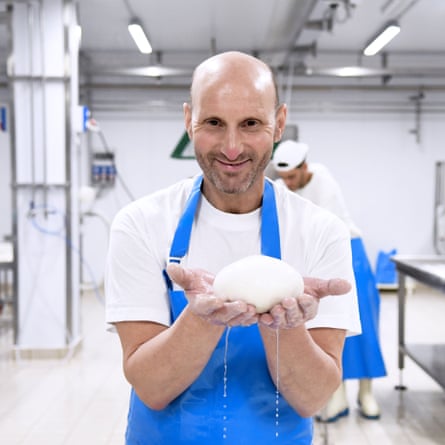
There are now several burrata makers in Andria, the most famous being Caseificio Olanda, which offers demos, tastings and a museum. Late one morning, we watch Riccardo “Dino” Olanda, son of the founders, work his magic. He adds almost-boiling water to the curds, then mixes with hands red from doing this every day. As he stretches and massages the curds, a smooth velvety mass forms. “See how it’s shiny?” he says. “Means it’s ready.” Working quickly, he squeezes out round lumps between thumb and forefinger into the familiar mozzarella balls. This action is mozzare, hence the name.
He also makes little knots and plaits before moving on to burrata. Taking a warm mozzarella ball, he works it into a hollow bag with his fingers then fills it with cream and stracciatella before tying the top with string.
Afterwards, a dairy-heavy meal totally worth the cholesterol and calories: mozzarella and burrata to start, then bread with chunks of caciocavallo (a stretched-curd cheese), and a dessert of heart-shaped fresh ricotta with strawberry jam or cocoa.
And, I have to say, Savio is right. The mozzarella and burrata have a juicy, elastic texture and a gorgeous cheesy, umami flavour; the salt and flavour leached out by the whey the cheeses later sit in. How will I ever settle for Tesco Finest after this?
Over the next few days, eating our way around the province’s restaurants and food producers, I wonder whether it’s because the ingredients are so good that this area has so many food obsessives, or the other way round.
Barletta sees few foreign tourists, but it is full of Italian life. There are lots of independent shops, a Norman castle and cathedral to visit, and every evening people pour into the bars, clubs and gelaterie of the sette strade, seven parallel streets in the old town.
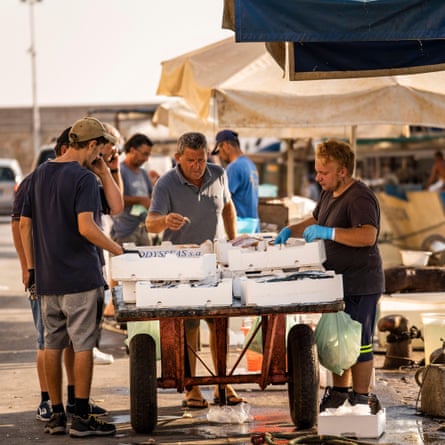
Down the coast, Trani, with its sea-facing romanesque cathedral and pretty harbour, attracts some tourists, but they are not in evidence at 7am when the fishing boats return. The men complain of rough seas and a poor catch, but from the back of the boats they’re soon selling mullet, octopus, skate, fat sea snails, monkfish and palombo (small shark) to restaurateurs and fishmongers. Thirtysomething Nicola says he went out at midday and got back at 3am. When does he sleep? “Never.” A fifth-generation fisher, he began helping on the boats aged six.
We’ll eat fish later, but today is for pizza. Portento in Barletta is run by food nut Luigi Lacerenza. He has us try so many local products as antipasti – caprino goat’s cheese tasting of green mountains, grilled caciocavallo from an old couple who make just six a week and small-batch salami – that we’re almost too full for pizzas. But they are wonderful: one with sausage, olives, oyster mushrooms and yellow tomatoes; another with aubergines and grated cacioricotta.
In Cerignola, west of Barletta, Rosario Didonna used the money he won on a TV standup competition to turn his family’s deli into a cosy, wood- panelled restaurant, U’ Vulèsce (dialect for “peckish”). Rosario knows fishers by name, works with small farmers and wine producers, and invites nonne from all over southern Italy to demonstrate recipes in his kitchens.
We start with tasty goat prosciutto and plum-sized local olives called bella di Cerignola. Then an unforgettable prawn tartare served in sea urchin shells, hairy crab spaghetti (“the juice is better than lobster”), octopus with bean puree, and sea bass with orange mayo. He waves away our thanks: “I’m doing the best job in the world!”
Nicola Barbera at Masseria Barbera, a farm restaurant in the Alta Murgia national park, is equally inspired, but rather by what grows on the estate founded by his great-great-great-great-grandfather Riccardo, who fought with Garibaldi. Exuberantly bouncing us around the farm – it produces 90% of what the 100-cover restaurant needs – he shows us olives and vines, but also the “weeds” growing around them. “They’re eatable,” he says, grabbing handfuls of peppery rocket, and bitter but delicate wild chicory. From the abundant kitchen garden, he makes eight varieties of tomato sauce.
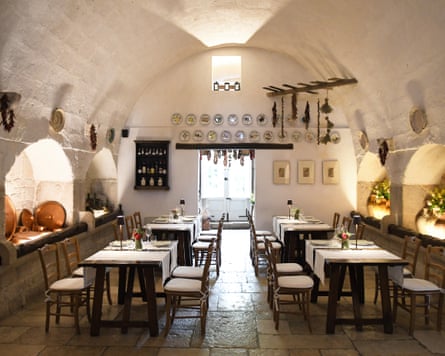
We tuck into a lot of this for lunch: a pie with white onions, anchovy and sultanas; courgettes with mint and garlic; spaghetti with yellow tomatoes. (“I call it bastard sauce,” says Nicola. “Those tomatoes take three times as long to pick.”) Then, something I never thought I’d eat: grilled donkey fillet. I feel bad about the patient, mild-tempered beasts, but this is healthy, low-fat food, never intensively farmed. It’s also the best meat I’ve ever tasted.
after newsletter promotion
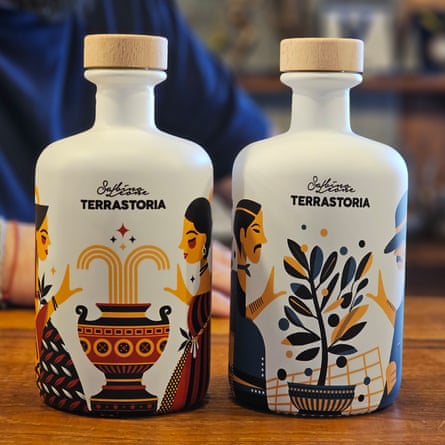
Good food is made better by good olive oil, and producers here include Muraglia, known for organic oil in hand-painted, rainbow-stripe ceramic bottles, and Sabino Leone, offering tours of its ancient groves and oil mill for €15, plus tastings.
This area also offers plenty to do between meals. Barletta was the home of Italian painter Giuseppe De Nittis, who hung out with Degas and Manet, and took part in the first impressionist exhibition in Paris, in 1874. Over 200 of his works are now displayed in the 16th-century Palazzo della Marra (€6).
At Europe’s biggest salt pan, Salina Margherita di Savoia, there’s an expanse of peaceful ponds with a snow-white salt mountain to climb. Another day, an exhilarating ebike ride in the Alta Murgia with Filippo Tito of Cycling ’n’ Trek, through dense forest to peer with awe into an old bauxite mine that resembles a mini grand canyon. We get back ravenous, but in this corner of northern Puglia, that’s a blessing.
Where to stay
Until this century, Barletta had little tourist accommodation. Pick of the few B&Bs is Antica Dimora (doubles from €97), a restored 17th-century palazzo run by Lilly and Riccardo Manna. There are three smart bedrooms with lots of plants and breakfast features different local specialities each day.
Lama di Luna (doubles from €230) is an organic farm in deep countryside, with six rooms set around an 18th-century stone courtyard. A well and solar panels make it energy and water self-sufficient; half of its 200 hectares are left wild, the rest are planted with olives, vines, almonds and cherries. There’s a cinema, a library and a large pool shaded by 600-year-old olive trees.
Where (else) to eat
Barletta’s 60-year-old Mosé bakery is revered for its krapfen filled doughnuts and sourdough croissants. There are also chocolates, ice-cream and cakes, all housemade, and great coffee.
Puglia has hundreds of gelaterie but experts rate Scoop in Canosa (which is called Puglia’s “Little Rome” for its catacombs, temple ruins and Roman bridge). Francesco Di Nunno makes ice-cream with local seasonal ingredients: raspberry and strawberry sorbets are available only in early summer; percoca yellow peach until mid-August.
There’s affordable fine dining at chef Luciano Matera’s Il Turracciolo in central Andria. Highlights for me are broad bean and chicory “meatballs”, bright green inside; a “hidden mushroom” under baked eggy topping; and pasta discs with whole and pureed green beans and peas.
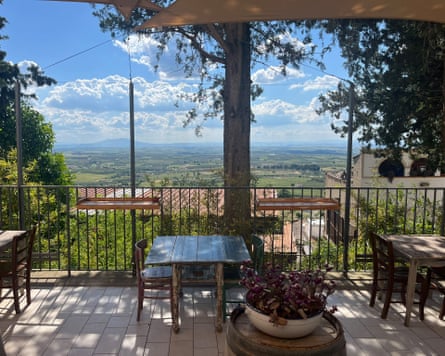
At A Sud dell’Anima, chef Nadia Tamburrano uses modern techniques and hyper-local ingredients to make food of astonishing quality for a small hilltop town (Minervino, population under 8,000). Her antipasti explode with flavour thanks to house-cured capers and homemade mustard, syrups and purees. A main of sweetbreads wrapped in intestines feels a bit out-there, but is delicious, the intestines crispy as crackling.
The trip was organised by Unexpected Italy, which offers personalised itineraries for Barletta and the surrounding area