2 months ago
45
2 months ago
45
Key events Show key events only Please turn on JavaScript to use this feature
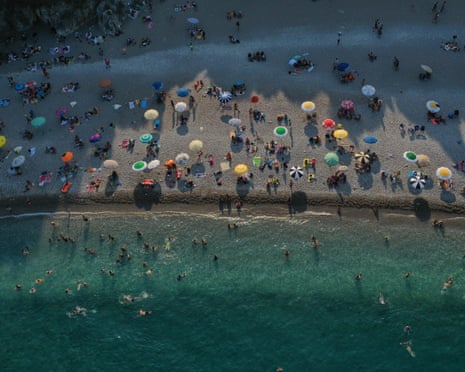
One big piece of news out of Belém last night was that Turkey will host Cop31 next year, with Australia leading the actual negotiations, under a deal to end an unprecedented stand-off between prospective host countries.
The unusual arrangement, which was being negotiated overnight and is expected to be officially announced today, would see the event take place in Antalya, a 2000-year-old Mediterranean city that has become the country’s tourism capital. Turkey would manage the event while Australia would preside over the diplomatic wrangling to stop the planet from heating and keep people safe from the breakdown of a stable climate.
Crucially, the resolution of the spat could still leave space for vulnerable Pacific island nations - who were part of Australia’s bid to host the summit - to play a significant role. Australian climate minister Chris Bowen told journalists last night that the deal could involve an event on a Pacific island before the summit to pledge money for a Pacific resilience fund.
Brazilian president Lula tells the conference

Damien Gayle
On Wednesday evening I joined a crowd of journalists, including my colleague Fiona Harvey, veteran of many Cops, to wait outside a plenary room in the artificially Baltic surroundings of the Cop30 conference centre.
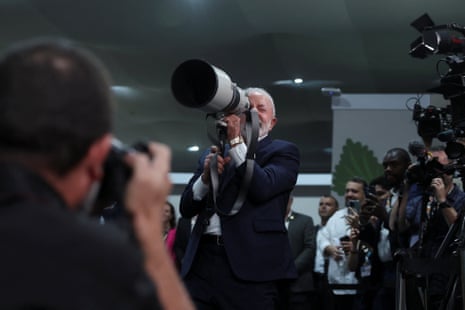
Rumour had it that the Brazilian president, Luiz Inácio Lula da Silva, who had earlier arrived at the UN climate summit, would soon emerge to speak to journalists. What exactly we would do if he did emerge was unclear.
There was no guarantee that we, out of the several hundred journalists who had gathered to catch a glimpse of Lula, would even get close. And even if we did, neither of us spoke enough Portuguese to quiz him on the finer points of international climate politics.
But then, without warning, some members of the press to our right began peeling off, moving back down the huge grey tented corridors that snake through the centre. Others nervously equivocated, then began to follow, first at a stride, then at a jog, then a sprint, whooping and hollering.
“News stampede!” shouted Fiona. “Damien, run!” I did as I was told, chasing my fellow members of the press corps, dodging tripod legs wielded at face height, trampling those too weak or slow to get out of my way, determined but unsure of where we were going, or where this race would end.
Finally, outside the conference centre’s “VVIP Lounge”, a new crowd began to form. I joined it, muscling my way as close to the front as possible, where harried looking UN guards fought to keep the jostling crowd of journalists at bay.
And as I stood there, staring at a closed, whitewashed door, shoulders squared to stop any overly keen rivals from trying to get past me, I slowly began to realise: I had no idea what on earth was happening.
If one moment sums up my experience of the Cop30 talks so far, this was it. Although I have followed – and covered – the Cop proceedings from London for several years, the Belém climate summit has been my first in-person experience of the international climate negotiations. And I don’t think it’s any threat to my journalistic machismo to admit that these talks are bewildering.
Multiple tracks of negotiations, all articulated in obscure acronyms and insider jargon; texts and draft texts; huddles, scrums and doorsteps; and thousands of people whose roles are all entirely vague but no doubt also vital to the future of the planet.
Cop attendees who spoke to the Guardian agreed that this edition of the UN climate summit is more complex than in recent years. Usually by this late stage of the negotiations talks would have coalesced around a totemic issue that would be seen as definitive. In fact, that was partly why Lula was there, to try to bash some heads together: high-level ministerial meetings, an attempt to get some decisions taken. Brazil had hoped to get a package of measures gavelled through by the end of Wednesday night. That deadline passed without a text appearing; the hosts now promise it on Thursday.
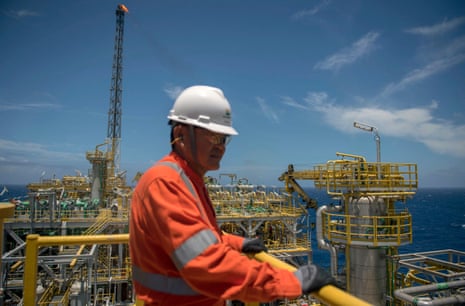
Before he headed off again, Lula told reporters that the proposal for a roadmap to the end of oil use does not involve “imposing anything to anyone” nor “determining deadlines for countries to stop burning fossil fuels”, the main cause of greenhouse gases responsible for global warming.
“We need to reduce greenhouse gas emissions. And, if fossil fuel is a thing that emits a lot, we need to start thinking about how to live without fossil fuel, and build the way to live [without it].”
“I am so happy that I leave here certain that my negotiators will have the best result a Cop could have ever offered to the Planet Earth,” the Brazilian president said. He believes that the best deal can be negotiated, “because, in a COP, we don’t impose anything, everything has to be consensus, it has to be a lot of conversation. And we respect the political, ideological, territorial and cultural sovereignty of each country. We don’t want to impose anything, we just want to say it’s possible.”
His words, however, are a little optimistic. Rifts on key issues remain, particularly around climate finance, unilateral trade measures, progress on emissions-reduction plans and the central issue of whether countries will agree to develop a “roadmap” setting out how the world will transition away from fossil fuels.
That means there is plenty of bewildering work ahead, and many more late nights in the Cop media centre. As Fiona is keen on reminding me: “Cop is a marathon, not a sprint.”
Good afternoon, this is Ajit Niranjan joining you from Berlin as we enter the final days of the 30th United Nations climate summit. My US-based colleague Gabrielle Canon will be taking over later today to guide you through the latest.