2 months ago
182
2 months ago
182
Endometriosis is like someone taking a drill to your organs. The pain resembles a tsunami in every one of your cells – or the movement of tectonic plates inside your body. Years spent contending with the condition is “not life”. Endometriosis may not literally kill you, but suffering from it can feel like a living death.
In Emma Barnett: Fighting Endometriosis, the Today presenter provides all these unflinching insights and many more into the condition, which involves cells resembling those that line the uterus growing elsewhere in the body. There is no cure, the only available treatment is hormones (predominantly the contraceptive pill), to mask symptoms, or surgery – including a total hysterectomy, although that won’t necessarily provide relief on a permanent basis. Endometriosis is extremely painful and little understood. It’s also incredibly common: one in 10 women of reproductive age in the UK have it.
Now 41, Barnett has reached the end of her tether with a) the pain and b) the medical establishment’s response to it. It takes on average nine years to get a diagnosis in the UK (and slightly longer worldwide), making sufferers seriously question their perception of pain in the meantime. One of Barnett’s interviewees is Mada, who over the years has been misdiagnosed with appendicitis, IBS and PMS. Mada magnanimously allows the TV cameras to document her laparoscopy – the keyhole surgery she undergoes to investigate and remove some of the cell growth – letting us see the way endometriosis can effectively glue women’s insides together. When she is told the operation has confirmed the cause of her pain, she starts crying, such is the relief that she is “not crazy.”
Part of the battle is getting diagnosed, but recognition doesn’t make the symptoms any more bearable. Barnett is determined to confront viewers with the constant struggle that belies her professional achievements and family life, recording candid video diaries in her pyjamas, unable to get out of bed. She meets 26-year-old Chloe, whose desperation to end her agony forced her to pay for surgery in Dubai then request a hysterectomy in this country. Anyone who has read Lena Dunham’s recent memoir Famesick, which includes an evocative account of her endometriosis (when it comes to the excessive menstrual bleeding that accompanies the condition, she describes “clots so big at times that they floated out of me and bobbed to the surface of the bathtub like cherry tomatoes”) will know she was driven to do the same thing. Like Dunham, Chloe says the severity of her pain means she wouldn’t have the capacity to care for a child anyway.
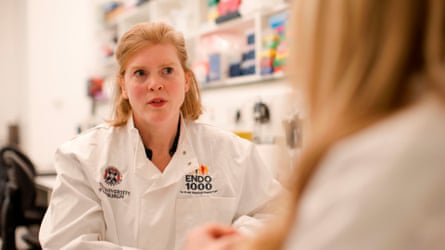
Barnett already has two children, having become pregnant via IVF (endometriosis is one of the leading causes of infertility), but her worsening symptoms mean she’s also considering that most extreme remedy. First, she wants to get to the bottom of a status quo that makes a last resort the only option. Visiting the University of Edinburgh’s dedicated endometriosis research team, she quizzes Dr Lucy Whitaker on why there has been so few advances in treatment. The answer is a lack of funding, which – Barnett suggests – is because endometriosis doesn’t kill anyone. It does cost the UK economy £12.5bn a year though, through women leaving the workforce due to their symptoms. This, thinks Whitaker, is a better angle for influencing policymakers. Barnett greets this insight into a maddening value system with a sardonic smile.
As anyone who has been offered two paracetamol during established labour will know, women’s pain is often minimised to an almost comical degree. Chronic pain, however, is not a joke, and the mood throughout this necessary, deliberately infuriating and often very moving programme is rightly solemn. A chat with Wes Streeting, back when he was health secretary, starts off jovially enough, but it soon becomes clear that Barnett is not in the mood to be fobbed off. Streeting is very sympathetic, citing a family member diagnosed after 21 years of pain, and cops to the medical misogyny at the heart of our society. Yet Barnett insists – admirably – on substantial assurances. He gives them.
That Streeting is no longer in the job isn’t the only thing preventing this documentary from ending on an optimistic note: Barnett and millions more remain in agony. You’d hope, however, that its existence is some kind of progress in itself. “Pain is such a subjective symptom,” says Mada’s doctor when asked about the delay in diagnosing endometriosis. “It’s really difficult to quantify.” That is true, technically, but it also feels like an excuse. As figures like Barnett and Dunham dig deep to articulate their symptoms, surely it won’t be one the medical establishment can rely on much longer.