2 months ago
57
2 months ago
57
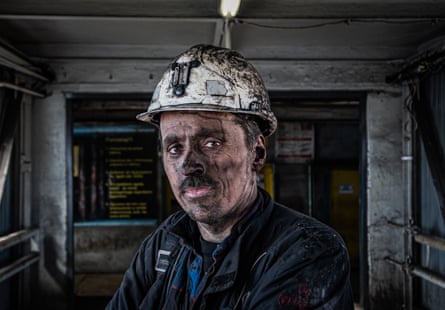
Coal dust is fine; it seeps into the pores of the skin. That is why a thin black line permanently traces the outline of Rafal Dzuman’s eyes, as if he were wearing makeup. Team leader of the G-2 mining crew, 49-year-old Rafal Dzuman has been descending every day to 700 metres below ground for at least 20 years, at the Murcki-Staszic coalmine in southern Poland. Opened in the mid-17th century and today owned by the Polish giant PGG, the mine sits on the southern outskirts of Katowice, and still extracts about 23,000 tonnes of coal a day.
-
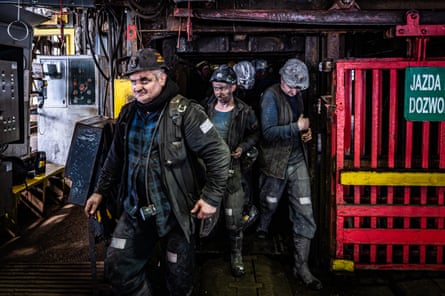
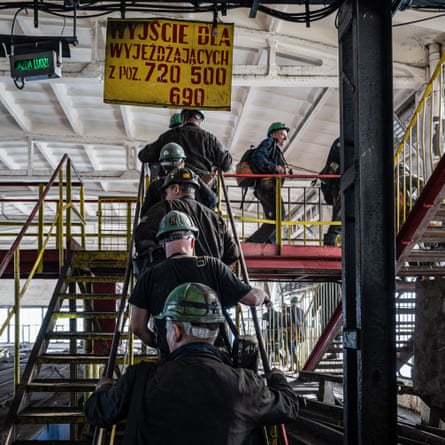
Katowice, Poland: Miners exit the lift after working in the coal-mining tunnels at the Murcki-Staszic Mine (PGG Group), located on the southern outskirts of the city. Coal mining began here in 1657; today, the mine’s daily production stands at about 23,000 tonnes
-
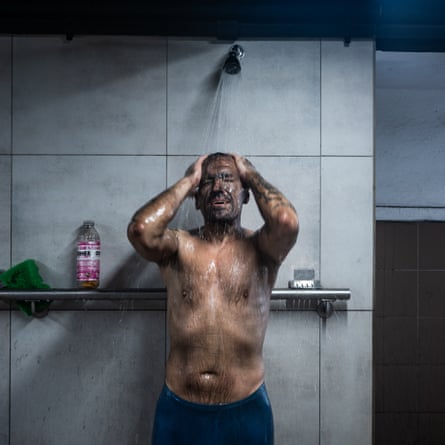
Rafal Dzuman, a 49-year-old coal miner at the Murcki-Staszic mine (PGG Group), poses for a photograph after his shift. The mine’s reserves are estimated to last about 50 years
-
Coal miners step out of the lift and head towards the changing rooms and showers. The dust is particularly fine, and even though a hot shower lasts several minutes, the coal can sometimes leave indelible stains on his skin
Katowice – once called Stalinogród – is the most important city in Upper Silesia, for centuries the coal-mining heartland of the old continent and today the last district in the European Union where hard coal is still extracted. Here in southern Poland there are still schools training young miners, and 80,000 people descend underground every day to extract thousands of tonnes of black rock – the same rock still used to produce half of the country’s electricity. But Upper Silesia is also the most complex laboratory of an already deeply complex European energy transition.
-
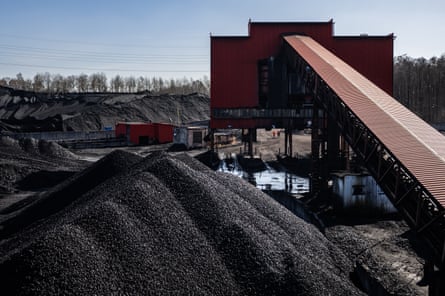
Coal stored in the open air, ready to be loaded on to train cars
-
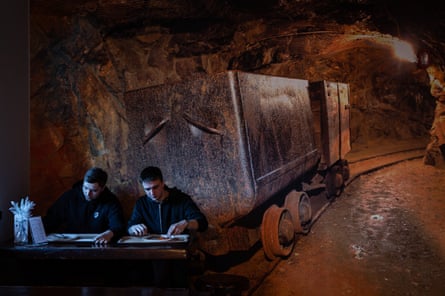
Two students eat their lunch in front of a large poster depicting a mining tunnel with a mine car in the cafeteria of the Faculty of Mining, Safety Engineering, and Industrial Automation at the Silesian University of Technology in Gliwice
The decarbonisation decision made in Brussels makes no exceptions, and within a few decades, the Polish coal economy will have to give way to a “climate-neutral” model. The target date is 2049, though it is likely that the transition could accelerate and coal could be abandoned entirely by 2035.
-
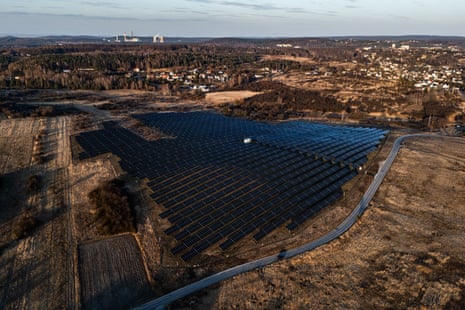
Luszowice, Poland: solar panels in the countryside east of Katowice. The plant was developed by Regesta, a Polish company specialising in renewable energy sources and power generation
-
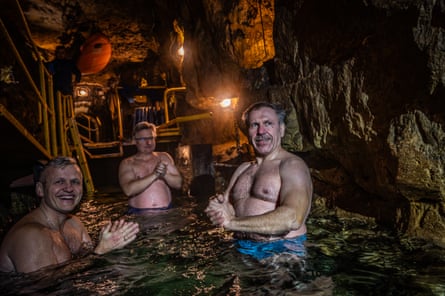
Tarnowskie Góry, Poland: Three friends take a dip in the 6C water of the Black Trout Adit. The tunnel is part of a network of drainage tunnels in the former local silver and lead mine, now a Unesco world heritage site
-
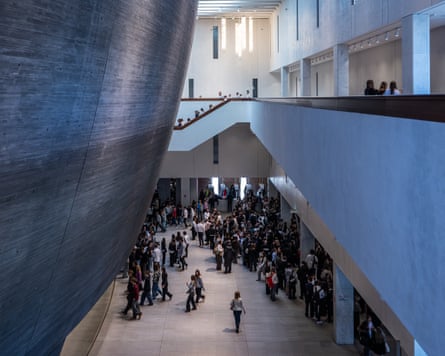
Students and teachers crowd the entrance to the National Polish Radio Symphony Orchestra before a concert for schools. Built on the site of a former coalmine, the redbrick building’s exterior resembles the public housing in the nearby mining district of Nikiszowiec

-
Students attend a concert by the National Polish Radio Symphony Orchestra
Today, no new exploration is permitted and no new mines may be opened. On one hand, existing mines survive only thanks to substantial state subsidies – extracting coal requires digging ever deeper, sometimes beyond 1,000 metres – while on the other, the price of coal extracted abroad is falling, where labour costs are lower. It can therefore become economically attractive to buy it elsewhere: Indonesia, Kazakhstan, Colombia, and, until the outbreak of the war in Ukraine, Russia.
-
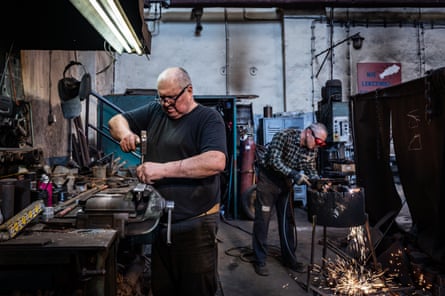
Two workers at the foundry of the Wujek coalmine, which is still in operation and managed by Polska Grupa Górnicza in Katowice. In 1981, nine striking miners were killed by the army during clashes aimed at suppressing industrial action at the mine, an event that is known as the Pacification of Wujek
-
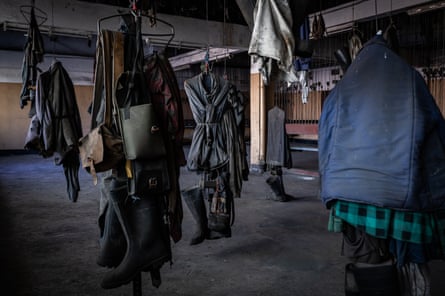
Miners’ work clothes from the Wujek coalmine, which is still in operation and managed by PGG in Katowice
That, at least, was the calculation made before the conflict in the Middle East erupted and before oil and gas prices began to rise. What will happen now? In Poland, questions pile up: will the billions of euros from the European just transition fund be enough to transform a mono-industrial region into a diversified economy? Will they manage to redeploy the workers who, between active mines – around 20 – and the supply chain, still number more than 200,000? And above all, could the current geopolitical uncertainty somehow persuade Poland and the European Union to slow the pace of a process that appears unavoidable?
-
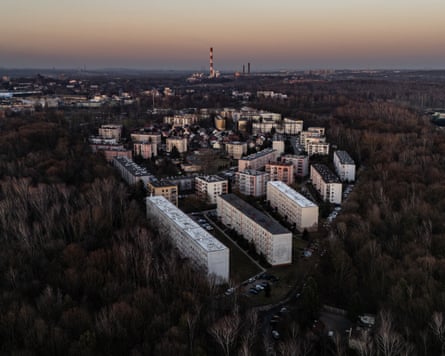
Zabrze, a southern district of the city, famous for its mining industry. In the background is the smokestack of the Fortum Silesia power plant, which is still partially coal-fired
-
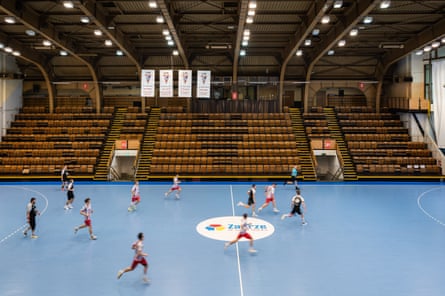
The Pogoń sports arena, a building originally belonging to a nearby coalmine that was donated in 1987 to the Pogoń Zabrze handball team, which at the time represented the mining industry
In 2025, the world extracted more coal than in any previous year: more than 9bn tonnes, much of it in China, India and Indonesia. Coal is a polluting energy source that contributes to global heating, but it is also cheap, and today generates one-third of the world’s electricity. Poland extracts a mere 85m tonnes, less than 1% of the global total, yet for Upper Silesia, giving up coal carries the weight of an identity trauma as much as an economic one. “On one hand, we will lose a centuries-old tradition and a stable energy source,” says Jacek Nowak, geologist at the Silesian University of Technology, “and on the other we will continue to buy coal where extraction happens in a predatory way, from countries that respect neither environmental standards nor workers’ rights.”
-
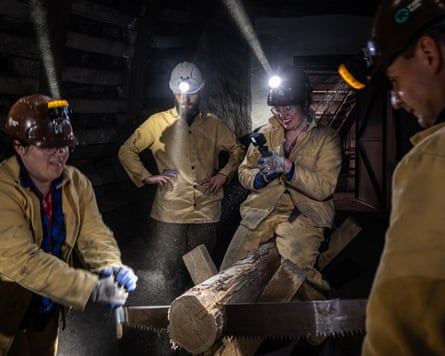
Tourists dressed as miners simulate the work of cutting logs 350 metres underground in the Guido coalmine, founded in 1855 by the wealthy German Guido Henckel and closed in 1960. Today, it is a popular museum in Zabrze
-
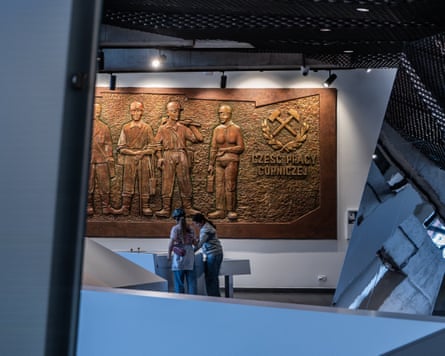
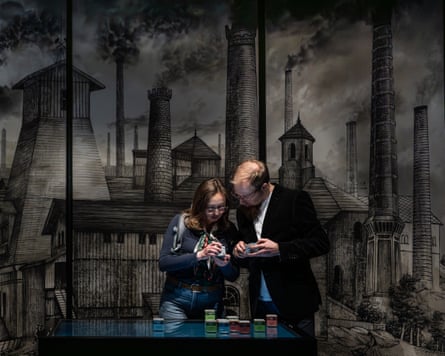
Two young girls visit the Saturn Museum in Czeladź, dedicated to mining that takes its name from the former local coalmine Saturn. Two visitors read up on the historical information in a room at the Museum of the History of Katowice
-
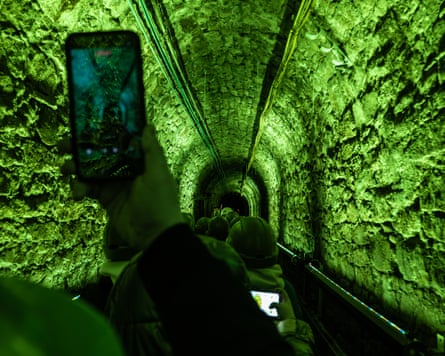
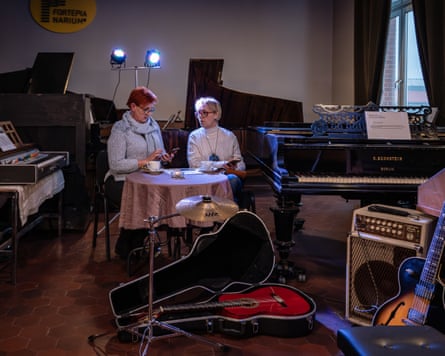
Tourists photograph an underground tunnel during a boat tour of Queen Luiza Mine. Founded in 1791 under Prussian rule, the coalmine faced problems with water infiltration, and many of its tunnels have since been flooded. Two women wait for a guitar concert to begin in a hall located in a former coalmine that now houses the Kopalnia Sztuki (Art Mine) association in Zabrze
The European Green Deal is under way, and as power plants abandon coal in favour of gas, two-thirds of the mines have already been closed or repurposed. In Zabrze, the former Guido and Queen Luiza mines have become museums where visitors explore the tunnels dressed as real miners.
-
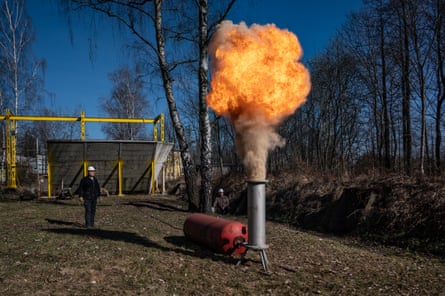
Technicians conduct a coal dust explosion risk test involving the ignition of methane, flammable liquid vapours and other gases at the Barbara Experimental mine in Mikołów
-
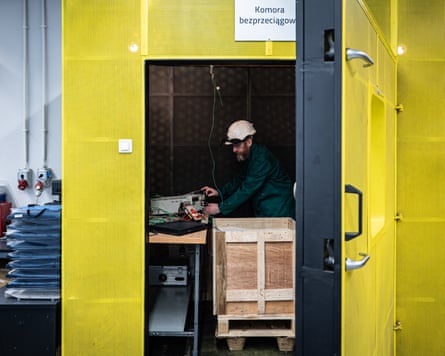
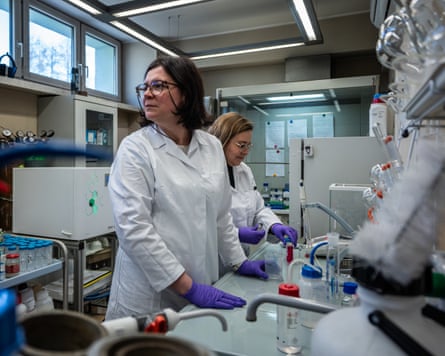
A technician prepares a test in a containment chamber to study industrial dust explosion, and researchers at work in a chemistry lab in Barbara Experimental mine
In Mikołów, a mine has been transformed into the Barbara Experimental mine, a research centre specialising in the study of extraction techniques and risks associated with explosive gases, particularly methane.
-
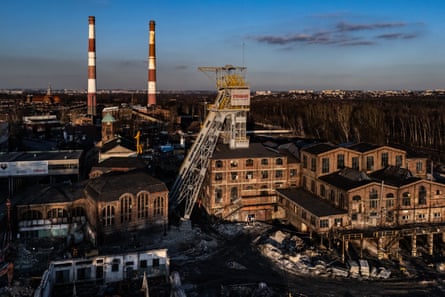
The former Wieczorek coalmine, which is now closed and undergoing redevelopment thanks in part to European funding. A centre for the hi-tech development of the creative industries and the gaming sector will be built here
-
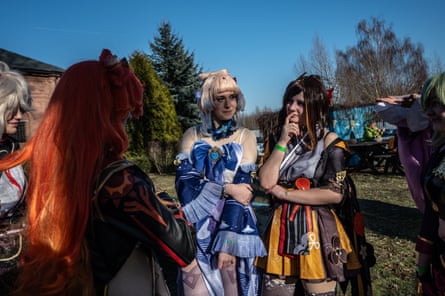
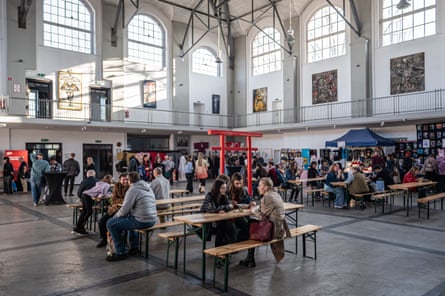
Girls dressed in Japanese manga-style outfits get ready for a show at the Wilson Shaft gallery. People eat lunch and visit the booths at a Japan-themed fair
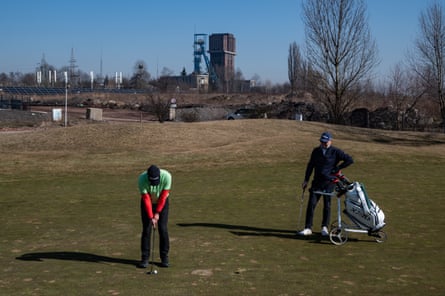
Some mines have become art galleries – such as the Wilson Shaft gallery in Katowice – while others have been turned into golf courses, such as the Armada golf club in Bytom, and one of them – the former Wieczorek mine – is to become a hub dedicated to hi-tech, creativity and gaming. “But if the transition imposed by Brussels is too fast,” says Arkadiusz Sienczak of the miners’ union ZZG, “we will not manage to offset the losses in the mining sector with new jobs.”
-
Golfers at the Armada golf club in Bytom. An example of industrial redevelopment, the golf club, which opened in 2013, was built on the site of the former KWK Szombierki – the first in Poland to be built on a post-mining site
-
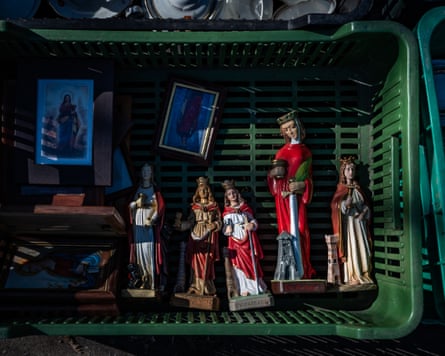
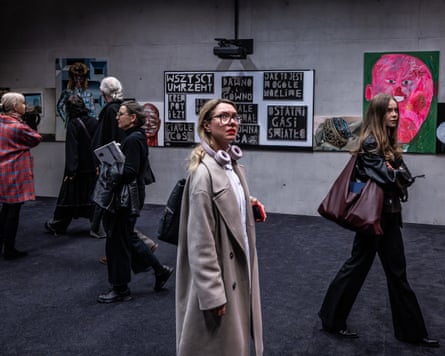
Old figurines of St Barbara for sale at a flea market in a park south of the city. Traditionally, the patron saint of miners, on 4 December, her feast day, many mines would close and the occasion was celebrated with masses and lunches. A woman views works of art on display at Art Collect, a contemporary art fair held at the international conference centre, next to the Spodek Arena, a true symbol of the development that coal mining has brought to the city and the entire Upper Silesia region
Coal has shaped the history of Silesia, transforming the landscape and influencing generations of families. Some local schools – such as the technical school complex in Rybnik – continue to train the miners of the future. “They are aware workers,” says headteacher Piotr Tokarz, “knowledgable about the latest mining technologies but also informed on issues such as safety and sustainable extraction.” At one time, more than 140,000 people worked in the coalmines of Rybnik; today 6,000 remain. The job of a miner no longer guarantees a long-term future and is considered physically demanding: retirement comes at 50 after 25 years of service, 15 of them underground. Despite this, around 20 young people have chosen to become miners.
-
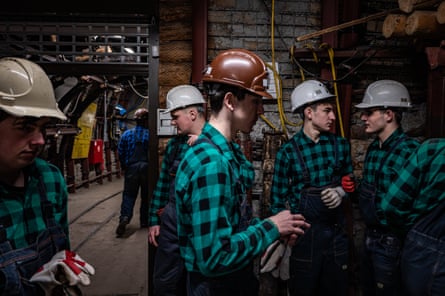
A group of student miners during a class in a tunnel-laboratory at the technical school complex in Rybnik
-
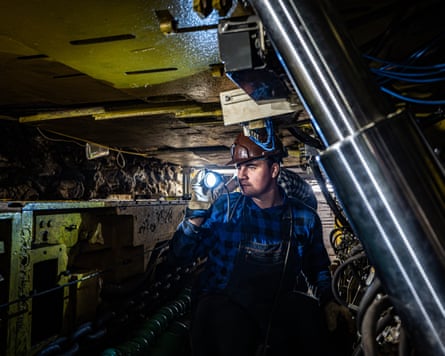
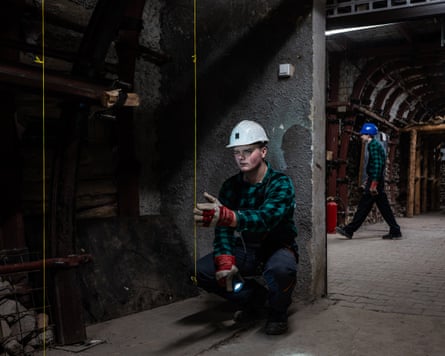
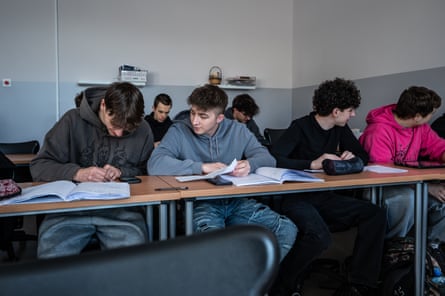
Students at work in a classroom at the technical school complex, Rybnik. The school, which opened in 1945 to train coal mining technicians, still has classrooms where students learn underground mining techniques
Among them is Wiktor Dudek, 17 years old, hard hat and green-and-black checked shirt, who, together with his classmates, attends lessons in a tunnel-laboratory beneath the school. Wiktor does not speak English, but I noticed that during lessons, he does not speak Polish either. “We don’t need English down in the mine,” he says, “and we don’t need Polish either — our language as miners is Silesian. It’s a matter of tradition. Of course, the outlook for us young people is not rosy, but my grandfather was a miner and so was my father, and that is why I will be one too.”