3 months ago
131
3 months ago
131
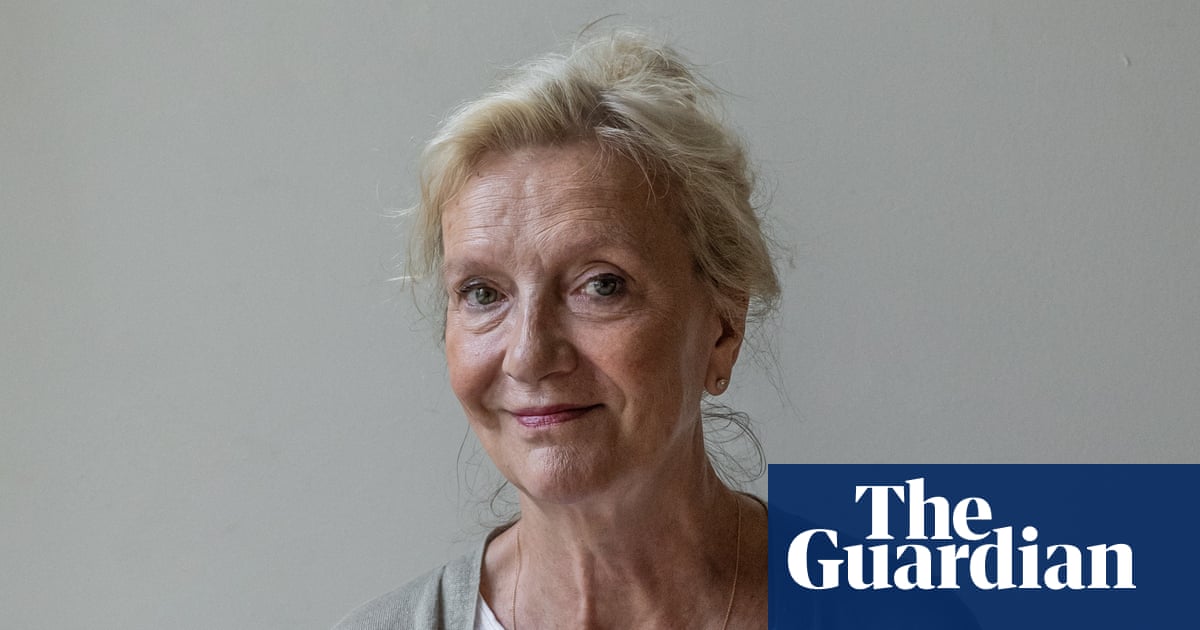
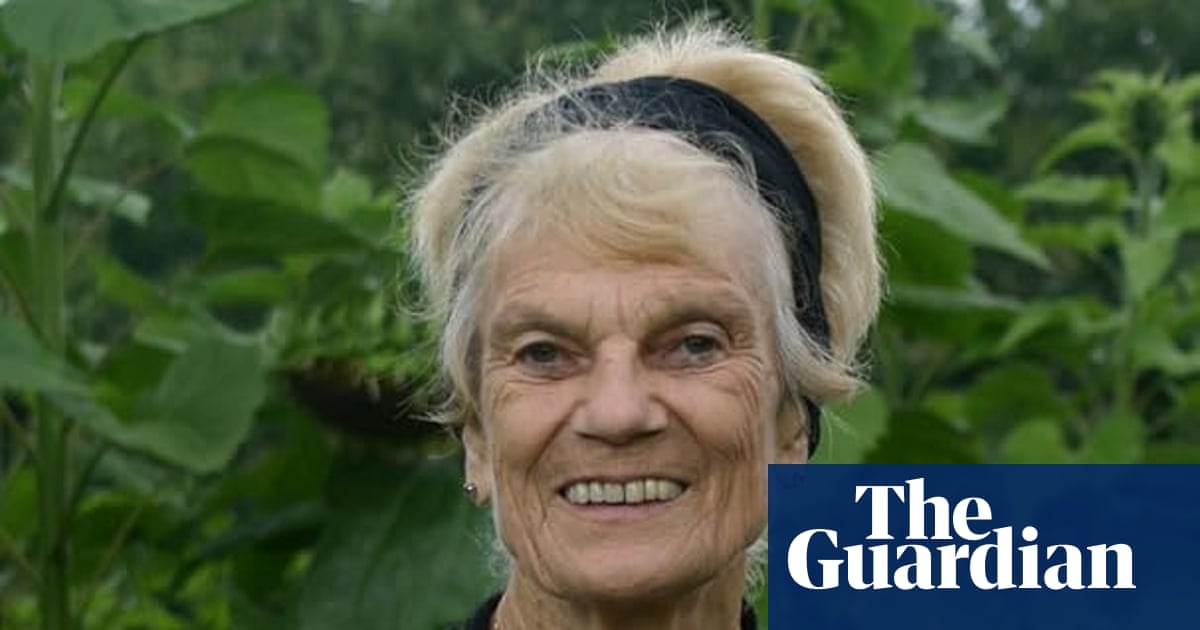
At the time, in 1940, when the 11-year-old Eva Schloss (then Eva Geiringer), newly arrived from Vienna, played with a group of children that included Anne Frank in the grassy square between their Amsterdam flats after school, she could not have imagined how intimately linked her name and Anne’s would become.
Eva, who has died aged 96, and Anne were not close: although born a month apart and neighbours in Merwedeplein (Anne lived at flat 37 and Eva at 46), they were unalike – Eva athletic, Anne more interested in fashion, films and flirting.
But when Eva’s mother married Otto Frank, Anne’s father, in 1953, she became Anne’s posthumous stepsister, a moniker she never sought but used to brilliant effect in 40 years of Holocaust education. The story she eventually recounted was not of Anne’s death but of her own survival, after being transported to Birkenau (the part of Auschwitz in which the gas chambers were situated) with her parents and brother in 1944.
Eva was born in Vienna into a middle-class Jewish family, the daughter of Elfriede Markovits, known as Fritzi, and Erich Geiringer, a businessman. The family observed the main Jewish festivals and did not eat pork but were not orthodox.
Their comfortable lives changed overnight with the Anschluss, the German annexation of Austria, in 1938. After Eva’s older brother, Heinz, came home from school with blood streaming down his face, having been beaten up because he was a Jew, the Geiringers decided that they must leave Vienna.
They moved, via Brussels, to Amsterdam, but when the Netherlands capitulated to the Nazis, they were forced to wear the yellow star on their coats. As the situation for Jews worsened, they acquired false papers and went into hiding, moving seven times in two years before ending up in an attic flat that, like the Franks’s, had a secret compartment behind a trapdoor.
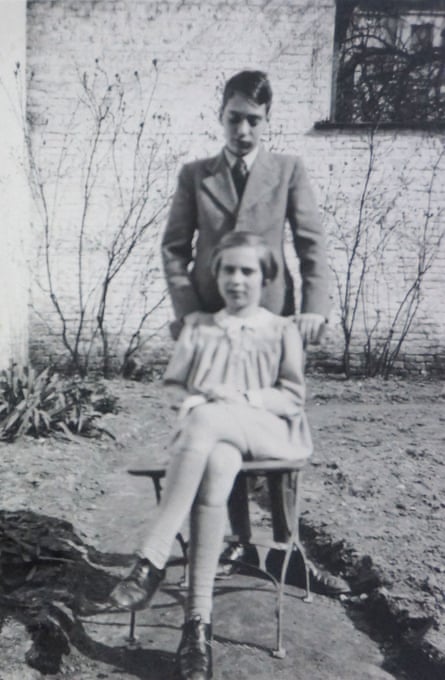
At 8.30am on Eva’s 15th birthday, they were enjoying a celebration breakfast when the Gestapo stormed in and marched the family to their headquarters, where they were beaten with truncheons.
From Westerbork, the Dutch deportation camp for Jews, they were transported to Auschwitz. Separated from Eva’s father and brother, Eva and her mother had their heads shaved and Eva was tattooed with the number A/5272.
In the first of her three co-authored books, Eva’s Story (1988, with Evelyn Julia Kent), Eva recounts in unsparing detail the unendurable conditions and repeated humiliations that they suffered there: starvation; infestations of black beetles and lice; brutal beatings by sadistic kapos (Polish prisoner-guards); frostbite as a result of hours standing in the icy cold for the Appell (roll call) or to watch an escaper being hanged; being forced to carry dead bodies; diarrhoea.
They also experienced an extraordinary stroke of luck: when Fritzi persuaded Eva, who had a high fever, to go to the Birkenau hospital block, she shrieked with joy to see Minni, her cousin from Prague, working as a nurse there.
Minni enjoyed protected status because her husband, a dermatologist, also in Auschwitz, treated Nazis in the camp with skin problems. She procured extra food for Eva and Fritzi, kept them in the ward for longer than usual and, crucially, was able to intercede on their behalf with Josef Mengele to save Fritzi, after she had been selected for the gas chambers. Without Minni, neither Eva nor Fritzi would have survived.
After Auschwitz was liberated by the Soviet army in January 1945, Eva and her mother returned to Amsterdam, only to learn from the Red Cross that her brother had died in Mauthausen of exhaustion in April, after the forced march from Auschwitz ahead of the Soviets’ arrival, while her father had perished three days before the war’s end.
Eva returned to school but could not settle: she felt bitter, angry and depressed. Otto Frank, who had learned of the death of his wife, Edith, and his daughters Anne and Margot, began to get close to Fritzi, especially after the discovery and then publication of Anne’s diary in 1947. He told Eva that she should not go through life hating everybody because she would be the one to suffer, and he gave her the Leica camera he had used to photograph Anne and Margot.
At Otto’s suggestion, she went to London to take a photography course. In the boarding house in Cricklewood where she stayed, Eva met Zvi Schloss, an Israeli citizen born in Bavaria, now studying in London. They married in 1952 and went on to have three daughters, while Eva opened an antiques business in Edgware.
In March 1986, Eva’s life changed again. Eva and Fritzi were invited to the opening of the Anne Frank and the World exhibition at the Mall Galleries, near Buckingham Palace. The event was chaired by Ken Livingstone, leader of the Greater London council, who seated them on the top table, with Eva next to him. Livingstone spent the evening asking her about herself and how she had met Otto.
As the formal proceedings wound to a close, he suddenly pushed back his chair and stood up. To her horror, Eva heard him announce to the audience, “And now, just before we finish, Eva is going to say a few words to you.” Eva had never spoken publicly about her experiences before, but found, after she was handed a microphone and nervously got to her feet, that once she started speaking, she could not stop.
After this, Eva spoke at openings of the exhibition around the UK, in cathedrals and civic halls, in schools, colleges and prisons. She co-founded the Anne Frank Trust UK with Gillian Walnes Perry, who described her as indefatigable.
Eva tailored her speeches to her audience. One of her first prison speeches was to female inmates at HMP Durham. “Some of you are full of hate,” she told them. “I was full of hate, too, and I think I have a message for you.” The message was that she was a survivor and that they could survive too. To gay prisoners, she described the fate of her homosexual Auschwitz inmates. In a London prison Eva met one woman, who baldly announced that she had killed her “darling husband”. They corresponded for years afterwards.
Eva felt survivor’s guilt, not about Anne, but in relation to her brother Heinz, who had feared death. In 2017 she instigated an exhibition at the Jewish Museum in London of the 30 paintings of his that they had retrieved from beneath the floorboards of their Amsterdam hiding-place.
Eva never spoke in public about the postwar Pollyanna fetishisation of Anne Frank, except to note, of the oft-quoted words of the diary, “I still believe that deep down human beings are good at heart”, that “I cannot help remembering that she wrote this before she experienced Auschwitz and Belsen.”
She published her second book, The Promise, aimed at much younger readers, in 2006, followed by the bestselling After Auschwitz (“remarkable for its unflinching gaze at the past and also for its hope”) in 2013.
In 2012 Eva was appointed MBE for her work with the Anne Frank Trust and other Holocaust charities. She believed that “we need to learn to live with each other in harmony, to accept each other for who and what we are. We must learn the lesson that human differences actually enrich our lives. We should not be afraid of people who are different from us, but we need to embrace their faiths and ways of life so that we can give our children and future generations a safer life to live.” She became an Austrian citizen again in 2021.
Fritzi died in 1998 and Zvi in 2016. Eva is survived by their daughters, Caroline, Jacky and Sylvia, and by five grandchildren.