1 month ago
78
1 month ago
78
Roli Srivastava
Founder of the Migration Story, India
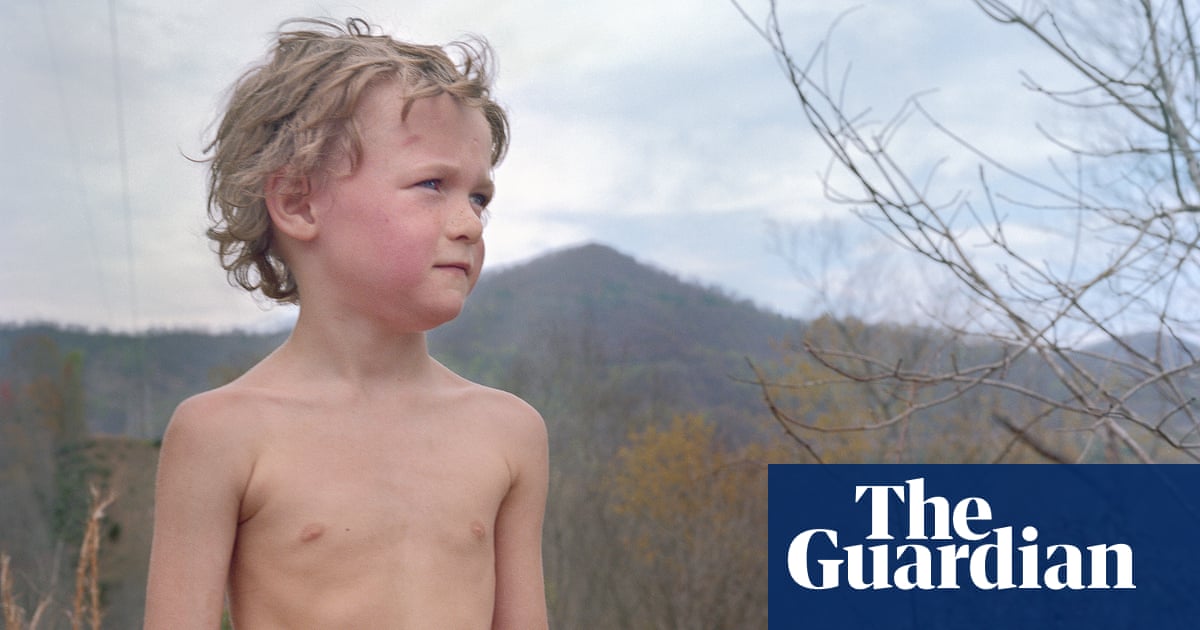
Shubham Sabar, 19, was working at a construction site in Bengaluru, capital of India’s southern Karnataka state, when he received a phone call from his teacher back home, hundreds of miles away in Odisha state, telling him he had passed the National Eligibility cum Entrance Test (Neet) – India’s tough admissions examination for undergraduate medical and dental colleges.
Snippets of the news reached me on WhatsApp and I commissioned the Odisha-based video journalist Rakhi Ghosh, who walked through farms and forests to reach Sabar’s home in Khordha district. She met Sabar, who had returned home and was getting ready to join the Maharaja Krishna Chandra Gajapati Medical College in Berhampur – about 90 miles (150km) from his village.
Sabar, who was born to farm worker parents, studied late into the night for the exam, which nearly 2.3 million applicants sat. He knew that education was the only way he could help his family and the tribal community in his village, where “people first pray for a cure before seeing a doctor”, as Sabar told Ghosh in the video report.
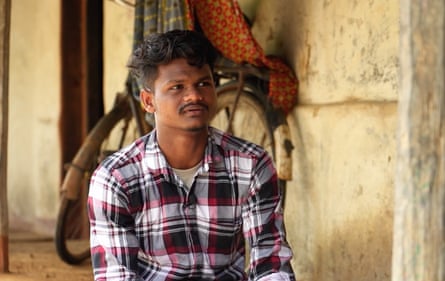
Like tens of thousands of other Indians, he migrated from his village to work at a construction site to support his family, but also to save money for his higher education.
Children passing highly competitive exams for entry to medicine, engineering or civil services are widely celebrated in India, and coaching classes charge huge sums of money to prepare students for the tests, which are failed by nearly half of all entrants. Families throw parties and their friends and relatives sing the praises of achievers hoping their offspring will emulate them.
For this reason, Sabar’s achievement shines even brighter. He had no access to expensive tutors. His parents, overjoyed by his success, have borrowed money and used their savings to support his admission to the medical college. His father continues to work as a farm labourer, knowing it will take more effort to sustain his son’s five-year medical degree.
We document the lives and challenges of migrant workers across the country at the Migration Story, but Sabar’s story emerged as our favourite of 2025 for it carried a message of quiet resilience – the power of hard work and hope.
The Migration Story is India’s first newsroom to focus on the country’s internal migrant population
Hawo Nor Osman
Reporter for Bilan Media, Somalia
In May, I worked on a story about 103 families living in a camp on the outskirts of Somalia’s capital, Mogadishu. They had been displaced due to conflict, drought and climate change, with many living as internally displaced people for more than seven years.
Constant eviction made life unstable, especially for women and children. With no legal agreement to stay, they were often forced to leave quickly, sometimes losing their shelters to bulldozers or eviction by police.
They started a monthly cooperative system so each family could save enough money to buy a small piece of land. I kept wondering: how can displaced people buy land when their lives are so uncertain? But they lived with strength, hope and patience.
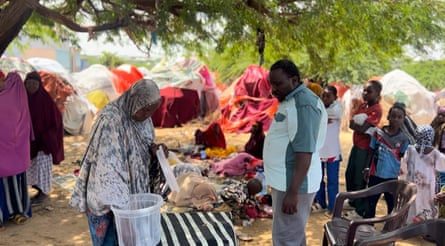
The story of these families is more than a news report; it shows the power of people coming together for a shared purpose. With little money and many challenges, they achieved something remarkable: buying land of their own. They have proved that hope can turn into reality and communities can thrive when united.
To me, this story is deeply moving. It reminds me that those who struggle most often teach us the meaning of strength, kindness and collaboration.
Bilan Media is a media house in Somalia staffed and run by women
Christine Mungai
News editor at the Continent, Africa
The story of 2025 that gave me hope was a feature we published on 31 May, on a new multidisciplinary art biennale in Guinea-Bissau that ran for the month of May.
Guinea-Bissau rarely appears even in our newspaper, the Continent – and when it does, it is almost always in the context of political upheaval or organised crime. It lived up to that reputation with yet another coup in November, the ninth attempted or successful one since independence in 1974.
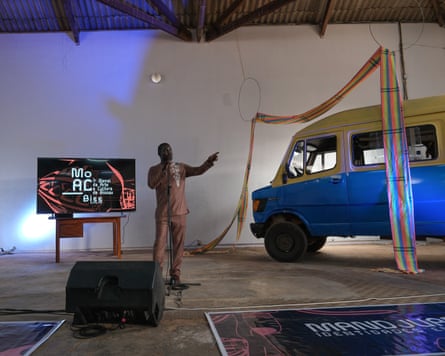
That’s why MoAC Biss – described by our contributor Jason Patinkin as “perhaps west Africa’s most improbable art event” – felt so remarkable. Most aspiring artists move abroad as soon as they are able to due to lack of support and infrastructure at home. Patinkin reports that “Guinea-Bissau has no contemporary art museums, art schools or specialised art supply shops”, which means most of the art on display had never been exhibited to a home crowd, in the context that birthed it.
Organisers had to navigate everything from electricity shortages affecting video installations to limited printing facilities, flight disruptions caused by an energy blackout in Portugal and Spain, and constant funding gaps.
This story shows that even in the most unlikely places, there is beauty that shines through. Resilience is a word that gets thrown around a lot in covering Africa, but I loved the simple triumph of these artists coming home, and showing their art in their own country.
The Continent is a weekly newspaper written by African reporters, designed to be read and shared on WhatsApp
Zahra Joya
Founder of Rukhshana Media in Afghanistan
In a small room in Kabul, 22-year-old Nargis Badr carefully packs handmade crystal bags, preparing them for customers thousands of miles away in the US, Canada and Germany. Just two years ago, her online business did not exist; neither did the future she is now trying to build.
By 2025, Badr’s venture had grown into a team of more than 30 people – most of them young women who, like her, were barred from education after the Taliban returned to power. What began as a survival strategy has slowly turned into a source of income and hope for dozens of girls left behind by Afghanistan’s collapsing education system.
Before 2021, Badr had completed school and was preparing for the national university entrance exam, hoping to study psychology at Kabul University. That dream ended abruptly when the Taliban banned women from higher education.
“For months, I felt completely lost,” she says. “It felt like life had stopped. I spent my days reading books and scrolling on Instagram, but I didn’t see a future.”
After months of depression and isolation, Badr began searching for alternatives. She researched what kind of product she could make from home, how online marketing worked and how to reach customers beyond Afghanistan.
In October 2023, with a modest investment of 25,000 to 30,000 Afghanis (£330), she launched her business producing handmade crystal bags.

The challenges were immediate. Sourcing raw materials from Kabul’s wholesale markets – particularly Mandawi market, a conservative, male-dominated space – was intimidating. “Just being there as a young woman felt like resistance,” she says.
Despite the obstacles, her business steadily grew. Today, Badr provides her team with paid work at a time when education and employment opportunities for Afghan women are shrinking rapidly.
For Rukhshana Media, which reports extensively on women’s lives under Taliban rule, stories are often filled with loss, restriction and fear. But Badr’s journey, which one of our reporters covered, tells another side of Afghanistan’s reality – one of quiet defiance, creativity and determination.
Amplifying stories such as Nargis’s is a deliberate editorial choice. While much of the reporting on Afghan women rightly focuses on repression, bans and violations, documenting how women navigate, resist and adapt under extreme restrictions is equally vital.
These stories challenge the single narrative of victimhood, highlight women’s agency, and ensure that Afghan women are seen not only as subjects of crisis but as actors shaping their own futures, even in the most constrained circumstances.
Rukhshana Media is a collective of female journalists reporting on women’s lives in Afghanistan
Edilma Prada Céspedes
Editor at Agenda Propia, Colombia
In Putumayo, a region that connects the Andes mountains with the Colombian Amazon, Indigenous communities place great importance on the water systems in their ancestral lands, taking care of the spirit of water (Iaku in the Inga language). Together with rural and urban communities, they protect animals, plants and rivers affected by oil pollution, agricultural expansion, deforestation and the climate crisis.
Their collective efforts were portrayed by 40 community storytellers in our series Territory of the Iaku: A Weaving of Voices Caring for Water in Putumayo.
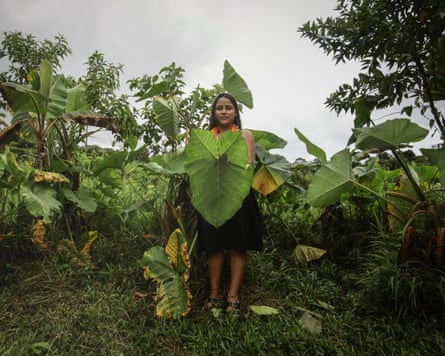
Farmers in the Sibundoy valley are restoring the Colombian pine, a species that retains moisture and promotes rainfall. This tree is endangered because of the over-exploitation of its timber. In the same area, children from the Pilas Club learn about the importance of the forest, which is threatened by agrochemicals.
In the municipalities of Orito and San Miguel, Awá healers protect the kipu, or black land crab, which they consider to be “the mother of water” and which is endangered by the pollution of rivers and streams.
In Puerto Leguízamo, on the border with Peru, Murui Muina women and elders plant water-regenerating plants such as the canangucha palm to prevent wetlands from drying up as a result of cattle ranching.
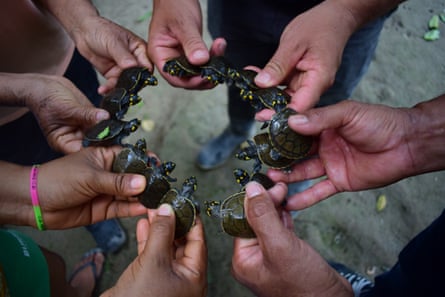
In Puerto Asís, women are rescuing charapa turtles threatened by the drought affecting the Putumayo River. As the turtles are increasingly at risk of extinction in the wild, the Zápara Indigenous people have stopped hunting them. Neighbourhood communities in the city are also planting trees to preserve a complex of 43 wetlands threatened by urban sprawl.
In a region facing huge challenges from extractive industries, and the struggle between criminal armed groups for control of drug trafficking routes, these communities cling to their knowledge, nurturing the deep relationship with Mother Earth and spiritual beings.