3 months ago
176
3 months ago
176
I owned an air fryer long before they attained peak ubiquity, and I use it on a daily basis, so I’m surprised when people express zero interest in them. For my lifestyle, air fryers are brilliant: I’m usually multitasking, so being able to pop chicken, veggies or sausages in a drawer and walk away frees me up.
But if you’re thinking of buying one, it’s worth exploring whether it will work for how you live – and the food you cook – to avoid cluttering your kitchen counter with another underused gadget, and needlessly spending money.
Air fryers work in a similar way to standard convection ovens: an element heats up, and a fan distributes the heat. What’s different is the size of the cavity compared with a standard oven – it’s smaller, so an air fryer heats up fast, saving energy. You’re also advised to shake food frequently to expose more of the food’s surface area to the heat, resulting in a crisp, browned exterior. Unlike conventional frying, food is coated in only a little oil to boost the crunch (or may need none at all), so it can also be a healthier way of cooking.
“Air fryers are quick, convenient and relatively cheap to run compared with conventional ovens,” says Natalie Mathie, energy expert at Uswitch. “A jacket potato might take about 30 minutes in an air fryer, compared with closer to an hour in an oven. The average air fryer uses about 1.4kW of power, which means it would cost roughly 19p to cook something for 30 minutes at current energy prices. Using a 2kW oven for the same time would cost about 28p.” But, of course, that comes with an upfront cost. So, is it really worth parting with your hard-earned cash?
Do you really need an air fryer?
Think how often you’ll use it
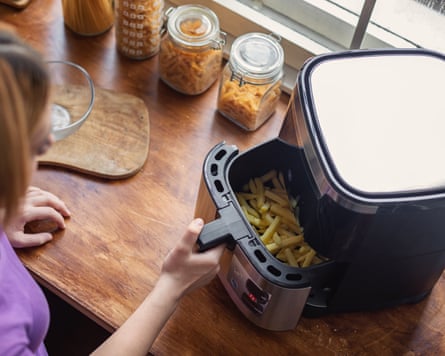
A good air fryer is an investment, both from a cost point of view and for the precious worktop space it takes up. If you don’t think you’ll use it often, it’s one more product with a manufacturing trail behind it and a recycling (or landfill) journey ahead. That’s why I advise against buying the cheapest air fryer possible to dip your toe in the water: these tend to be poor quality with flimsy drawers and non-stick coatings that don’t last. As I discovered when testing for our guide to the best air fryers, spending more tends to get you better build quality, and hopefully one that’ll last.
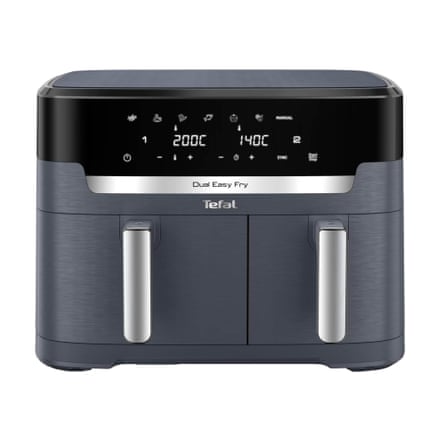
Our favourite air fryer overall: Tefal Easy Fry Dual XXL EY942BG0
For more, read our test of the best air fryers
Choose the right size for you
Should you decide to take the plunge, choose an air fryer that’s a suitable size for your needs and for what you plan to cook. I use my air fryer not only for food from the freezer (air fryers nearly always have presets for frozen food) but also for fermenting yoghurt, reheating slices of pizza and roasting parsnips. However, I’ve had less success with dehydrating and making fruit leathers (a labour-intensive chewy snack, made by drying pureed fruit into sheets over several hours), and I still prefer my steak pan-fried: air fryers can dry out meat, especially if there’s less fat.
“A small toaster oven with convection can be excellent for one to two portions,” says Saifur Rahman, head chef at family-run restaurant Tower Tandoori in London’s Bermondsey. “If you already use a combi microwave with a grill or convection cooking, the jump in speed or texture with an air fryer can be smaller than expected, especially for bigger batches. A 4-5L basket may suit one or two portions, but for family feasts, cooking happens in rounds, and the time and energy advantage of an air fryer shrinks.”
Use appliances you already own instead
If you don’t think you’ll use an air fryer much, it’s cheaper and more sustainable to make better use of the appliances you already own. Many can produce air fryer-style crisp textures or match the rapid cooking speed, so it’s worth seeing what’s already in your kitchen that may have been overlooked.
Andy Bowler, chef and owner of gourmet meal kit company Indulge Dining, believes a traditional fan oven still gives the best results for many meals. “Air fryers are excellent for crisping, but not suited to anything with a sauce or liquid,” he says. “The baskets are fairly small unless you go for a large model, which then takes up a lot of cupboard or worktop space. A fan oven, properly preheated, will do most of what an air fryer does: use a perforated baking tray or a wire rack to help air circulate and improve caramelisation.”
Electric pressure cookers and microwaves can reduce cooking times for many foods, with crisp and browning added afterwards under a hot grill. Dig out their instruction manuals to see what settings or programmes are on offer that you might have forgotten about or don’t use regularly.
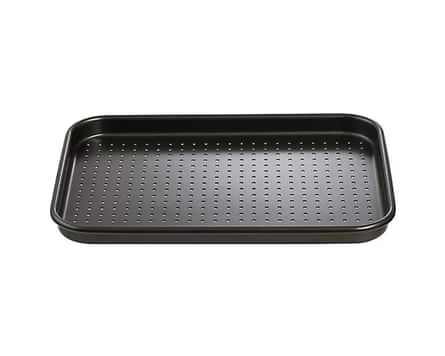
Perforated baking tray
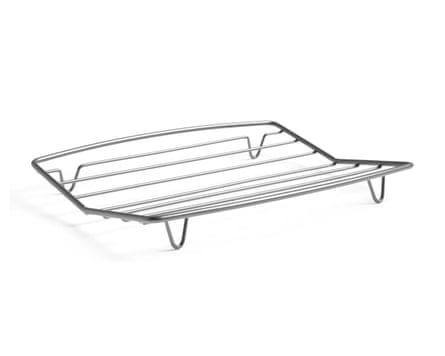
Carbon steel roasting rack
Try shallow frying
For those who don’t have time to wait for an oven to preheat, Bowler has a faster suggestion. “Shallow frying is a good alternative. With the right pan, such as a heavy-based stainless-steel one or a well-seasoned cast-iron skillet, and temperature control, you’ll get excellent results. Use enough oil to conduct heat evenly, without drowning the food, and drain properly afterwards.”
There is, in fact, little an air fryer can cook that can’t be produced another way, albeit with a trade-off of requiring multiple methods, a little extra oil or more energy. How experienced you are as a cook matters too: air fryers tend to be pretty forgiving for novices as its programs take the guesswork out of duration and temperature.
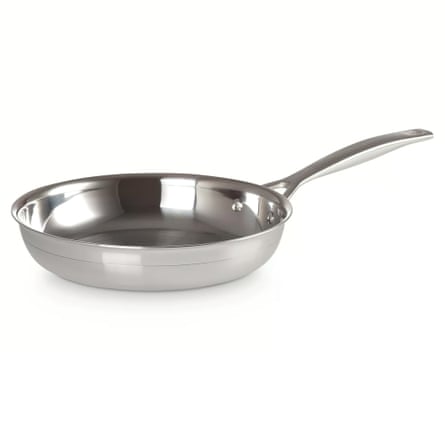
Le Creuset stainless steel frying pan
For more, read our roundup of the best frying pans for every cook
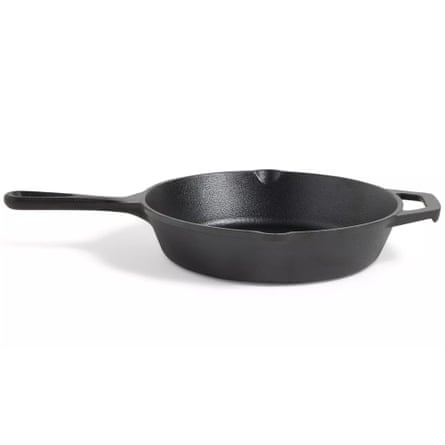
Le Creuset cast-iron skillet
For more, read our guide to the best Le Creuset alternatives. We’ve also put blenders, rice cookers and soup makers to the test